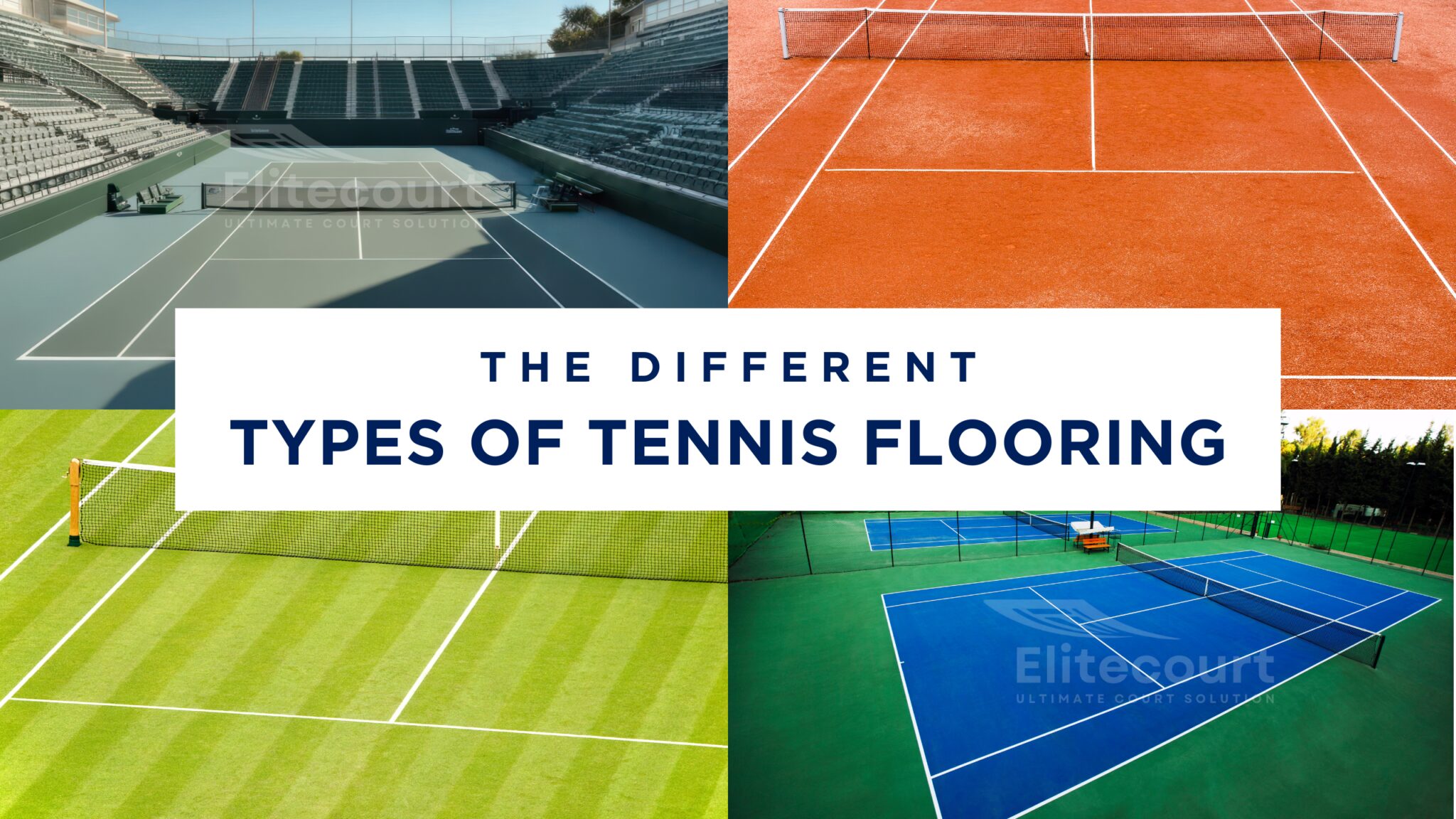
Understanding Tennis Ground Size and Why It Matters
A standard tennis court measures 78 feet long and 36 feet wide for doubles, and 27 feet wide for singles. But that’s only part of the story. The true tennis ground size includes much more than just the marked playing lines—it extends to surrounding run-off areas, player movement zones, and safety margins that significantly impact gameplay.
Now think about it this way: would a professional athlete perform at their best if they constantly worried about stepping out of bounds or crashing into barriers? Probably not. That’s exactly why understanding the complete tennis ground size is essential—not just for professionals, but also for schools, clubs, and recreational facilities.
A properly sized tennis ground ensures fair play, safety, and optimal performance. It also directly affects how the game feels. Too small, and players feel restricted. Too large without proper markings, and it disrupts rhythm and accuracy. The balance lies in precision.
From a construction and material standpoint, this is where manufacturers like Elitecourt play a crucial role. While installation might vary, the flooring system itself must allow accurate line markings, consistent bounce, and dimensional stability. Synthetic acrylic surfaces, in particular, are engineered to maintain these exact standards over time.
So whether you’re planning a professional facility or a community court, getting the tennis ground size right is the foundation of everything. It’s not just about measurements—it’s about creating a space where the game can truly thrive.
What Does “Tennis Ground Size” Really Include?
When people refer to tennis ground size, they often picture just the rectangle marked by white lines. But in reality, that’s only the playing court. The complete tennis ground size includes several critical components that go beyond those visible boundaries.
First, there’s the playing area, which includes the singles and doubles court dimensions. Then comes the run-off space, which surrounds the court and allows players to chase balls safely without obstruction. This space is not optional—it’s essential, especially for competitive play.
Additionally, a full tennis ground includes:
- Backspace (behind baselines) for player movement
- Sideline clearance for lateral play
- Net posts and safety zones
- Optional seating or fencing zones
Ignoring any of these elements can compromise both safety and performance. For instance, insufficient backspace can prevent players from executing deep baseline shots effectively.
From a surface perspective, materials like synthetic acrylic flooring help define these zones clearly. Elitecourt’s surfaces are designed to support precise line application and long-term dimensional accuracy, ensuring that every inch of the tennis ground size remains consistent over time.
In simple terms, tennis ground size isn’t just about how big the court is—it’s about how well the entire space functions as a cohesive playing environment.
Why Accurate Court Dimensions Are Non-Negotiable
Accuracy in tennis ground size isn’t just a technical requirement—it’s the backbone of the sport itself. Imagine playing on a court where the service box is slightly off or the baseline is shorter than standard. Even a small deviation can completely change the dynamics of the game.
Professional organizations like the International Tennis Federation (ITF) enforce strict guidelines to ensure uniformity across all courts worldwide. You can explore official standards directly from the ITF here:
https://www.itftennis.com/en/about-us/tennis-tech/
Why does this matter so much? Because tennis relies heavily on precision, angles, and consistency. Players train for years to master shot placement based on exact court dimensions. Any inconsistency disrupts that rhythm and affects performance.
From a manufacturing standpoint, maintaining accuracy requires surfaces that:
- Resist wear and tear
- Prevent line fading or distortion
- Maintain even texture and bounce
This is where Elitecourt’s synthetic acrylic systems stand out. These surfaces are engineered to retain their structure and markings, even under heavy use and varying weather conditions.
Here’s a simple analogy: building a tennis court with inaccurate dimensions is like tuning a piano incorrectly. It might still produce sound, but it won’t deliver the harmony the player expects.
In the end, precision isn’t optional—it’s fundamental. And when it comes to tennis ground size, every inch truly counts.
Official Tennis Ground Size Dimensions (ITF Standards)
Understanding the official tennis ground size begins with recognizing the standards set by global governing bodies. The International Tennis Federation (ITF) defines these measurements to ensure that every court, whether used in a local club or an international tournament, delivers a consistent playing experience. These aren’t arbitrary numbers—they are the result of decades of refinement to balance fairness, performance, and safety.
At its core, a tennis court has a fixed length of 78 feet (23.77 meters). This measurement remains constant across both singles and doubles matches. The width, however, varies depending on the format. For doubles matches, the court extends to 36 feet (10.97 meters), while singles matches use a narrower width of 27 feet (8.23 meters). The additional width in doubles is created using the outer sidelines, which are not used during singles play.
But here’s where it gets interesting—these dimensions only define the playing lines. The full tennis ground size extends beyond this, incorporating necessary clearance areas that significantly increase the total footprint of the court. Without these additional spaces, even a perfectly measured court would feel incomplete and restrictive.
From a technical standpoint, ensuring that these dimensions remain accurate over time requires high-quality surface materials. Synthetic acrylic flooring, like the solutions offered by Elitecourt, plays a critical role in maintaining line sharpness, surface uniformity, and dimensional integrity. Over time, inferior surfaces may crack, fade, or shift slightly, which can alter the perceived size of the court and affect gameplay.
So while the numbers themselves may seem straightforward, achieving and maintaining these dimensions in real-world conditions requires thoughtful planning and the right materials.
Standard Tennis Court Length and Width
The standard tennis ground size is built around a precise rectangular geometry that ensures uniform gameplay across the world. The 78-foot length is divided evenly by the net, creating two equal halves of 39 feet each. This symmetry is essential, as it ensures both players compete under identical spatial conditions.
The width is where variation comes into play. For singles matches, the 27-foot width is marked by the inner sidelines. These lines create a narrower playing field that emphasizes precision and control. In contrast, doubles matches expand the playing area to 36 feet, using the outer sidelines to allow for more dynamic team play.
Here’s a simple breakdown:
| Format | Length | Width |
|---|---|---|
| Singles | 78 ft | 27 ft |
| Doubles | 78 ft | 36 ft |
This distinction is critical when designing or planning a tennis ground. Even if a court is primarily intended for singles play, most facilities opt for full doubles dimensions to maximize versatility.
Another important detail is the service line, positioned 21 feet from the net on both sides. This creates the service boxes, which are further divided by the center service line. These markings must be applied with extreme accuracy, as they directly influence serve placement and gameplay strategy.
Elitecourt’s synthetic acrylic flooring systems are specifically designed to support this level of precision. Their surfaces allow for clean, durable line markings that remain visible and accurate over time, even with heavy use and exposure to environmental factors.
In essence, the standard length and width form the backbone of the tennis ground size—but the true functionality of the court depends on how well these dimensions are executed and maintained.
Singles vs Doubles Court Dimensions Explained
At first glance, the difference between singles and doubles courts might seem minor—just a few extra feet on either side. But in reality, this variation plays a huge role in how the game is played and experienced.
In a singles court, the narrower 27-foot width demands precision. Players must rely on accurate shot placement, controlled angles, and strategic movement. There’s less room for error, which makes the game more technical and mentally demanding.
On the other hand, a doubles court, with its 36-foot width, introduces a completely different dynamic. The additional space allows for wider shots, faster rallies, and more aggressive net play. It also accommodates two players per side, which changes positioning and strategy entirely.
From a design perspective, this means that most tennis grounds are built using doubles dimensions, with singles lines included inside. This ensures maximum flexibility, allowing the same court to be used for both formats without modification.
However, marking these lines correctly is crucial. Misaligned or faded lines can confuse players and disrupt gameplay. That’s why high-quality surfaces are essential. Elitecourt’s acrylic systems ensure that both singles and doubles lines remain crisp, visible, and accurate, even after prolonged use.
Think of it like a multi-lane highway—each lane must be clearly defined for smooth traffic flow. Similarly, a tennis ground must clearly distinguish between singles and doubles boundaries to maintain order and fairness in the game.
Ultimately, understanding these differences helps in planning a tennis ground size that meets both recreational and competitive needs without compromise.

Full Tennis Ground Area Including Surrounding Space
While the playing court dimensions are fixed, the complete tennis ground size extends well beyond those lines. This additional space—often referred to as run-off or clearance area—is essential for player safety, movement, and overall gameplay quality.
For professional-level courts, the recommended total area is approximately 120 feet by 60 feet. This includes:
- 21 feet of space behind each baseline
- 12 feet of space on each side of the court
These extra margins allow players to chase down balls, execute wide shots, and move freely without risking injury. Without adequate clearance, even a perfectly measured court can feel cramped and unsafe.
For recreational or club-level courts, the total area may be slightly reduced, but it should still provide sufficient space for comfortable play. Cutting corners here can negatively impact the user experience and limit the court’s usability.
From a surface standpoint, maintaining consistency across both the playing area and the surrounding space is crucial. Elitecourt’s synthetic acrylic systems ensure a uniform texture and grip, allowing players to move seamlessly across the entire tennis ground.
In practical terms, the full tennis ground size is not just about fitting a court into a space—it’s about creating an environment where players can perform at their best without limitations.
Recommended Total Area for Professional Courts
Professional tennis courts are designed with maximum performance and safety in mind. That’s why the total tennis ground size extends far beyond the playing lines, creating a spacious environment that supports high-speed, competitive play.
The standard recommendation of 120 feet by 60 feet ensures that players have ample room to move in all directions. This is especially important during intense rallies, where players may need to sprint several feet beyond the baseline or sideline to return a shot.
Another key factor is spectator and equipment space. Professional courts often include additional areas for seating, umpire chairs, and ball kids. While these elements don’t directly affect gameplay, they must be accounted for during planning to ensure the court remains functional and uncluttered.
Surface quality also becomes even more critical at this level. Any inconsistency in texture or bounce can impact performance and lead to unfair advantages. Elitecourt’s acrylic flooring systems are engineered to deliver consistent ball response and player comfort, making them ideal for high-performance environments.
In short, a professional tennis ground size isn’t just about meeting minimum requirements—it’s about exceeding them to create a world-class playing experience.
Space Requirements for Recreational and Club Courts
Not every tennis court needs to meet professional standards, but that doesn’t mean tennis ground size can be overlooked. Recreational and club courts still require careful planning to ensure they are safe, functional, and enjoyable for players of all skill levels.
Typically, these courts may use slightly reduced clearance areas, but they should still provide enough space for comfortable movement. A common approach is to maintain at least:
- 18 feet behind baselines
- 10–12 feet on the sides
This creates a balanced environment that supports casual play without requiring the full footprint of a professional court.
One of the biggest challenges in recreational settings is space limitation. Facilities often need to fit multiple courts within a restricted area, which can lead to compromises in layout. However, reducing space too much can negatively impact gameplay and increase the risk of injuries.
This is where smart design and quality materials come into play. Elitecourt’s synthetic acrylic surfaces allow for efficient space utilization without sacrificing performance. Their durability ensures that even high-traffic recreational courts maintain their integrity over time.
Ultimately, the goal is to create a tennis ground size that feels open, safe, and enjoyable—whether it’s used for casual matches, training sessions, or community events.
Tennis Court Layout Breakdown
Understanding tennis ground size goes beyond just length and width—it’s about how every inch of that space is structured. The layout of a tennis court is a carefully engineered design where each line, zone, and marking serves a specific purpose. When all these elements come together correctly, they create a playing environment that feels natural, balanced, and intuitive for players at every level.
Think of a tennis court like a blueprint for movement. Every shot you see in a match—whether it’s a cross-court rally or a perfectly placed serve—relies on the accuracy of these markings. Even a slight misalignment can throw off timing, angles, and overall gameplay.
At the heart of this layout are key components such as baselines, sidelines, service boxes, center marks, and the net system. Each of these contributes to defining the playable zones and ensuring that the rules of the game are applied consistently. For example, the service boxes dictate where a serve must land, while the baselines define the depth of the court.
From a surface perspective, the ability to maintain these markings over time is critical. Elitecourt’s synthetic acrylic flooring systems are designed to support long-lasting, high-contrast line markings that remain sharp even under heavy usage. This ensures that the tennis ground size and layout remain visually accurate and functional throughout the court’s lifespan.
In essence, the layout transforms a simple rectangular space into a dynamic arena where strategy, skill, and precision come to life.
Baselines, Service Boxes, and Center Marks
When you break down the tennis ground size, the internal markings play a defining role in how the game is played. Let’s start with the baselines—these are the lines at the far ends of the court, running parallel to the net. They mark the boundary for the length of the playing area and are crucial for determining whether a ball is in or out during deep rallies.
Moving inward, you’ll find the service lines, located 21 feet from the net on both sides. These lines create the service boxes, which are further divided into left and right sections by the center service line. This division is essential for serving rules, as players must alternate between these boxes during a game.
Then there’s the center mark, a small but important line that extends from the baseline toward the net. It helps players position themselves correctly when serving, ensuring fairness and consistency.
All these markings must be applied with precision. Even a slight deviation can lead to confusion or incorrect calls during a match. That’s why the choice of surface material is so important. Elitecourt’s acrylic systems allow for precise line application and strong visual contrast, ensuring that every marking is easy to see and interpret.
Here’s a quick overview of key markings:
| Marking | Purpose |
|---|---|
| Baseline | Defines court length |
| Service Line | Creates service boxes |
| Center Service Line | Divides service boxes |
| Center Mark | Guides server positioning |
In practical terms, these lines are the language of the court. They communicate rules, define boundaries, and guide player movement—all within the framework of the overall tennis ground size.
Net Height and Placement Specifications
The net is more than just a divider—it’s a defining feature of the tennis ground size and plays a central role in how the game unfolds. Its height and placement are strictly regulated to ensure fairness and consistency across all levels of play.
According to official standards, the net height is:
- 3 feet (0.914 meters) at the center
- 3.5 feet (1.07 meters) at the posts
This slight dip in the middle creates a natural challenge for players, requiring precision and control when hitting shots over the net. The net is suspended across the full width of the court, extending slightly beyond the doubles sidelines to ensure complete coverage.
Placement is equally important. The net must be positioned exactly at the midpoint of the 78-foot court length, dividing it into two equal halves. Any misalignment can disrupt gameplay and create an uneven playing field.
From a design perspective, the area around the net must also be considered. Players often approach the net for volleys, so the surface in this zone must provide consistent grip and shock absorption. Elitecourt’s synthetic acrylic flooring ensures that players can move confidently and safely, even during fast-paced exchanges near the net.
Another often-overlooked detail is the net posts. These are placed 3 feet outside the doubles sidelines, ensuring that the net remains taut and properly aligned. While they may seem like minor components, their positioning directly affects the overall accuracy of the tennis ground size.
In short, the net isn’t just a piece of equipment—it’s an integral part of the court’s geometry. When its height and placement are precise, it enhances the balance and integrity of the game.
Types of Tennis Courts and Size Considerations
While the tennis ground size follows standard dimensions, the type of court—whether indoor or outdoor—can influence how those dimensions are experienced. Different environments introduce unique challenges and considerations that go beyond the basic measurements.
For instance, an outdoor court must account for factors like wind, sunlight, and drainage. These elements can affect how players move and how the ball behaves. As a result, the surrounding space and orientation of the court become just as important as the dimensions themselves.
Indoor courts, on the other hand, eliminate many environmental variables but introduce their own constraints. Ceiling height, lighting, and enclosure size all play a role in shaping the overall tennis ground size. A court might meet the standard length and width, but if the ceiling is too low, it can limit gameplay—especially for high lobs.
Surface material also becomes a key factor in both settings. Elitecourt’s synthetic acrylic flooring is designed to perform consistently in various environments, offering uniform bounce, durability, and weather resistance. This makes it a versatile choice for both indoor and outdoor applications.
Ultimately, while the core dimensions remain unchanged, the context in which the court exists can significantly impact how those dimensions are utilized and experienced.
Outdoor vs Indoor Tennis Ground Size Differences
At first glance, the tennis ground size for indoor and outdoor courts appears identical—and technically, it is. The playing dimensions remain the same. However, the effective size of the court can feel very different depending on the environment.
Outdoor courts typically offer more flexibility in terms of space. They can accommodate larger run-off areas, spectator zones, and additional features without the constraints of a building structure. However, they must also be designed to handle environmental factors such as rain and temperature changes.
Indoor courts, by contrast, are limited by architectural boundaries. While they still follow the same court dimensions, they require careful planning to ensure adequate:
- Ceiling height (to allow high shots)
- Lighting placement (to avoid glare)
- Wall clearance (to maintain safety)
These factors can influence how players perceive the size of the court. For example, a low ceiling can make the court feel smaller, even if the floor dimensions are correct.
Surface performance also varies between the two settings. Elitecourt’s acrylic systems are engineered to deliver consistent playability regardless of environment, ensuring that the tennis ground size feels uniform whether indoors or outdoors.
In essence, while the measurements may be the same, the experience of playing on the court can differ significantly based on its surroundings.
Synthetic Acrylic Courts and Their Dimensional Flexibility
When it comes to maintaining accurate tennis ground size, the choice of surface material can make all the difference. Synthetic acrylic flooring has become a preferred option for many facilities because of its ability to support precise dimensions while offering long-term durability.
One of the key advantages of acrylic surfaces is their dimensional stability. Unlike some traditional materials that may shift, crack, or degrade over time, acrylic systems are designed to maintain their structure and appearance. This ensures that the court lines remain accurate and the overall tennis ground size does not change.
Another benefit is the ease of customization. Acrylic surfaces allow for clear, vibrant line markings that can be tailored to include both singles and doubles layouts without confusion. This flexibility is especially valuable for multi-purpose courts that host different types of matches.
Elitecourt, as a leading manufacturer, focuses on delivering high-performance acrylic systems that enhance both functionality and aesthetics. Their surfaces are engineered to provide:
- Consistent ball bounce
- Enhanced player comfort
- Long-lasting color and line clarity
Think of it like painting on a perfectly smooth canvas—every line is sharp, every detail is clear, and the overall picture remains intact over time.
In the context of tennis ground size, this means that players can trust the court to perform exactly as expected, match after match, year after year.
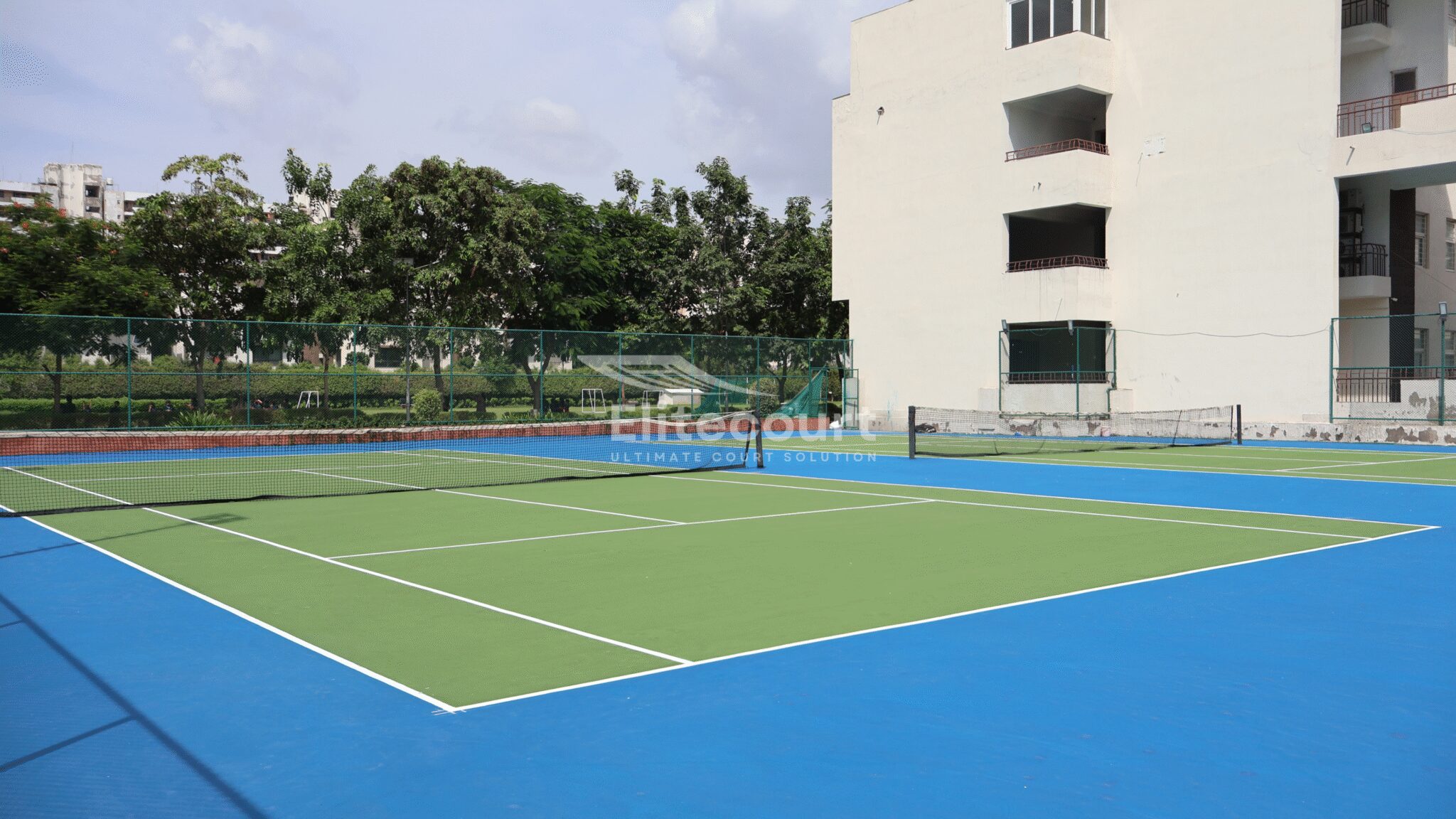
Surface Impact on Tennis Ground Size Planning
When discussing tennis ground size, most people focus purely on measurements. But here’s something that often gets overlooked: the surface itself plays a surprisingly powerful role in how those dimensions are experienced. Two courts can have identical measurements on paper, yet feel completely different underfoot. That difference often comes down to the flooring system.
Surface texture, grip, and responsiveness influence how players move across the court. If a surface is too slippery, players hesitate, making the court feel larger and harder to control. If it’s too rough, movement becomes restricted, and the space feels tighter than it actually is. So while the numerical tennis ground size stays constant, the perceived playing area shifts depending on the surface quality.
This is where synthetic acrylic flooring, like the systems developed by Elitecourt, becomes essential. These surfaces are engineered to provide balanced traction, consistent bounce, and predictable performance, ensuring that players can fully utilize the entire court without hesitation. The result? A tennis ground that feels exactly as it should—neither too cramped nor unnecessarily expansive.
Another important factor is how well the surface maintains its integrity over time. Cracks, fading, or uneven patches can distort visual cues and affect gameplay. A high-quality acrylic system resists these issues, preserving both the accuracy and usability of the tennis ground size.
In simple terms, the surface doesn’t change the dimensions—but it absolutely shapes how those dimensions are experienced. And in a game where precision is everything, that distinction matters more than most people realize.
Why Surface Type Affects Court Dimensions Perception
Let’s dig a little deeper into why surface type can influence how players perceive tennis ground size. Imagine walking into two identical rooms—one brightly lit with smooth flooring, and the other dimly lit with uneven ground. Even if both rooms are the same size, they won’t feel the same. Tennis courts work in a similar way.
A surface with consistent color and texture helps define boundaries clearly. Players can instantly recognize lines, judge distances, and position themselves accurately. On the other hand, a worn or uneven surface can blur these visual cues, making the court feel irregular or unpredictable.
Bounce behavior also plays a major role. On a high-quality acrylic surface, the ball reacts consistently, allowing players to anticipate its trajectory. This predictability helps them use the full tennis ground size effectively. In contrast, inconsistent bounce can make players second-guess their movements, subconsciously shrinking the usable space.
Footing is another critical element. A surface that provides optimal grip without being abrasive allows players to move freely and confidently. This freedom enhances their ability to cover the entire court, reinforcing the true dimensions of the space.
Elitecourt’s synthetic acrylic systems are specifically designed to address these factors. By delivering uniform performance across the entire surface, they ensure that the tennis ground size is not just accurate on paper, but also felt accurately during play.
So while measurements define the court, perception defines the experience—and surface type sits right at the intersection of the two.
Benefits of Synthetic Acrylic Flooring for Accurate Layouts
If maintaining precise tennis ground size is the goal, synthetic acrylic flooring stands out as one of the most reliable solutions available today. It’s not just about durability—it’s about preserving accuracy, consistency, and playability over time.
One of the biggest advantages of acrylic surfaces is their ability to hold line markings with exceptional clarity. Unlike surfaces that may fade or wear unevenly, acrylic coatings keep lines sharp and visible, ensuring that every boundary remains clearly defined. This is crucial for both competitive matches and training sessions, where even a small misjudgment can affect performance.
Another benefit is the uniformity of the surface layer. Acrylic systems are applied in multiple coats, creating a smooth and even finish. This consistency supports accurate ball bounce and player movement, reinforcing the integrity of the tennis ground size.
Here’s what makes synthetic acrylic flooring particularly effective:
- Dimensional stability that prevents shifting or cracking
- Weather resistance for outdoor courts
- Low maintenance requirements without compromising performance
- Customizable textures to suit different playing styles
Elitecourt focuses on delivering these advantages through precision-engineered acrylic systems that meet professional standards. Their surfaces are designed to maintain both visual and functional accuracy, ensuring that the tennis ground size remains consistent throughout the court’s lifespan.
Think of it like a high-quality map—if the lines are clear and the scale is accurate, navigation becomes effortless. In the same way, a well-designed acrylic court allows players to navigate the game with confidence and precision.
Transform Your Sports Facility Today!
Contact us for high-quality synthetic sports flooring material and elevate your space!
Common Mistakes When Planning Tennis Ground Size
Even with clear guidelines and standards, mistakes in planning tennis ground size are more common than you might expect. These errors often stem from underestimating the importance of space, precision, or material quality. And once a court is built, correcting these issues can be challenging.
One of the most frequent mistakes is focusing only on the playing area while ignoring the surrounding clearance space. As discussed earlier, the run-off area is essential for safety and gameplay. Without it, players are forced to limit their movement, which can lead to both performance issues and potential injuries.
Another common issue is inaccurate line marking. This can happen due to poor measurement, low-quality materials, or surface degradation over time. Even minor discrepancies can disrupt gameplay and create confusion during matches.
There’s also the tendency to compromise on surface quality in an effort to simplify construction. However, this often leads to long-term problems such as uneven wear, fading lines, and inconsistent bounce—all of which affect the perceived and functional tennis ground size.
Elitecourt addresses these challenges by providing high-quality acrylic flooring systems that support precise measurements and long-term durability. While they don’t handle installation, their materials are designed to make accurate execution easier and more reliable.
Avoiding these mistakes isn’t just about following rules—it’s about understanding how each element contributes to the overall performance of the court.
Ignoring Run-Off Space
One of the biggest oversights in planning tennis ground size is neglecting the run-off space. It might seem like an optional addition, especially when space is limited, but in reality, it’s a critical component of the court.
Run-off space provides players with the room they need to chase balls, recover from shots, and maintain momentum during rallies. Without it, the court becomes restrictive, forcing players to hold back and limiting the natural flow of the game.
From a safety perspective, insufficient clearance increases the risk of collisions with fences, walls, or other obstacles. This is particularly concerning in competitive settings, where players move at high speeds and require ample space to react.
The recommended clearance for a standard court—21 feet behind baselines and 12 feet on the sides—is not arbitrary. It’s based on the dynamics of the game and the need for unrestricted movement.
Using a high-quality surface like Elitecourt’s acrylic systems ensures that this extended area is just as playable as the main court. The consistent texture and grip allow players to move seamlessly across the entire tennis ground size, without hesitation or discomfort.
In short, run-off space isn’t extra—it’s essential. And overlooking it can significantly compromise the functionality of the court.
Improper Markings and Line Measurements
Another critical issue in tennis ground size planning is improper line marking. This might seem like a minor detail, but in tennis, lines define the game. Every serve, rally, and point depends on their accuracy.
Incorrect measurements can lead to:
- Misaligned service boxes
- Uneven sidelines
- Confusing overlaps between singles and doubles lines
These errors not only affect gameplay but also reduce the credibility of the court, especially in competitive environments.
One of the main causes of this problem is using surfaces that don’t support precise and durable line application. Over time, lines can fade, blur, or shift, making it difficult for players to judge boundaries accurately.
Elitecourt’s synthetic acrylic flooring is designed to prevent these issues by providing a stable and high-contrast base for line markings. This ensures that every line remains clear and accurate, even after extended use.
Think of it like a ruler—if the markings are off, every measurement you take will be wrong. The same principle applies to a tennis court.
Maintaining proper line measurements is not just about aesthetics—it’s about preserving the integrity of the game and ensuring that the tennis ground size remains true to its intended design.
Expert Tips for Designing the Perfect Tennis Ground
Designing the ideal tennis ground size isn’t just about following a blueprint—it’s about combining technical accuracy with practical insight. The best courts are those that not only meet official standards but also enhance the overall playing experience.
One of the first considerations is court orientation. Ideally, courts should be aligned in a north-south direction to minimize the impact of sunlight on players’ vision. This might seem like a small detail, but it can make a significant difference during matches.
Environmental factors such as wind, drainage, and surrounding structures should also be taken into account. These elements can influence how the court is used and how long it maintains its quality.
Another key factor is choosing the right materials. Elitecourt’s synthetic acrylic systems offer a combination of durability, performance, and visual clarity that supports accurate tennis ground size planning. Their surfaces are designed to adapt to different environments while maintaining consistent playability.
Ultimately, designing a tennis ground is about creating a space where players feel comfortable, confident, and inspired to perform at their best.
Ideal Orientation and Environmental Factors
The orientation of a tennis court plays a subtle yet powerful role in how the tennis ground size is experienced. A poorly oriented court can create visual challenges, making it difficult for players to track the ball—especially during sunrise or sunset.
By aligning the court in a north-south direction, designers can reduce glare and ensure more consistent lighting conditions throughout the day. This allows players to fully utilize the court without visual distractions.
Environmental factors such as wind direction and drainage also come into play. Proper drainage ensures that the court remains usable after rain, while wind barriers can help maintain consistent gameplay conditions.
Elitecourt’s acrylic surfaces are designed to perform well under various environmental conditions, offering weather resistance and long-term durability. This ensures that the tennis ground size remains functional and reliable, regardless of external factors.
In essence, orientation and environment don’t change the dimensions—but they significantly influence how those dimensions are used.
Choosing the Right Flooring Manufacturer
When it comes to achieving accurate tennis ground size, the choice of flooring manufacturer is just as important as the design itself. The materials used will determine how well the court maintains its dimensions, performance, and visual clarity over time.
A reliable manufacturer like Elitecourt focuses on delivering precision-engineered synthetic acrylic flooring systems that support consistent gameplay. Their products are designed to ensure:
- Accurate line retention
- Uniform surface texture
- Long-lasting durability
It’s important to remember that while manufacturers provide the materials, the quality of those materials directly impacts the final outcome of the court. Choosing a trusted brand ensures that the tennis ground size is not only achieved during construction but also preserved for years to come.
In the end, the right flooring system acts as the foundation for everything else—supporting the structure, enhancing performance, and maintaining the integrity of the game.
Transform Your Sports Facility Today!
Contact us for high-quality synthetic sports flooring material and elevate your space!
Conclusion: Getting Tennis Ground Size Right for Performance & Longevity
Getting the tennis ground size right is about much more than meeting standard measurements. It’s about creating a space where precision, performance, and safety come together seamlessly. From the official dimensions defined by global authorities to the surrounding clearance areas that support player movement, every element plays a role in shaping the overall experience of the court.
What becomes clear throughout this guide is that accuracy is everything. A well-measured court ensures fair play, while a thoughtfully designed layout enhances the natural flow of the game. Add to that the importance of surface quality, and you begin to see how each component contributes to the bigger picture.
Elitecourt’s role in this ecosystem is focused on delivering high-performance synthetic acrylic flooring systems that support these standards. By providing surfaces that maintain dimensional integrity, consistent bounce, and long-lasting line clarity, Elitecourt helps ensure that every tennis ground size remains true to its intended design.
Whether you’re planning a professional facility or a recreational court, the principles remain the same: prioritize accuracy, choose quality materials, and consider the full scope of the playing environment. When all these elements align, the result is a tennis court that not only meets expectations—but exceeds them.
FAQs
The standard tennis ground size for the playing area is 78 feet long and 36 feet wide for doubles, while singles courts use a width of 27 feet. However, the total ground size includes additional clearance space around the court.
For a full tennis ground size, it is recommended to have at least 21 feet behind the baselines and 12 feet on each side, creating a total area of approximately 120 x 60 feet for professional play.
While surface type does not change the actual dimensions, it significantly affects how the tennis ground size is perceived and experienced, influencing movement, bounce, and visibility.
Yes, recreational courts may have slightly reduced clearance areas, but maintaining near-standard tennis ground size is important for safety and playability.
Accurate line markings ensure fair play and proper gameplay. Any deviation can affect shot judgment and disrupt the integrity of the tennis ground size.