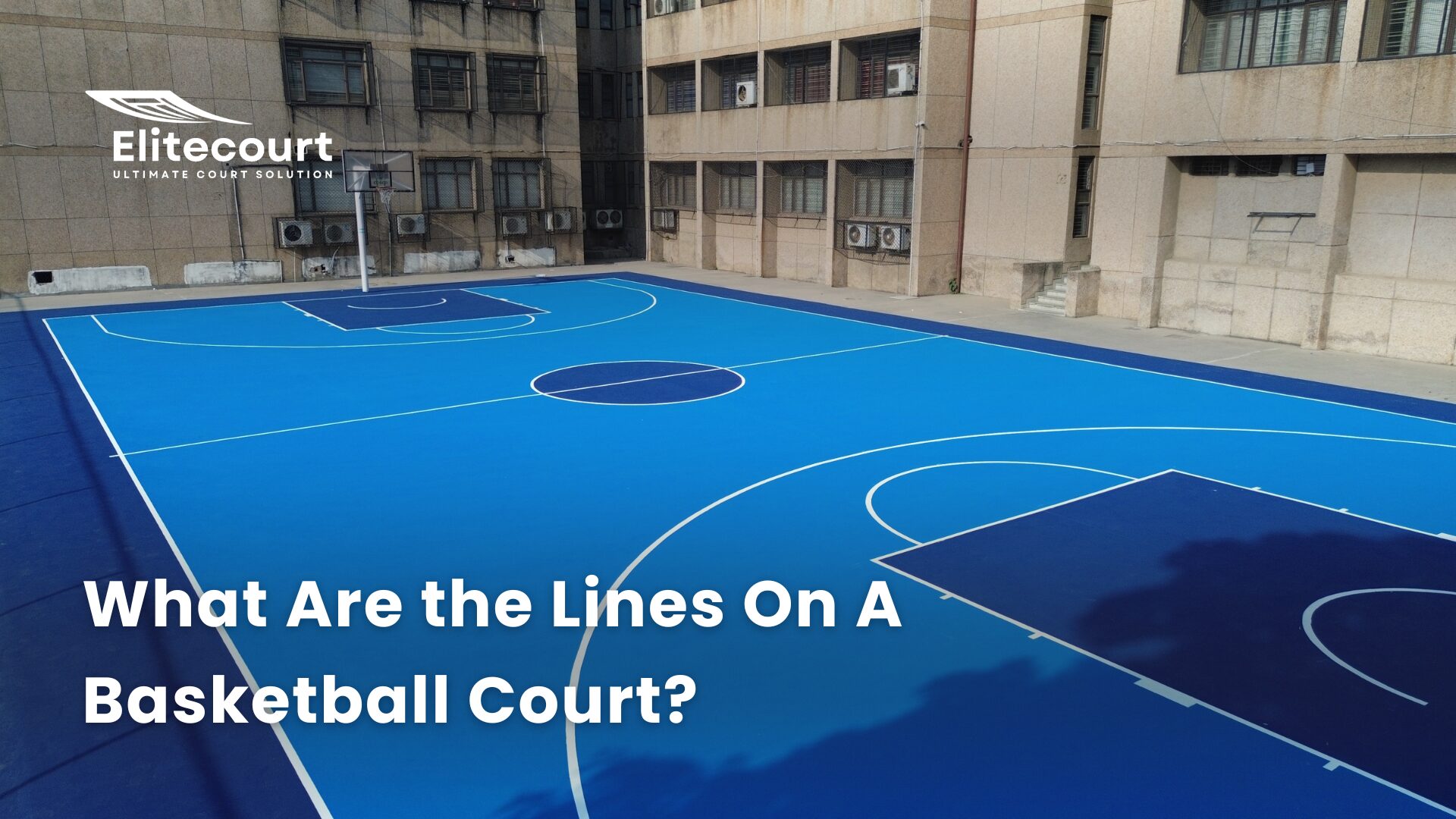
Basketball court lines are the painted markings that define where play happens, where players must stand, how points are scored, and when the ball is in or out of bounds. These lines include the sidelines, baselines, center line, center circle, free-throw line, lane markings, three-point line, and other specialized areas near the basket and benches.
If you want the simple answer, here it is: the lines on a basketball court organize the game. They divide the court into scoring zones, movement zones, restart areas, and regulated player positions. Without them, basketball would lose structure, fairness, and consistency.
That direct answer matters because many people think basketball court markings are only visual guides. In reality, they are part of the game’s rule framework. Officials use them to judge violations. Players use them to space the floor. Coaches use them to design movement. Facility planners use them to ensure the court supports the intended level of play. And manufacturers like Elitecourt must consider how the flooring system supports sharp, durable, and visible basketball court lines over time.
Why Basketball Court Lines Matter
A basketball court is not just a flat playing surface. It is a regulated sports environment where every line has a purpose. Some lines define the legal limits of play. Others control restarts, shooting value, defensive positioning, and rebounding space. Together, they shape how the game feels and functions.
They create structure
The first role of basketball court lines is structure. The outer boundary tells players where the live court starts and ends. The center line splits frontcourt from backcourt. The lane markings create order around free throws and rebounding. The three-point line separates long-range scoring from two-point scoring.
Without this structure, the sport would become inconsistent from one venue to another.
They support fair officiating
Officials rely on clear line markings to make fast decisions. Key calls, such as whether a shooter was behind the three-point line, a player stepped on the baseline, a defender established position outside the restricted area, or a team committed a backcourt violation, are all based on these lines.
That means clarity of court markings is not just cosmetic. It directly affects rule enforcement.
They influence performance
Players react to court markings constantly, even when they are not thinking about them. Ball handlers use lines to orient themselves. Shooters track spacing near the arc. Defenders position their feet relative to the lane and restricted area. Rebounders find lane spaces during free throws. Coaches teach movement using the court’s geometry.
In that sense, basketball court lines are part of player communication. They guide decisions in real time.
They affect facility quality
For sports venues, schools, clubs, and multi-use facilities, the quality of court markings reflects the overall standard of the space. Faded, poorly aligned, or confusing lines reduce usability. Clean, accurate markings improve function and confidence.
This is especially important on synthetic acrylic sports court flooring, where the surface system and line-marking compatibility both matter for appearance and long-term wear.
Expert tip: The best basketball court lines are not only accurate on day one. They stay visible, consistent, and easy to read under repeated use and changing light conditions.
Main Basketball Court Lines and Areas
To understand the court as a whole, it helps to look at the complete set of common markings.
Core basketball court lines
- Sidelines
- Baselines or end lines
- Center line
- Center circle
- Three-point line
- Free-throw line
- Free-throw lane lines
- Lane space marks
- Restricted area arc or no-charge semicircle
- Inbound markings near the baseline or sideline
- Team bench and scorer’s table area markings in some regulated settings
Core basketball court areas
- Backcourt
- Frontcourt
- Perimeter
- The key
- The paint
- Low post and high post zones
- Free-throw semicircle
- Three-point area
- Restricted area under the basket
- Out-of-bounds area
Some of these are formal rulebook terms. Others are common basketball language used by coaches, players, and broadcasters. All of them connect back to the line system on the court.
Basketball Court Lines Quick-Reference Table
| Line/Area | What It Is | Primary Purpose |
|---|---|---|
| Sidelines | Long boundary lines on each side | Define the lateral limits of the court |
| Baselines / End Lines | Boundary lines behind each basket | Mark the end limits of the playing area |
| Center Line | Line across the middle of the court | Divides backcourt and frontcourt |
| Center Circle | Circle at midcourt | Used for the opening jump ball and spatial reference |
| Three-Point Line | Arc around the basket area | Separates three-point shots from two-point shots |
| Free-Throw Line | Line in front of the basket area | Marks where foul shots are taken |
| Lane Lines | Parallel lines extending from baseline area | Define the key or paint |
| Lane Space Marks | Small marks along the lane | Show legal player positions during free throws |
| Restricted Area Arc | Arc under the basket | Helps determine charging and blocking positions |
| Bench/Table Markings | Lines near sideline off court | Organize team and official areas |
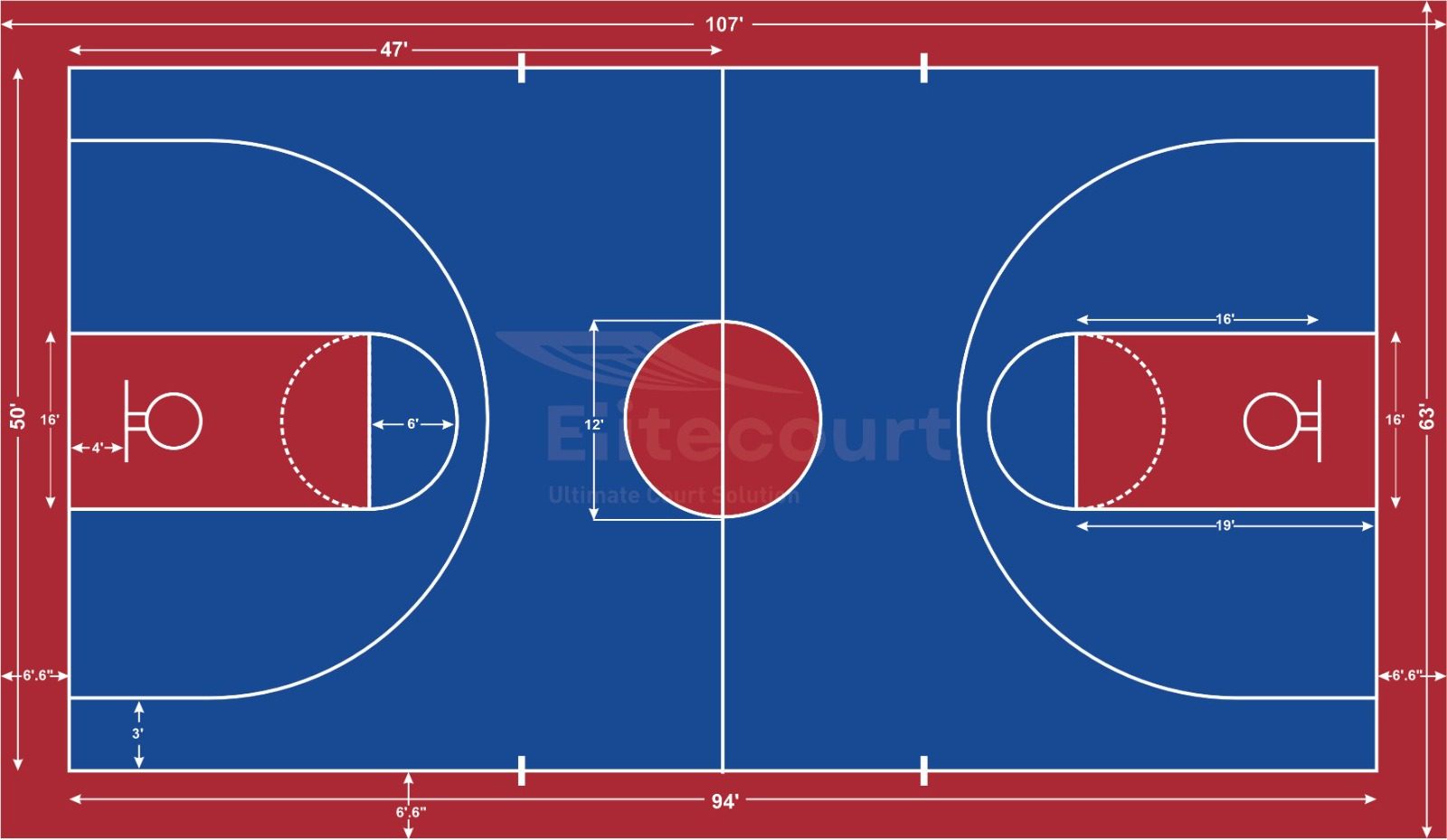
Boundary Lines: The Outer Frame of the Court
The simplest basketball court lines are also the most essential. The boundary lines frame the playable area.
Sidelines
The sidelines run along the two longer sides of the court. When the ball or a player holding the ball touches or crosses these lines, the ball is out of bounds. Sidelines also matter for inbound plays, coaching space, and bench area planning.
Because sidelines are used constantly, they must remain easy to identify. On facilities with multiple sport overlays, this can become a challenge. If too many colors compete for attention, the basketball sidelines may lose visual dominance.
Baselines or end lines
The baselines, also called end lines, run behind each basket. They define the back edge of the playing court and are central to inbounding, scoring continuation, and out-of-bounds calls. Players often move at high speed along the baseline during layups, closeouts, and transition defense, so clear visibility is critical.
In many conversations, people casually say “baseline” and “end line” as if they mean slightly different things, but both refer to the same boundary in common use.
Why boundary lines matter more than people think
Boundary lines seem basic, but they affect almost every possession. A single foot on the line changes a legal save into a turnover. A baseline position changes the angle of an inbound pass. A well-defined edge helps players judge spacing and momentum.
On acrylic court systems, the line quality around boundaries should remain crisp because boundary calls often depend on fine visual margins.
The Center Line and Center Circle
The court’s midpoint creates one of the game’s most important organizational zones.
Center line
The center line divides the court into two halves: backcourt and frontcourt. This line matters for backcourt rules, ball advancement, defensive pressure, and game tempo. Once a team establishes possession in the frontcourt, certain leagues restrict returning the ball to the backcourt.
That makes the center line more than a midpoint stripe. It is a rule boundary with strategic consequences.
Center circle
The center circle sits at midcourt and is most closely linked to the opening jump ball. It also gives players and officials a strong visual landmark. Coaches use the center circle in drills, press breaks, transition spacing, and half-court setups.
Even though jump-ball procedures may vary by level of play, the center circle remains a standard visual feature of the court.
Design value of midcourt markings
From a facility perspective, the center line and center circle contribute to court identity. These lines are highly visible in photos, broadcasts, and live viewing. Their neatness helps shape first impressions of the venue.
The Three-Point Line
Among all basketball court lines, the three-point line may be the most recognized by casual fans. It defines one of the most important scoring boundaries in the sport.
What the three-point line does
A shot made from beyond the three-point line counts for three points. A shot made with the shooter’s foot on or inside the line counts for two points. That simple distinction has transformed modern basketball strategy.
The line changes:
- Shot selection
- Floor spacing
- Defensive rotations
- Offensive sets
- Transition priorities
Why the three-point line matters strategically
Because three-point shots offer greater scoring value, teams design offenses to create open looks behind the arc. Defenders, in turn, extend pressure farther from the basket. This stretches the game horizontally and opens space in the lane.
As a result, the three-point line is not just a scoring marker. It acts as a strategic boundary that changes player positioning on every possession.
Arc shape and corner areas
Most courts use an arc connected to straight segments near the sidelines or corners, depending on the governing standard. The exact shape varies, but the purpose remains the same: create a consistent distance boundary from the basket.
Corners deserve special attention because they often produce high-value shot opportunities. That means accurate line geometry matters. A small visual error can create confusion for shooters, coaches, and officials.
Surface contrast and readability
The three-point line should remain highly legible against the base color of the court. If the contrast is weak, it becomes harder for players to judge foot placement, especially during fast catch-and-shoot actions.
Expert tip: On synthetic acrylic basketball courts, line visibility depends on both color contrast and surface finish consistency. A great-looking court still needs line clarity from every viewing angle.
Transform Your Sports Facility Today!
Contact us for high-quality synthetic sports flooring material and elevate your space!
The Free-Throw Line and Free-Throw Lane
A free-throw line is one of the most important markings in basketball because it connects directly to foul administration, player positioning, and scoring opportunities.
The free-throw line
This is the line from which a player attempts an uncontested foul shot after certain types of fouls. It stands at the center of the court’s lane structure and is one of the most frequently used reference points in both games and training.
A free throw looks simple, but the line creates a formal reset moment in the game. It pauses live action, places players in assigned spaces, and restores structure.
The free-throw lane
The area around the free-throw line is often called the lane, key, or paint, though those terms are not always identical in strict technical use. The lane is bounded by parallel lines extending from the end line toward the free-throw line.
This marked zone serves several functions:
- It organizes player positions during free throws
- It defines a central interior scoring area
- It supports post play, help defense, and rebounding
- It creates visual structure beneath the basket
Lane violations and positioning
During free throws, players occupy designated spaces along the lane lines. These markings help officials manage fairness and timing. If players enter too early or violate positioning rules, the shot may be reset or ruled differently depending on the competition rules.
This is a strong example of how small court lines control detailed game behavior.
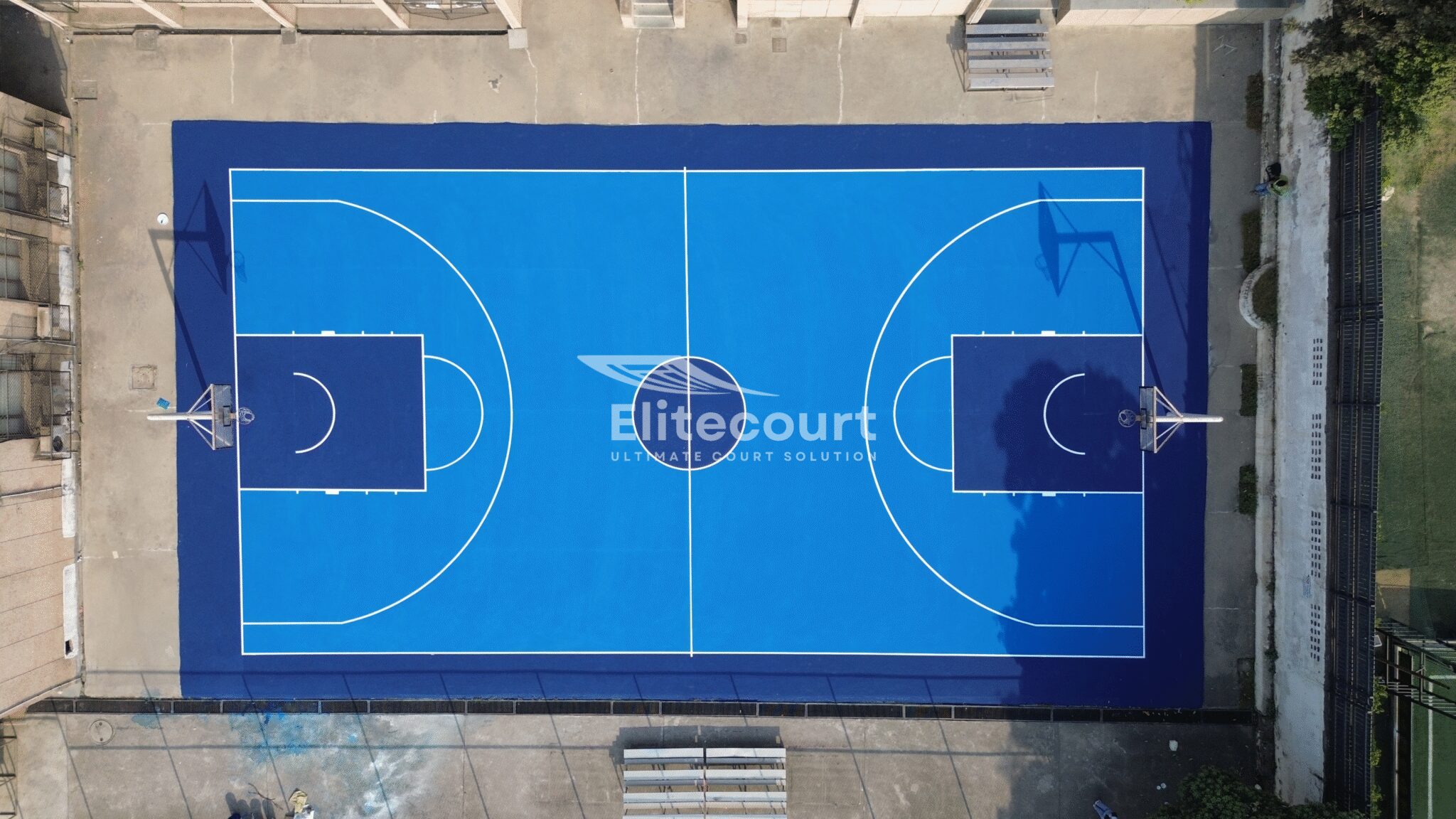
The Key, Paint, and Restricted Areas
These interior court zones are some of the most discussed areas in basketball because they influence shot quality, contact, rebounding, and interior defense.
What is the key?
The key is the marked area extending from the baseline to the free-throw line, including the lane and free-throw circle structure. The term comes from older court designs that resembled a key shape. Today, many people still use it as a general label for the painted lane area.
What is the paint?
The paint usually refers to the filled or visually distinct area inside the lane lines. Coaches talk about points in the paint, protecting the paint, and attacking the paint. While the term is more visual than legal, it is central to basketball language.
Why these areas matter
The interior court area influences:
- Rim attacks
- Post-ups
- Help defense
- Shot contests
- Rebounding angles
- Shot-blocking timing
Because so much action happens here, line accuracy matters a great deal. The lane must read clearly both to players on the floor and to officials making contact judgments.
The Basket Area and No-Charge Semicircle
Close to the basket, small markings can have major rule effects.
Restricted area arc
The restricted area arc, often called the no-charge semicircle, is located under the basket. Its purpose is to help officials judge whether a defender is in a legal position to draw an offensive foul on a driving player.
While exact enforcement depends on the competition rules, the concept is simple: position relative to this arc affects the charge/block decision.
Why this line is important
This arc:
- Protects offensive drives near the rim from unsafe defender positioning
- Clarifies officiating in fast, high-contact plays
- Encourages more consistent interpretation under the basket
Even though it is smaller than the three-point line or lane, it often influences some of the game’s most dramatic calls.
Hash Marks, Lane Spaces, and Player Positioning Lines
Not every basketball court line is large or obvious. Some of the most functional markings are small.
Lane space marks
Along the free-throw lane, you may see short marks that indicate where players should stand during free throws. These are essential for legal positioning and rebounding fairness.
Coaching and player development value
These markings also help in training. Coaches use them to teach:
- Rebounding alignment
- Box-out assignments
- Free-throw routine spacing
- Rotation habits
Why small lines still matter
Smaller markings may seem secondary, but they improve order. Good court design respects these details because basketball depends on precise movement.
Transform Your Sports Facility Today!
Contact us for high-quality synthetic sports flooring material and elevate your space!
Team Bench Areas and Scorer’s Table Markings
Not all basketball court lines are inside the live playing area. Some support the administrative side of the game.
Bench areas
Bench zones help separate team personnel from live play and maintain sideline order. These areas become especially important in competitive environments where coaches, substitutes, and staff need a clearly defined space.
Scorer’s table area
The scorer’s table area supports officials, game timing, substitutions, and scorekeeping. Proper markings improve flow during stoppages and reduce sideline confusion.
Why off-court markings matter
Even though they do not directly affect shooting or dribbling, these lines support game management. A well-marked court is easier to operate professionally.
Differences Between FIBA, NBA, NCAA, and High School Basketball Court Lines
One of the most important things to know about basketball court lines is that they are not always identical across all levels of play. The broad structure is familiar, but dimensions, spacing, and some special areas vary.
What usually stays the same
Across major rule systems, you will still find:
- Boundary lines
- Midcourt markings
- Free-throw structures
- A three-point line
- Basket-area markings
- Lane-related positioning features
What may change
Differences can involve:
- Court dimensions
- Three-point distance
- Restricted area shape or size
- Lane dimensions
- Bench and administrative markings
- Specific measurement methods
For official requirements, facilities should always refer to the relevant governing body. One useful authority is FIBA’s official basketball rules and court standards: https://www.fiba.basketball/documents
Why these differences matter for facilities
A recreational court may prioritize broad usability. A competition venue may need strict compliance with a governing standard. A school may need multi-sport compatibility. A training center may want specific line hierarchy to support drills.
That means planning basketball court lines should begin with a clear understanding of who will use the court and what rule set matters most.
How Basketball Court Lines Affect Game Flow
It is easy to think of court markings as static, but they actively shape the rhythm of basketball.
Transition play
The center line and boundaries define fast-break lanes, trapping zones, and backcourt pressure. Players use them instinctively to measure angles and speed.
Half-court spacing
The three-point line stretches the defense. The lane compresses interior action. Together, these lines determine how offenses create driving lanes and shooting windows.
Rebounding and fouls
Lane markings organize free-throw rebounding. Restricted area lines influence contact calls. Baseline space changes how players finish near the rim.
Tempo and decision-making
Because players constantly reference line positions, the court markings contribute to faster decisions. A guard sees the arc and knows whether to pull up. A defender sees the lane line and shades inward. A wing checks the sideline and adjusts spacing.
This constant interaction is why basketball court lines are part of gameplay, not just decoration.
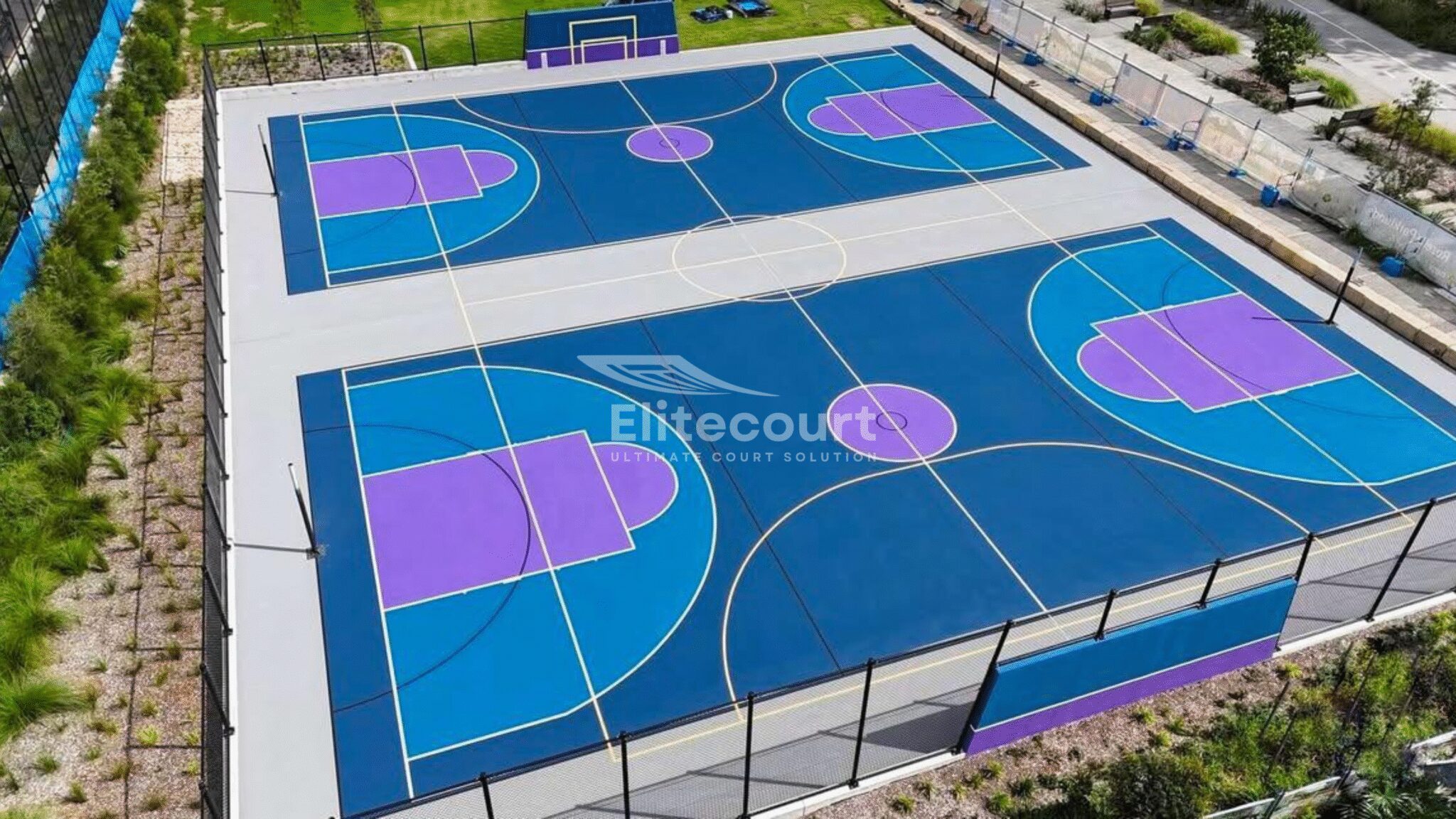
How Line Visibility Depends on the Court Surface
Line markings do not exist in isolation. They sit on top of a sports surface, and that surface affects how well the lines perform over time.
The relationship between lines and flooring
A line may be dimensionally correct, but if the surface underneath does not support visual clarity or coating compatibility, the result may still be poor. On synthetic acrylic systems, line performance depends on:
- Surface texture
- Color contrast
- Coating compatibility
- Weather exposure for outdoor courts
- Routine care practices
Why acrylic sports flooring matters
Elitecourt manufactures synthetic acrylic sports court flooring materials, and that matters because the line system must work with the playing surface. A high-quality acrylic sports flooring system can support:
- Clear line visibility
- Uniform appearance
- Consistent playing feel
- Durable surface performance
- Reliable color separation between court zones
Elitecourt does not install, but as a flooring material manufacturer, it understands that line clarity starts with a properly specified surface system designed for sports use.
Indoor and outdoor considerations
Outdoor courts often deal with:
- Strong sunlight
- Dust and debris
- Moisture exposure
- More visible fading over time
Indoor courts may deal with:
- Artificial lighting glare
- Multipurpose use
- Heavy foot traffic
- Scuff visibility
In both settings, line readability is essential.
Expert tip: If a court is designed for basketball first, the basketball lines should be the most visually dominant markings on the floor.

Best Practices for Planning Basketball Court Lines on Acrylic Sports Flooring
When designing a new sports surface or upgrading an existing facility, basketball markings should be planned carefully from the start.
Define the intended level of play
Before any marking plan is finalized, decide whether the court is meant for:
- Recreation
- School use
- Club training
- League competition
- High-performance practice
- Multi-use community sports
This decision affects line selection, dimensions, and hierarchy.
Choose the governing standard early
If your court must align with a specific rule set, do not leave that decision until later. Line layout should be based on the target standard from the beginning.
Prioritize line visibility
Use strong contrast between the base playing area and the line color. Avoid combinations that become hard to read under sunlight or indoor glare.
Reduce visual clutter on multi-sport courts
Many facilities need markings for several sports. That can work, but only if the hierarchy is controlled. If too many line colors overlap, player confusion increases.
A good marking strategy uses:
- One dominant sport color
- Secondary colors for less frequently used layouts
- Clear spacing and clean intersections
- Logical visual grouping
Match the line plan to the flooring system
Court markings should complement the sports flooring material, not fight against it. The finish, texture, and color plan all affect the final result.
Think about maintenance visibility
A line that looks sharp only in ideal conditions is not enough. The court should remain readable under regular use.
Transform Your Sports Facility Today!
Contact us for high-quality synthetic sports flooring material and elevate your space!
Common Mistakes With Basketball Court Lines
Even when the goal seems simple, facilities can run into avoidable problems.
Using the wrong standard
A court may look correct to a casual observer but still be wrong for its intended use. This creates issues for competition, training consistency, and officiating.
Overloading a multi-use court
Too many overlapping markings can make it difficult for players to identify the live basketball boundaries and scoring zones.
Weak contrast
Poor color contrast makes the lines harder to read, especially from the perimeter, under low-angle light, or during fast movement.
Ignoring surface compatibility
Line quality depends on how the markings interact with the flooring system. The sports surface matters.
Treating basketball lines as an afterthought
Because line marking comes late in many project timelines, it is sometimes rushed. That is a mistake. Basketball court lines deserve planning attention equal to the base court design.
How to Read Basketball Court Lines During a Game
This short section offers a practical way to understand the court in action.
If you are watching offense
Look for:
- Whether the shooter is behind the three-point line
- How the offense spaces players around the arc
- Whether cutters enter the lane
- How close drivers get to the restricted area
If you are watching defense
Look for:
- How defenders position relative to the paint
- Whether help defenders arrive outside the restricted arc
- How traps use the sideline and midcourt line
- How rebounding matchups form along the lane spaces
If you are watching officials
Notice how often they look at:
- Feet on the boundary lines
- Contact near the restricted area
- Positioning around the free-throw lane
- Whether shots begin inside or outside the three-point line
The more you understand the lines, the easier the game becomes to read.
Transform Your Sports Facility Today!
Contact us for high-quality synthetic sports flooring material and elevate your space!
FAQs
The primary lines are the sidelines, baselines, center line, three-point line, and free-throw lane lines. These markings define the playing area, scoring zones, and rules for player positioning.
The three-point line separates two-point shots from three-point shots. A player must shoot from behind this arc to score three points. It is a crucial element of modern offensive strategy and defensive spacing.
No, dimensions often vary. The NBA, FIBA, and NCAA have different specifications for the three-point line distance, lane width, and overall court size.
Clear lines are essential for fair officiating, player safety, and accurate scoring. Faded or confusing lines can lead to missed calls and disrupt gameplay.
Players use lines to judge spacing, shot value, and legal positioning. The lines are fundamental to offensive plays and defensive formations, helping players read the game and anticipate action.
Conclusion
Basketball court lines are the foundation of how the game is organized, played, judged, and understood. They define the legal playing area, separate scoring zones, guide player positioning, support officiating, and shape tactics on every possession. From the sidelines and baselines to the three-point arc, free-throw line, lane markings, and restricted area, each line has a distinct purpose.
For facility owners, schools, clubs, and sports planners, understanding these markings is about more than rules. It is also about creating a court that feels clear, functional, and professional. Strong line visibility depends not only on correct layout, but also on the quality and suitability of the surface beneath it.
Elitecourt supports this goal as a trusted manufacturer of synthetic acrylic sports court flooring materials, helping projects begin with a sports surface system designed for performance, clarity, and reliability. If you are planning a basketball court surface, understanding the role of basketball court lines is one of the smartest places to start.