Introduction: What Exactly Is a Court of Basketball?
A court of basketball is far more than a rectangular slab of flooring with painted lines. It is a precisely engineered space where athlete safety, competitive fairness, and surface performance converge into a single, meticulously standardized arena. Whether you are building a professional NBA-level facility, a school gymnasium, or an outdoor community court, understanding what makes a court of basketball compliant, safe, and competition-ready is fundamental to every decision you make — from the foundational sub-base to the topmost layer of acrylic coating.
At its core, a court of basketball must meet dimensional requirements set by governing bodies such as the National Basketball Association (NBA), FIBA (Fédération Internationale de Basketball), and NCAA (National Collegiate Athletic Association). Each organization specifies court length, width, lane dimensions, three-point line radius, key shape, and dozens of other parameters that collectively define the playing environment. Getting these measurements right is not optional — it is a requirement of fair play and athlete safety.
Beyond dimensions, the flooring surface itself plays a defining role in how the game is played. A court of basketball must deliver consistent ball bounce, reliable traction, shock absorption for joint protection, and long-term durability under heavy foot traffic. This is where the choice of flooring material becomes critical — and where Elitecourt’s synthetic acrylic sports court flooring provides a proven, internationally recognized solution.
In this comprehensive guide, we will cover everything you need to know about a court of basketball: its official dimensions across different governing bodies, the role of the surface material, line-marking specifications, how surface quality affects athletic performance, what to look for in flooring materials, and much more. Whether you are a facility planner, architect, school administrator, or sports body official, this article gives you the complete picture.
The Official Dimensions of a Court of Basketball
NBA Court Dimensions
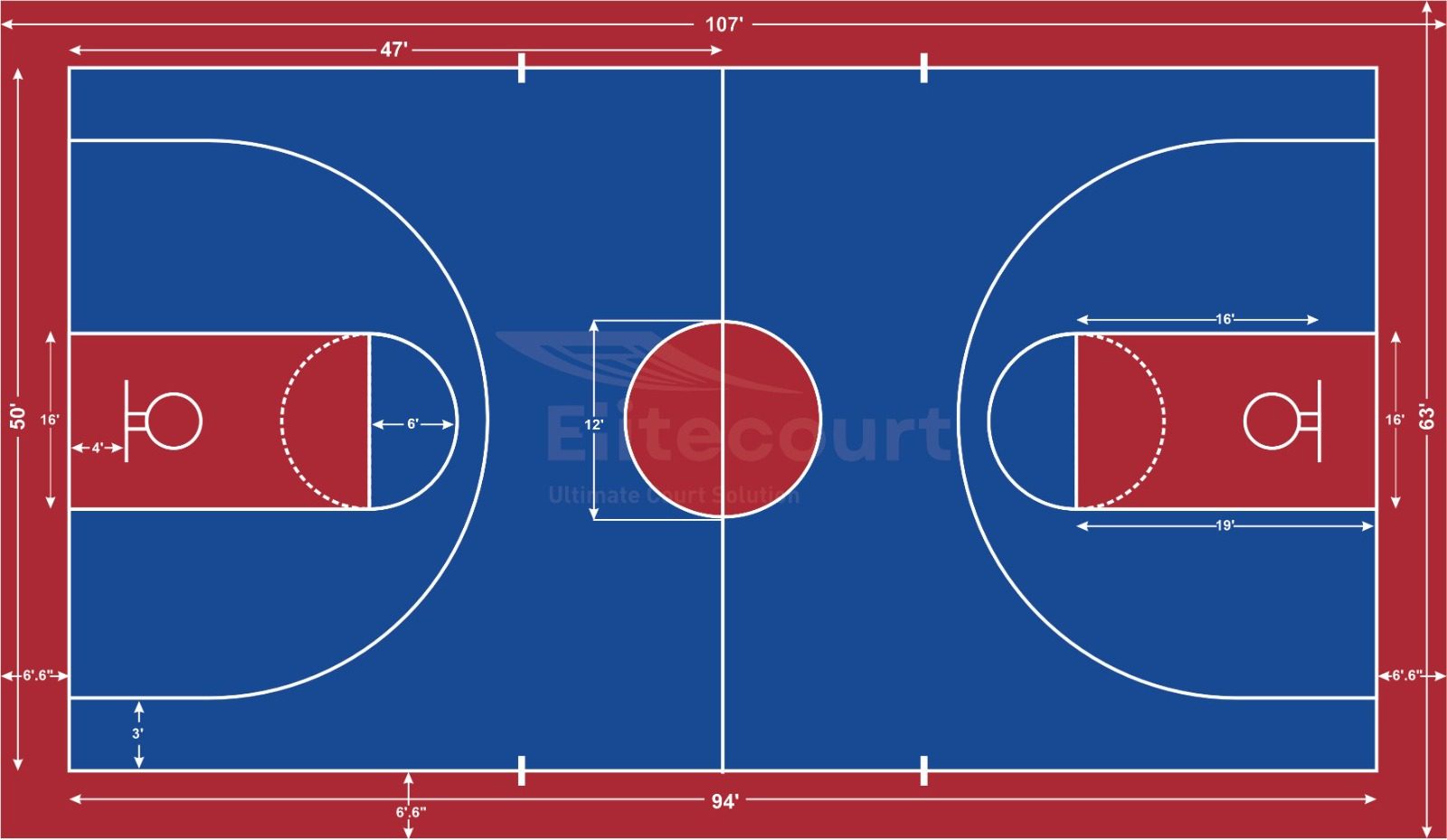
The NBA court of basketball is the standard most people picture when they imagine a professional game. According to NBA specifications:
- Total Length: 94 feet (28.65 meters)
- Total Width: 50 feet (15.24 meters)
- Three-Point Line Distance (corner): 22 feet (6.7 meters)
- Three-Point Line Distance (top of arc): 23 feet 9 inches (7.24 meters)
- Free-Throw Line Distance: 15 feet (4.57 meters) from the backboard
- Key (Paint) Width: 16 feet (4.88 meters)
- Center Circle Diameter: 12 feet (3.66 meters)
The NBA court is the largest standard court of basketball in the world, designed to maximize spacing, facilitate elite athleticism, and provide adequate room for players, officials, and sideline staff.
FIBA Court Dimensions
FIBA, the international governing body for basketball, uses slightly different measurements — primarily because FIBA works in metric units. The FIBA-standard court of basketball is used in the Olympic Games, FIBA World Cup, EuroBasket, and most international competitions.
| Dimension | FIBA Standard |
|---|---|
| Court Length | 28 meters |
| Court Width | 15 meters |
| Three-Point Line (corner) | 6.75 meters |
| Three-Point Line (arc) | 6.75 meters |
| Free-Throw Line Distance | 5.8 meters from backboard |
| Restricted Area (key) Width | 4.9 meters |
| Center Circle Diameter | 3.6 meters |
One of the key differences in a FIBA court of basketball versus an NBA court is the three-point line distance — FIBA’s arc is uniformly 6.75 meters from the basket, while the NBA uses a variable distance with shorter corners. This affects shooting strategy and how the court must be marked.
NCAA Court Dimensions
The NCAA court of basketball, used in American college basketball, closely mirrors NBA dimensions but with a few notable distinctions:
- Total Length: 94 feet (28.65 meters)
- Total Width: 50 feet (15.24 meters)
- Three-Point Line Distance: 22 feet 1¾ inches (6.75 meters) — recently updated to match FIBA
- Lane Width: 12 feet (3.66 meters) — narrower than the NBA
- Free-Throw Line: 15 feet (4.57 meters) from the backboard
The narrower lane in NCAA courts affects how post players position themselves and creates different spacing dynamics compared to the wider NBA key.
High School and Recreational Court Dimensions
For high school basketball governed by NFHS (National Federation of State High School Associations) and community recreational courts, dimensions are slightly smaller:
- Court Length: 84 feet (25.6 meters)
- Court Width: 50 feet (15.24 meters)
- Three-Point Line Distance: 19 feet 9 inches (6.02 meters)
- Lane Width: 12 feet (3.66 meters)
Recreational and half-court setups can vary considerably, but most community installations target a minimum playing surface of 42 feet × 74 feet to accommodate a full game experience in tighter spaces.
Expert Tip: When planning any court of basketball, always clarify the governing body standards that apply to your intended use level — professional, collegiate, high school, or recreational. Building to the wrong spec can disqualify a facility from hosting sanctioned competitions.
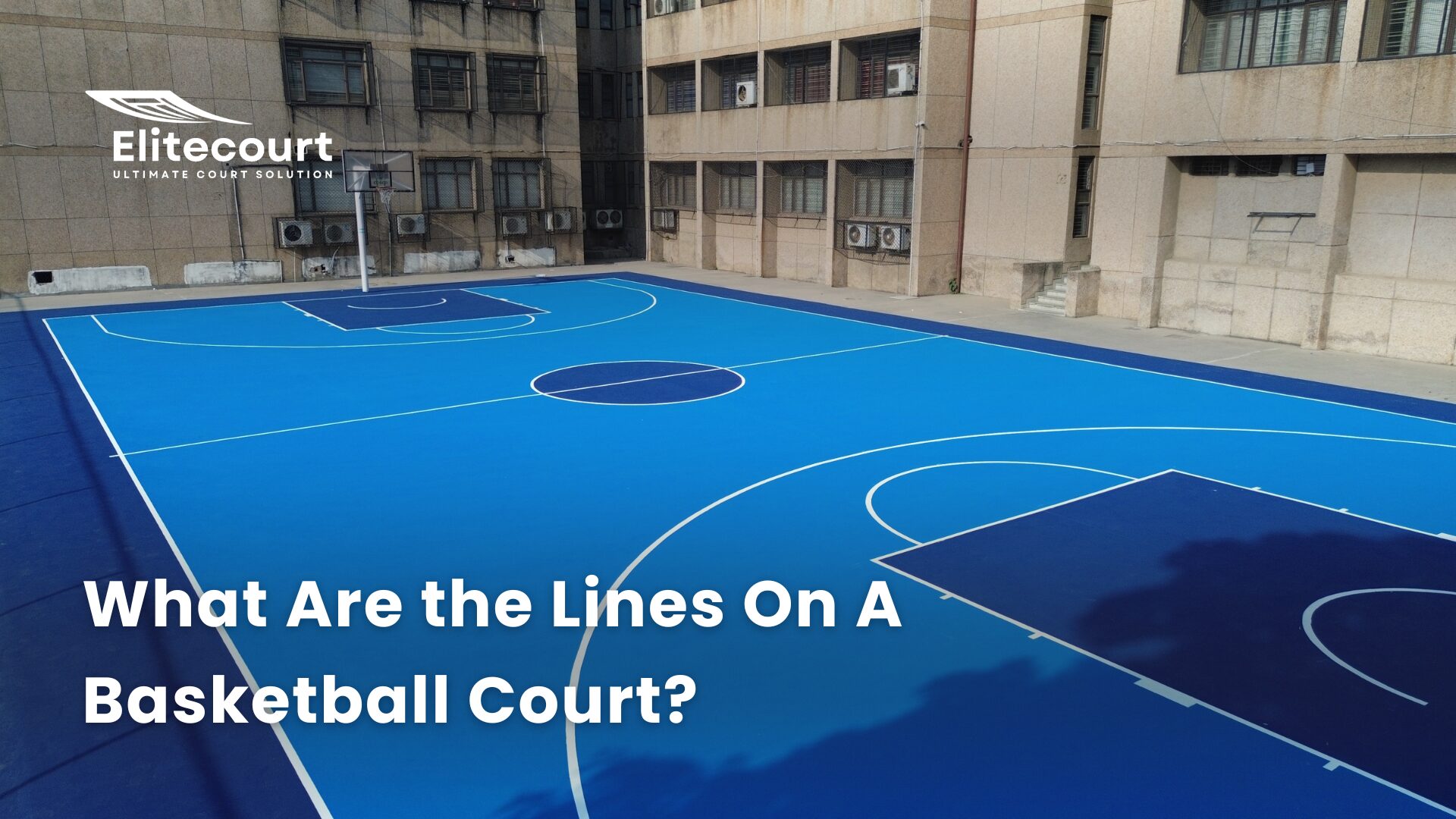
Understanding the Lines and Markings of a Court of Basketball
The line markings on a court of basketball are not merely decorative — they are functional boundaries that govern every aspect of gameplay. A properly marked court is a legal requirement for sanctioned competition. The precision of line placement depends entirely on the quality of the surface below, which must be smooth, consistent, and paint-receptive.
Boundary Lines
Every court of basketball is bounded by sidelines (the two long sides) and end lines (the two shorter ends). The playing area falls entirely within these boundary lines. Players who step on or cross these lines are considered out of bounds, making their precise placement essential.
The Key (Restricted Area / Paint)
The key — also called the lane, paint, or restricted area — is the rectangular zone extending from each end line toward the center of the court. It includes:
- The lane lines (the sides of the key rectangle)
- The free-throw line (extending across the key at the free-throw distance)
- The lane space marks (hash marks along the lane for positioning during free throws)
- The restricted arc (a small semicircle near the basket that governs charging/blocking calls)
In NBA courts, the key is rectangular and 16 feet wide. In older FIBA courts, the key was trapezoidal, but modern FIBA rules now use a rectangular key as well, aligning international court of basketball specifications more closely with the NBA model.
Three-Point Line
The three-point line is arguably the most strategically significant marking on any modern court of basketball. A successful field goal made from beyond this arc counts for three points instead of two, fundamentally shaping team strategy, player positioning, and game pace.
The three-point line has evolved significantly:
- NBA: Corner threes at 22 feet, arc at 23’9″
- FIBA/NCAA: Uniform arc at 6.75 meters (22’1¾”)
- NFHS: Arc at 19’9″
The surface beneath and around the three-point line must be completely flat and consistent — any surface irregularity near this high-traffic zone can cause unpredictable footing for players making or contesting shots.
Center Court Markings
The center circle divides the court into two halves and is used for opening tip-off. Surrounding markings — the half-court line, the jump circle, and the two smaller restraining circles — are all specified in detail by governing bodies. These markings must be painted with precision, requiring a surface that holds paint cleanly without cracking, peeling, or fading under heavy play conditions.
The Critical Role of Flooring in a Court of Basketball
Why the Surface Matters as Much as the Dimensions
You can get every measurement of a court of basketball absolutely right — perfect length, width, three-point distance to the millimeter — and still end up with a dangerous, non-compliant playing environment if the surface is wrong. The flooring of a court of basketball influences:
- Player safety — shock absorption protects joints; grip prevents slipping
- Ball performance — consistent bounce height is essential for fair play
- Game speed — surface friction affects how quickly players can cut and pivot
- Long-term facility viability — a durable surface reduces maintenance costs and downtime
- Compliance — international standards specify surface performance metrics, not just dimensions
FIBA, for example, specifies that approved surfaces must meet performance standards including ball rebound uniformity, slip resistance, and shock absorption. These standards are tested and certified before a facility can host FIBA-sanctioned events.
Synthetic Acrylic Flooring: The Modern Standard for Outdoor Courts
For outdoor courts of basketball, synthetic acrylic sports court flooring has become the globally dominant surface choice — and for good reason. Unlike concrete or asphalt alone, acrylic-coated surfaces deliver a controlled and consistent playing experience that benefits both athletes and facility operators.
Elitecourt’s synthetic acrylic flooring system is engineered specifically for the demands of a court of basketball. Applied over a prepared concrete or asphalt base, the multi-layer acrylic system creates a surface that is:
- Cushioned — the acrylic layers provide measurable shock absorption, reducing joint impact on players who spend hours running, jumping, and landing
- Consistent — ball bounce remains predictable across the entire surface, which is critical for fair competition
- High-grip — the textured acrylic finish provides reliable traction without being abrasive on court shoes
- Weather-resistant — UV-stable pigments and flexible acrylic polymers resist cracking, fading, and water damage in outdoor environments
- Line-ready — the smooth, uniform finish accepts court-marking paint cleanly, enabling precise, professional-looking line work
The Multi-Layer Acrylic System Explained
Understanding how a high-performance acrylic surface is constructed helps facility planners appreciate why material quality matters so deeply. A professional-grade acrylic system for a court of basketball typically consists of several distinct layers:
Layer 1 — Resurfacer / Filler Coat Applied directly to the prepared substrate (concrete or asphalt), this base layer fills minor surface voids, cracks, and imperfections. A smooth, defect-free base is essential for the layers above to perform correctly.
Layer 2 — Cushion Layer For courts where extended play sessions are expected, a cushion layer of textured acrylic is applied. This layer is specially formulated to provide the elastic response that absorbs vertical impact force — protecting knees, ankles, and hips during heavy play.
Layer 3 — Color Coat(s) One or more color coats are applied to create the visual playing surface. These pigmented acrylic layers are UV-stable, ensuring the court of basketball maintains its color vibrancy under prolonged sun exposure.
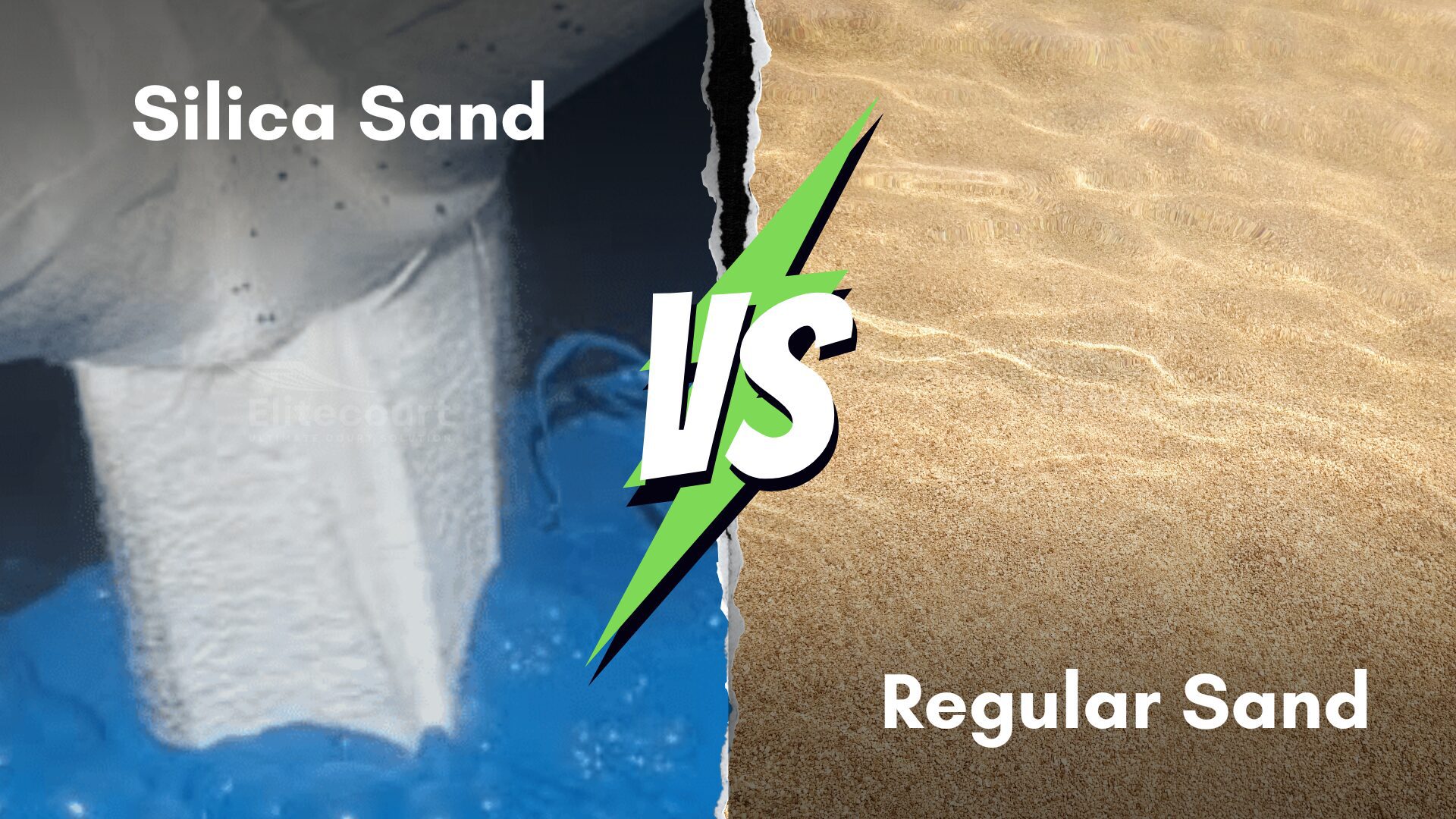
Layer 4 — Texture Coat The final layer includes silica sand or other aggregate mixed into the acrylic to create the characteristic textured surface of a court of basketball. This texture is what generates the controlled grip that athletes depend on.
Line Marking After the surface layers are complete and cured, precise court markings are painted using acrylic-compatible paints, applied according to the relevant governing body’s specifications.
Transform Your Sports Facility Today!
Contact us for high-quality synthetic sports flooring material and elevate your space!
Surface Standards and Compliance for a Court of Basketball
FIBA Surface Requirements
FIBA maintains detailed technical requirements for approved court surfaces, published through its Official Basketball Rules and equipment standards documentation. For a court of basketball to receive FIBA approval, its surface must pass performance tests including:
- Ball Rebound: The ball must rebound to a specified percentage of the drop height consistently across all surface zones
- Shock Absorption: The surface must absorb a minimum percentage of impact force to protect players
- Slip Resistance: The surface must fall within a defined friction range — high enough to prevent slipping, low enough to allow controlled movement
- Surface Regularity: The surface must be flat and level within defined tolerances — no bumps, waves, or depressions
These requirements apply to both indoor and outdoor courts of basketball and must be verified by accredited testing.
You can review FIBA’s official technical standards and equipment approvals at the FIBA Equipment Centre, the authoritative global resource for basketball facility compliance.
NCAA and NFHS Standards
While NCAA and NFHS do not maintain the same certification infrastructure as FIBA, both organizations specify surface performance expectations in their facility guidelines. NCAA-compliant courts of basketball must have surfaces that support consistent ball bounce, player safety, and appropriate footwear grip. Facilities hosting major NCAA events are subject to inspection and approval processes managed by the NCAA.
The Importance of Using Certified Flooring Materials
For facility planners and administrators, specifying a certified flooring material is not merely a best-practice recommendation — it is often a contractual or regulatory requirement. Hosting sanctioned competitions at any level typically requires documentation that the court of basketball surface meets the relevant performance standards.
Elitecourt’s synthetic acrylic flooring products are formulated to meet international sports flooring performance standards, giving facility operators the confidence that their court of basketball is built to last and play to specification.
Transform Your Sports Facility Today!
Contact us for high-quality synthetic sports flooring material and elevate your space!
Designing a Court of Basketball: Key Planning Considerations
Choosing Between Indoor and Outdoor Applications
The first major decision in any court of basketball project is whether the facility will be indoor or outdoor. This choice affects virtually every aspect of surface specification:
Outdoor courts of basketball must contend with UV radiation, rain, temperature cycling, and freeze-thaw stress. Synthetic acrylic flooring excels in outdoor applications because its flexible polymer chemistry resists cracking under thermal expansion and contraction, while UV-stable pigments prevent color fade under direct sunlight.
Indoor courts of basketball more often use hardwood flooring as the traditional surface, particularly at the professional and high-college level. However, synthetic acrylic and rubber-based indoor surfaces are increasingly used in school gyms, multipurpose sports halls, and training facilities where cost, durability, and multi-sport use are priorities.
Sub-Base Preparation: The Foundation of Performance
No surface material — however advanced — can compensate for a poorly prepared sub-base. The sub-base is the concrete or asphalt foundation on which the playing surface is laid. For a court of basketball, sub-base requirements include:
- Flatness: Maximum allowable deviation across the surface (typically ±3mm over 3 meters)
- Structural integrity: The base must support the weight and impact of athletic use without flexing, settling, or cracking
- Drainage: Outdoor courts must be designed with adequate slope (typically 1% in a single direction) to prevent water pooling
- Cure time: Newly poured concrete must fully cure before any surface coating is applied — premature application can trap moisture and compromise adhesion
Elitecourt provides technical guidance on sub-base specifications to help facility planners, architects, and contractors ensure the foundation is ready to receive high-performance acrylic flooring.
Court Orientation
For outdoor courts of basketball, court orientation relative to the sun is a practical consideration that significantly affects play quality. The ideal orientation runs the court north-south, minimizing the impact of direct sun glare into players’ eyes during morning and late afternoon play. Where site constraints prevent a true north-south orientation, shading structures such as canopies or shade sails can mitigate glare issues.
Multi-Sport Court Considerations
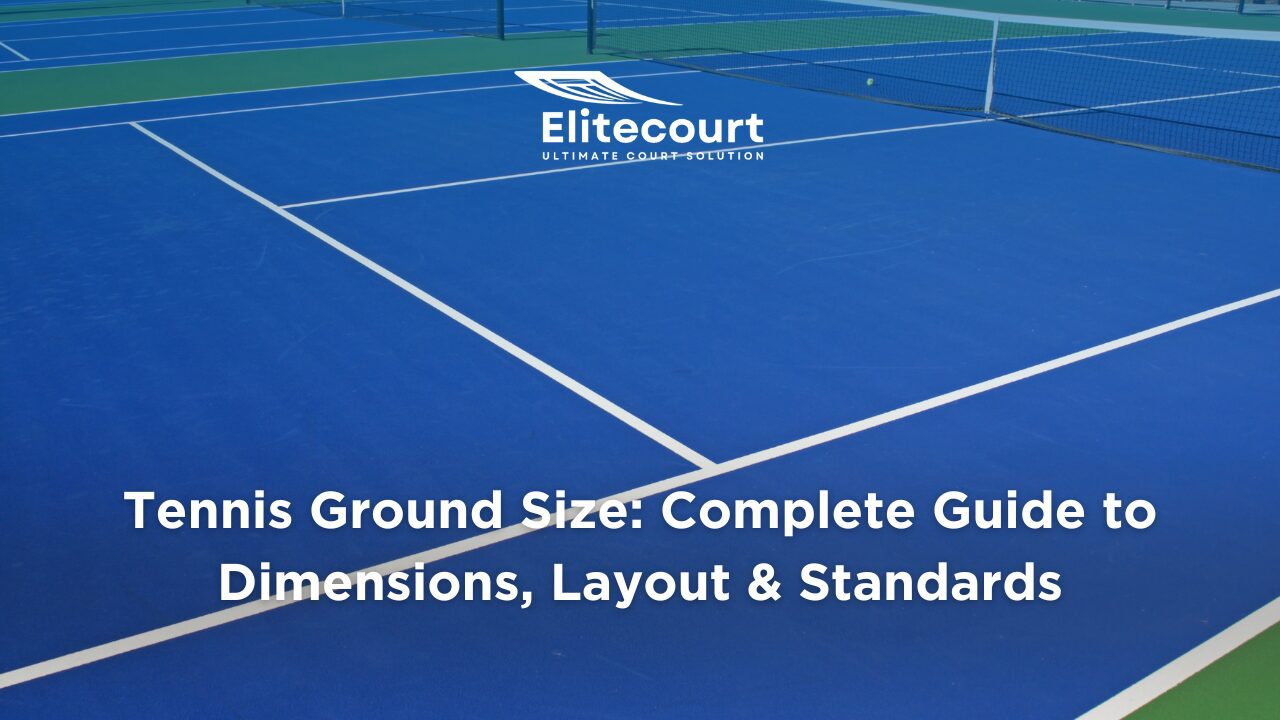
Many community and school facilities cannot justify building a dedicated single-sport court. Multi-sport courts allow a single surface to serve as a court of basketball, badminton court, volleyball court, tennis court, and more by overlaying multiple sets of line markings in different colors. Synthetic acrylic surfaces are ideally suited to multi-sport applications because:
- Multiple line colors can be applied clearly and distinctly on the acrylic surface
- The surface performs appropriately for all common racket and court sports
- The durable finish withstands the higher overall traffic of a multi-sport facility
When designing a multi-sport court that includes a court of basketball, the basketball court markings are typically the primary layout, with other sport lines added in contrasting colors to avoid visual confusion during play.
How Surface Quality Affects Athletic Performance on a Court of Basketball
Traction and Injury Prevention
Traction is one of the most critical performance characteristics of any court of basketball surface. Players make rapid changes of direction, explosive lateral cuts, and sudden stops — all of which depend on reliable grip between their court shoes and the floor. A surface that is too slippery risks slips and falls; a surface that is too grippy risks knee and ankle injuries from excessive torsional load during pivots.
High-quality acrylic surfaces are engineered to deliver a precise friction coefficient that balances these demands. The silica aggregate in the texture coat provides grip without being abrasive, and the coating thickness is controlled to maintain consistent texture across the entire court.
Shock Absorption and Joint Protection
The average basketball player lands from jumps multiple times per minute during a game. Over a season, this accumulated impact stress is significant — and the surface of the court of basketball either amplifies or attenuates that stress with every landing. A surface with adequate shock absorption:
- Reduces peak impact force on knees, hips, and ankles
- Delays fatigue during extended play sessions
- Lowers the long-term risk of overuse injuries in frequent players
Elitecourt’s cushioned acrylic systems are specifically formulated to provide measurable shock absorption, making them suitable for facilities where player welfare is a priority — particularly youth sports courts where developing joints need extra protection.
Ball Rebound Consistency
A consistent ball rebound is not just a matter of comfort — it is a fundamental aspect of fair play on a court of basketball. Players develop muscle memory based on how the ball bounces off the floor; inconsistent bounce behaviour across different zones of the court disrupts that muscle memory and can favour certain playing styles over others.
High-quality acrylic surfaces maintain uniform hardness and elasticity across the entire court, ensuring that a ball dropped at the free-throw line bounces to the same height as one dropped in the corner or at center court.
Surface Durability and Long-Term Performance
A court of basketball is a long-term investment. A high-quality acrylic surface should maintain its performance characteristics for many years with appropriate maintenance. Factors that affect long-term durability include:
- Coating thickness — thicker coats resist wear better
- UV resistance — UV-stable pigments prevent color degradation and surface brittleness
- Flexibility — flexible polymer chemistry prevents cracking under thermal cycling
- Maintenance protocol — regular cleaning and periodic resurfacing extend surface life significantly
Elitecourt’s acrylic flooring systems are engineered for long-term performance, using premium-grade polymers and pigments that maintain their properties through years of heavy use and outdoor exposure.
Transform Your Sports Facility Today!
Contact us for high-quality synthetic sports flooring material and elevate your space!
Colour Selection and Court Aesthetics
The Role of Color in a Court of Basketball
Beyond pure function, the visual appearance of a court of basketball is deeply important — to players, spectators, and facility operators alike. Color choice affects:
- Player orientation — contrasting colors between the key, three-point zone, and main court help players quickly identify their position
- Brand identity — school, club, and professional team colors can be incorporated into the court design
- Spectator experience — a visually vibrant court of basketball enhances the atmosphere of competition
- Heat absorption — for outdoor courts, lighter colors reflect more solar radiation, keeping surface temperatures lower
Standard Court Color Schemes
Traditional court of basketball color schemes typically use:
- Main court: Hardwood tan (for indoor-look aesthetics), gray, green, or blue
- Key: A contrasting color — often red, blue, or a team color
- Out-of-bounds: A distinct contrasting border color
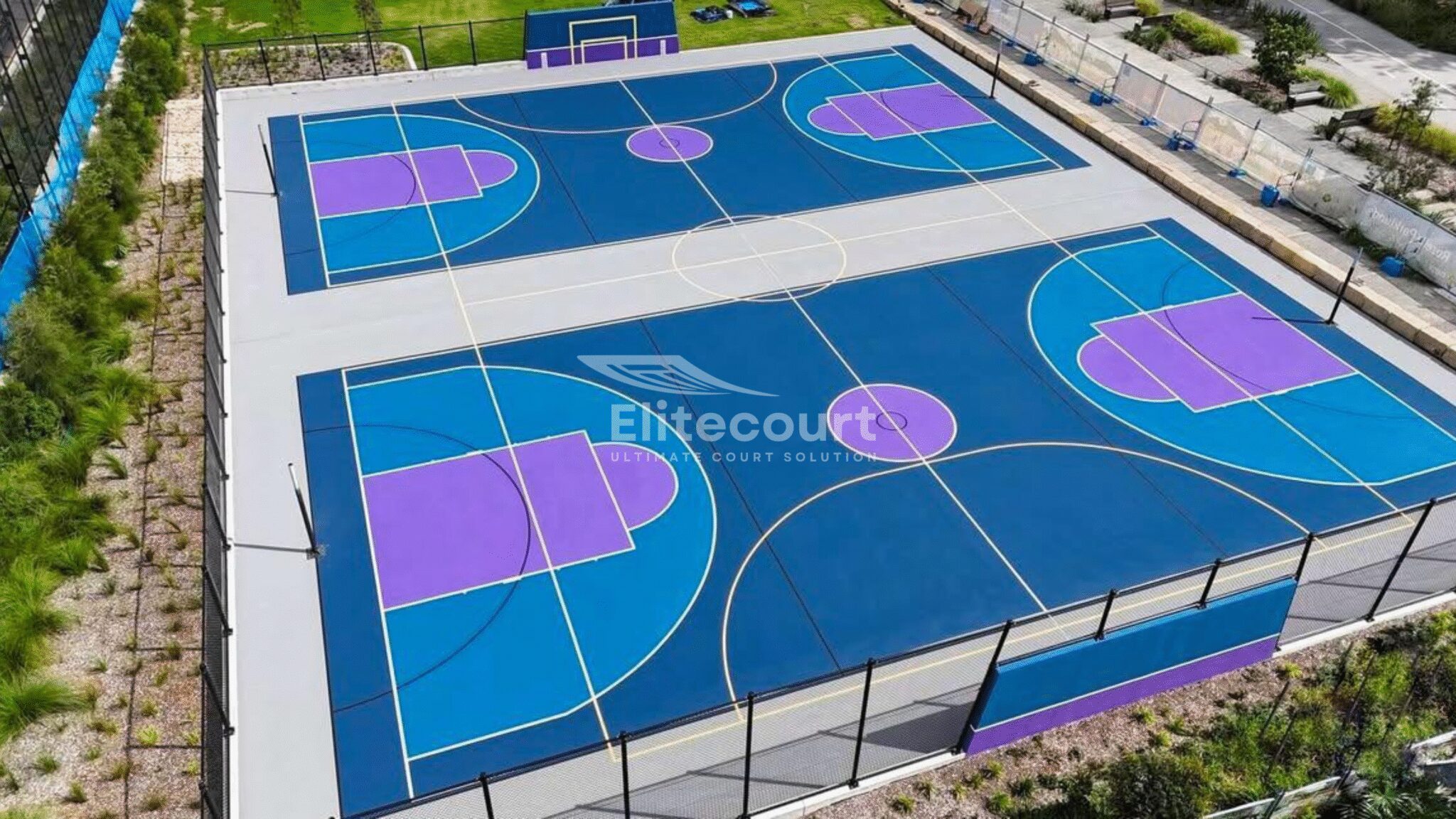
Modern facility design has moved well beyond traditional color schemes. Today’s courts of basketball increasingly feature bold, graphic designs with team logos, gradient color transitions, and creative geometric patterns — all achievable with high-quality acrylic surface paints.
Custom Court Designs
Elitecourt’s flooring system supports full custom color specification, allowing facility operators to design a court of basketball that reflects their institution’s identity or creates a visually distinctive community space. Custom designs are applied as part of the line-marking and color-coat process, creating durable, permanent graphics that are integral to the surface rather than overlaid stickers or decals that peel and wear.
Maintenance of a Court of Basketball Surface
Daily and Weekly Maintenance
Maintaining a court of basketball surface preserves both its appearance and its performance characteristics. Routine maintenance recommendations include:
- Daily sweeping or blowing to remove dirt, grit, and debris that can abrade the surface and reduce traction
- Weekly damp mopping with water and a mild, pH-neutral cleaner to remove surface contamination
- Prompt removal of spills — oils, solvents, and organic materials can degrade acrylic coatings if left in contact for extended periods
Periodic Resurfacing
Over time, even a high-quality acrylic court surface will show wear — particularly in high-traffic zones like the key, free-throw area, and center circle. Periodic resurfacing — the application of new color coat and texture layers over the existing base — restores the surface to near-original performance and appearance without the cost of a complete rebuild.
The frequency of resurfacing depends on:
- Traffic volume — high-use community courts require more frequent attention
- Environmental exposure — coastal environments with salt air and high UV accelerate surface degradation
- Maintenance quality — regularly cleaned and maintained surfaces last significantly longer
Identifying When Resurfacing Is Needed
Signs that a court of basketball surface requires resurfacing include:
- Visible wear patterns or loss of texture in high-traffic zones
- Fading or chalking of court colors
- Surface cracking not related to sub-base movement
- Reduced ball bounce consistency
- Slippery or inconsistent traction feedback
Addressing these signs promptly through resurfacing prevents minor surface degradation from becoming structural damage to the coating system.
Common Questions About Court of Basketball Dimensions
How Does a High School Court of Basketball Differ from an NBA Court?
High school courts governed by NFHS rules are 84 feet long — 10 feet shorter than the 94-foot NBA court — with a shorter three-point line at 19 feet 9 inches versus the NBA’s 23 feet 9 inches arc. The lane width is also narrower at 12 feet compared to the NBA’s 16 feet. These differences are intentional, scaling the court of basketball to the skill level and physical development stage of high school athletes. Playing on a smaller court allows younger players to develop their skills in a space that is appropriately challenging without being overwhelming.
Can a Court of Basketball Be Built on Any Surface?
No — not all foundations are suitable for a court of basketball. The sub-base must be structurally sound, level, and crack-free. Asphalt and concrete are the two standard sub-base materials for outdoor courts. Asphalt is more flexible and forgiving of minor sub-base settlement, while concrete is harder and more resistant to surface indentation. The choice between them depends on site conditions, climate, and budget — but both must be properly prepared before a quality acrylic surface is applied.
What Is the Correct Three-Point Line for a FIBA Court of Basketball?
The FIBA three-point line is set at 6.75 meters (22 feet 1¾ inches) from the center of the basket, measured along the floor. Unlike the NBA, which has shorter corner three distances (22 feet) and a longer arc (23 feet 9 inches), FIBA uses a uniform arc distance all the way around — corners included. This means the FIBA three-point line is a true arc from baseline to baseline, which affects both how the court of basketball is marked and how players position themselves for three-point attempts.
Does the Color of a Court of Basketball Surface Affect Temperature?
Yes — particularly for outdoor courts. Darker surface colors absorb more solar radiation and can become uncomfortably hot in summer climates. Lighter colors — whites, light grays, and pale blues — reflect more sunlight, keeping surface temperatures lower and more comfortable for players. This is an important consideration for any court of basketball in a hot climate. Elitecourt offers a range of color options across the full spectrum, allowing facility planners to balance aesthetic preferences with practical temperature management.
What Is the Restricted Area Arc on a Court of Basketball?
The restricted area arc — sometimes called the no-charge semicircle — is a small arc painted directly under the basket, 4 feet (1.22 meters) from the center of the basket in NBA and NCAA courts, and 1.25 meters in FIBA courts. Its purpose is to prevent defensive players from drawing charging fouls by stationing themselves directly under the basket. If a defender is inside the restricted area arc when contact occurs, an offensive charge cannot be called — only a blocking foul. This marking is mandatory on all sanctioned courts of basketball and must be accurately painted as part of the court’s line-marking package.
Elitecourt’s Approach to Court of Basketball Flooring
Manufacturing Excellence for Sports Surfaces
Elitecourt approaches the manufacture of synthetic acrylic sports court flooring with a deep commitment to performance, consistency, and durability. Every product in the Elitecourt range is formulated using premium-grade acrylic polymers, UV-stable pigments, and carefully graded aggregates that deliver predictable, reliable performance when applied to a court of basketball.
The manufacturing process involves rigorous quality control at every stage — from raw material selection to final product testing. This ensures that the acrylic systems leaving Elitecourt’s facility meet the performance specifications that facility operators and athletes depend on.
Engineered for the Demands of Basketball
Basketball is among the most physically demanding sports in terms of surface stress. Players weighing 80–120+ kilograms are constantly running, cutting, jumping, and landing. Multiply this across a full team, multiple games per day, and years of use, and the demands placed on a court of basketball surface become clear. Elitecourt’s flooring systems are engineered to withstand these demands without compromising on the performance characteristics that matter most: grip, bounce, shock absorption, and visual clarity of markings.
Supporting International and Local Standards
Elitecourt’s products are formulated to support compliance with FIBA surface performance requirements and other relevant international and local sports flooring standards. Facility operators who specify Elitecourt flooring materials for their court of basketball can do so with confidence in the product’s performance credentials.
Transform Your Sports Facility Today!
Contact us for high-quality synthetic sports flooring material and elevate your space!
Environmental Considerations in Court of Basketball Flooring
Sustainability in Acrylic Sports Surfaces
Environmental responsibility is an increasingly important factor in sports facility design. When evaluating flooring materials for a court of basketball, sustainability considerations include:
- Material longevity — a longer-lasting surface means less frequent material use and waste generation from resurfacing
- VOC content — high-quality acrylic formulations minimize volatile organic compound emissions during application
- Water-based chemistry — Elitecourt’s acrylic systems use water-based formulations, which have a significantly lower environmental impact compared to solvent-based alternatives
- Heat island mitigation — lighter-colored outdoor courts reflect solar radiation, contributing to cooler local environments in urban settings
Stormwater Management on Outdoor Courts
Outdoor courts of basketball are impermeable surfaces that shed rainfall rapidly. Responsible facility planning includes stormwater management solutions — drainage channels, permeable surrounds, or detention basins — that prevent court runoff from overwhelming local drainage infrastructure. The slope built into the court’s sub-base design (typically 1% in one direction) facilitates water runoff to designated drainage points.
Frequently Asked Questions
FIBA-standard basketball courts measure 28m x 15m. The three-point line is 6.75m, the key is 4.9m wide, and the free-throw line is 5.8m from the backboard. These specs apply to all international events, including the Olympics and FIBA World Cup.
Synthetic acrylic flooring over concrete or asphalt is ideal. It offers durability, weather resistance, consistent bounce, good traction, and shock absorption—unlike bare concrete or asphalt.
A high-quality acrylic surface can last many years, depending on usage, climate, and maintenance. Regular cleaning and periodic recoating help extend its lifespan.
Yes, multi-sport markings are common. Basketball lines are paired with other sports like tennis or volleyball using different colors to avoid confusion.
Maintenance includes regular sweeping, occasional cleaning, crack repairs, and periodic resurfacing to maintain performance and appearance.
Conclusion: Building the Perfect Court of Basketball
A court of basketball represents the intersection of precise engineering, athletic science, and community investment. From the carefully specified dimensions set by NBA, FIBA, NCAA, and NFHS to the multi-layer acrylic surface system that brings the court to life, every element plays a role in creating a safe, fair, and inspiring playing environment.
The dimensions and line markings define the boundaries of competition. The sub-base provides structural integrity. And the flooring surface — the layer that athletes touch with every step, every pivot, and every landing — determines how well the court of basketball performs in practice, both for the athletes who play on it and for the facility operators who maintain it.
Elitecourt’s synthetic acrylic sports court flooring is engineered specifically to meet the demanding performance requirements of a professional-grade court of basketball, while remaining practical and durable for community, school, and recreational applications. With years of manufacturing expertise, a deep understanding of international sports surface standards, and a commitment to product quality that facility operators worldwide have come to rely on, Elitecourt is the trusted choice for courts of basketball that are built to perform.
Whether you are planning a new court of basketball from the ground up or refreshing an existing surface that has seen better days, the quality of your flooring material is the foundation of everything that happens on the court. Choose a surface that is designed for the demands of the game — choose a surface engineered to the standard that athletes deserve.