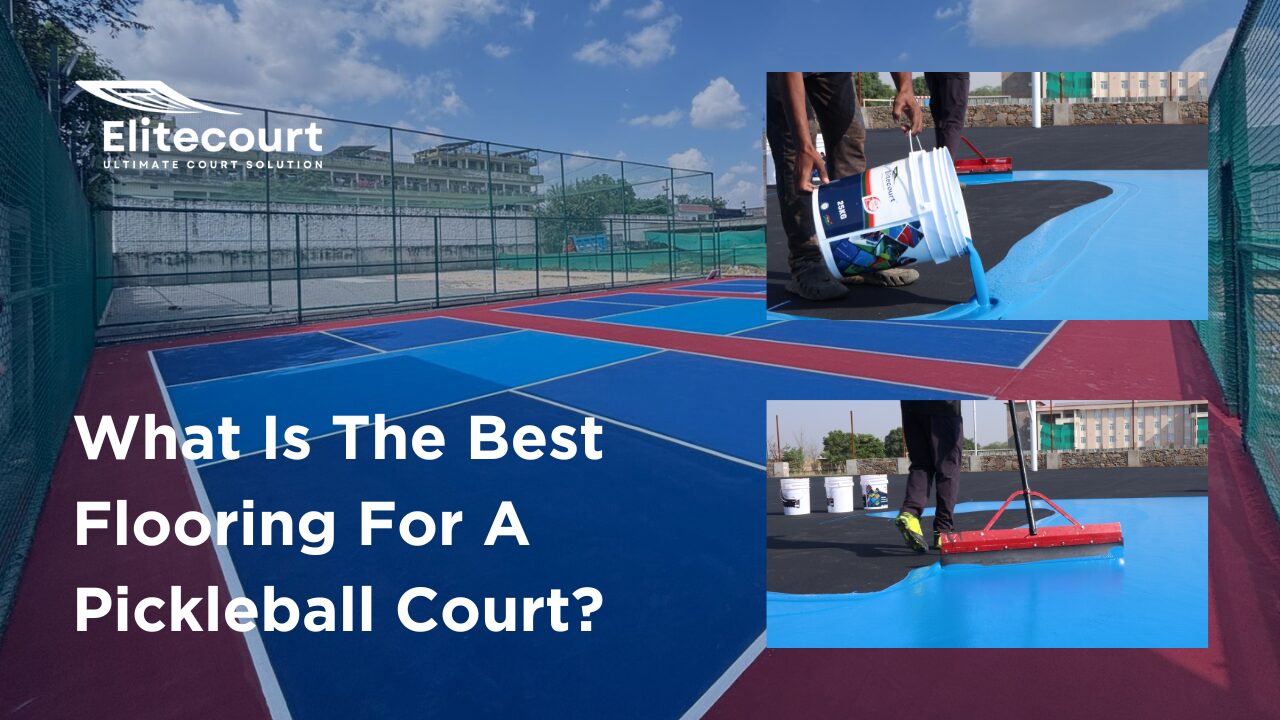
What is the best flooring for a pickleball court? For modern pickleball courts, the best-performing solution is a synthetic acrylic surface system applied over a properly designed concrete or asphalt base. This combination delivers the optimal balance of consistent ball bounce, controlled traction, player comfort, weather resistance, and long-term durability, which is why acrylic-coated courts have become the preferred choice for dedicated pickleball facilities worldwide.
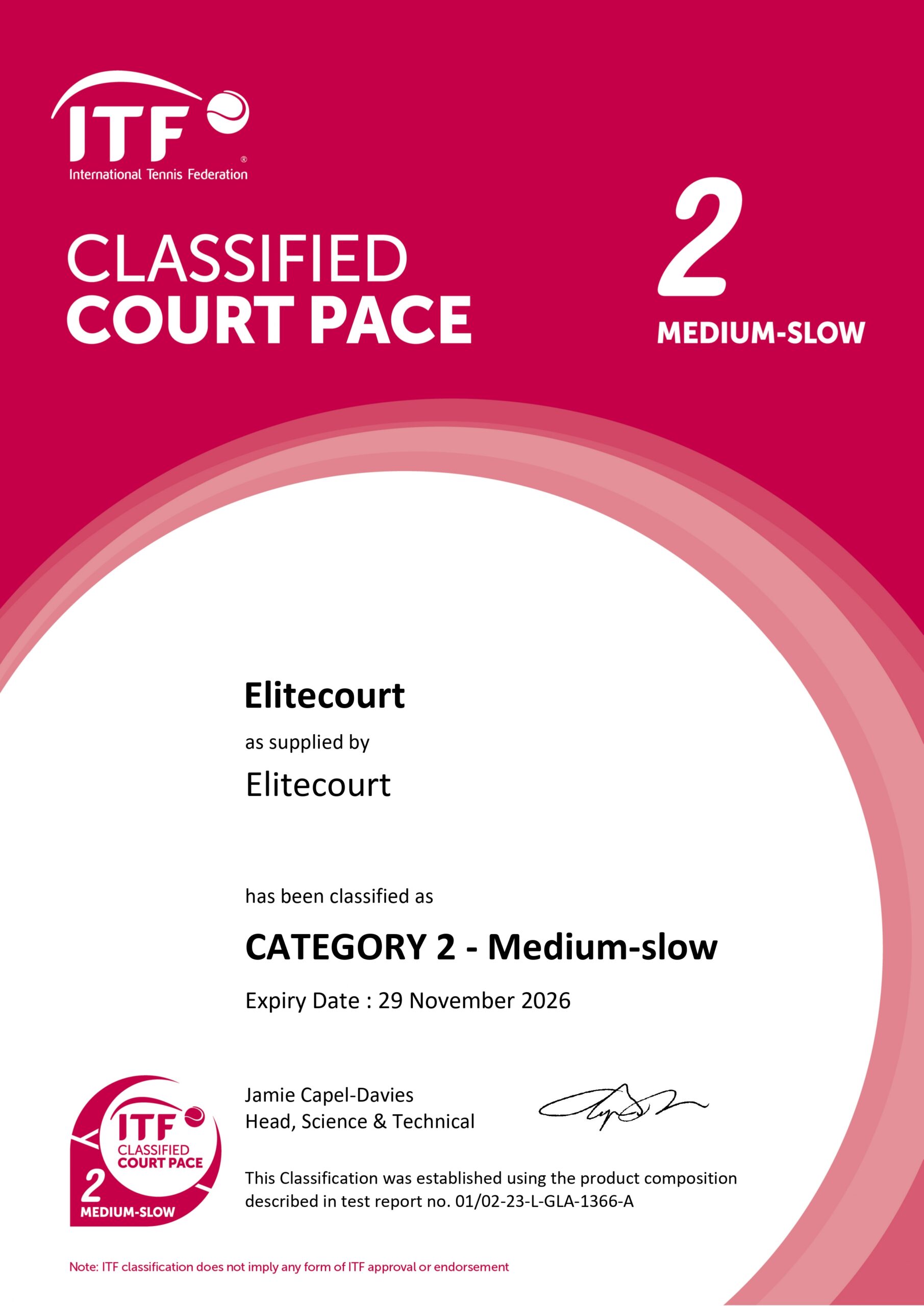
Elitecourt’s synthetic acrylic flooring systems stand out because they are specifically formulated to meet the demands of pickleball play in challenging environments like India’s varied weather patterns, answering what is the best flooring for a pickleball court with precision-engineered materials. These systems ensure that every court surface provides the medium-fast speed, predictable bounce, and secure grip players rely on during intense rallies and precise shots near the non-volley zone. By focusing on material excellence, Elitecourt empowers installers and planners to create courts that perform reliably from the first serve through years of regular use, consistently delivering the best flooring for a pickleball court.
Why surface choice matters for pickleball?
Choosing the right flooring goes far beyond aesthetics or initial setup—it’s the foundation of the entire playing experience. The surface directly affects how the ball behaves, how players move, and how safe and enjoyable each rally feels, influencing everything from casual recreational games to competitive tournaments. In pickleball, where split-second decisions and precise footwork define success, a mismatched surface can frustrate players and lead to suboptimal performance or even injuries.
Key reasons flooring matters for pickleball include the need for surfaces that support dynamic movement patterns unique to the sport, such as quick pivots at the kitchen line and controlled slides during defensive plays. Without the right balance of grip and responsiveness, players face inconsistent ball trajectories that disrupt strategy, while poor shock absorption amplifies fatigue over extended sessions. For facilities investing in pickleball infrastructure, selecting a proven flooring system ensures the court not only meets player expectations but also stands up to heavy usage, maintaining its quality across seasons.
- Ball behavior: The wrong surface can make the ball skid, die, or bounce unpredictably, damaging the quality of play.
- Player movement: Traction that is too low increases slipping, while overly aggressive friction strains joints and causes abrasion injuries.
- Safety and injuries: Hard, uneven, or glossy surfaces can dramatically increase the risk of falls, twists, and long-term stress injuries.
- Court lifespan: A well-chosen system withstands UV, heat, and rain, while inferior surfaces crack, fade, or delaminate quickly under outdoor conditions.
Overview of common pickleball court flooring options
There are several approaches to constructing a pickleball court surface, each with distinct construction methods and performance profiles, but not all deliver the specialized characteristics pickleball demands. The options below primarily address outdoor courts, which represent the majority of new pickleball developments globally due to the sport’s rapid expansion in community and club settings. Understanding these choices helps planners weigh trade-offs in playability, maintenance, and longevity before committing to a build.
Pickleball flooring decisions often hinge on how well a surface replicates the controlled, medium-paced play of professional venues, where consistency is paramount. While temporary or budget solutions exist, high-use facilities prioritize materials that evolve with the sport’s growth, supporting everything from beginner clinics to regional tournaments without frequent overhauls.
Main categories of pickleball court surfaces
- Bare concrete or asphalt
- Concrete/asphalt with acrylic sports coatings
- Modular interlocking tiles
- Artificial turf or grass-like systems
Pickleball flooring types vs performance
Surface options and how they compare for pickleball play:
| Surface type | Typical construction | Key pros for pickleball | Key limitations for pickleball |
|---|---|---|---|
| Bare concrete | Plain concrete slab, broom finish | Low initial setup, firm, good ball speed | Inconsistent texture, higher impact on joints, slippery when wet |
| Bare asphalt | Compacted base with asphalt layer | Flexible, reasonable grip, common in outdoor facilities | Surface oxidizes, cracks, and needs coating for proper bounce |
| Acrylic over concrete/asphalt | Engineered acrylic layers over base | Tournament-style bounce, controlled grip, strong UV resistance | Needs proper base design and periodic resurfacing |
| Modular plastic tiles | Interlocking tiles laid over existing slab | Fast installation, some shock absorption | Less “true” bounce, ball noise, expansion movement in heat |
| Artificial turf/grass-style surfaces | Turf carpet over elastic base or shock pad | Softer feel, multi-use spaces | Ball skids or slows, inconsistent bounce; not preferred for pickleball |
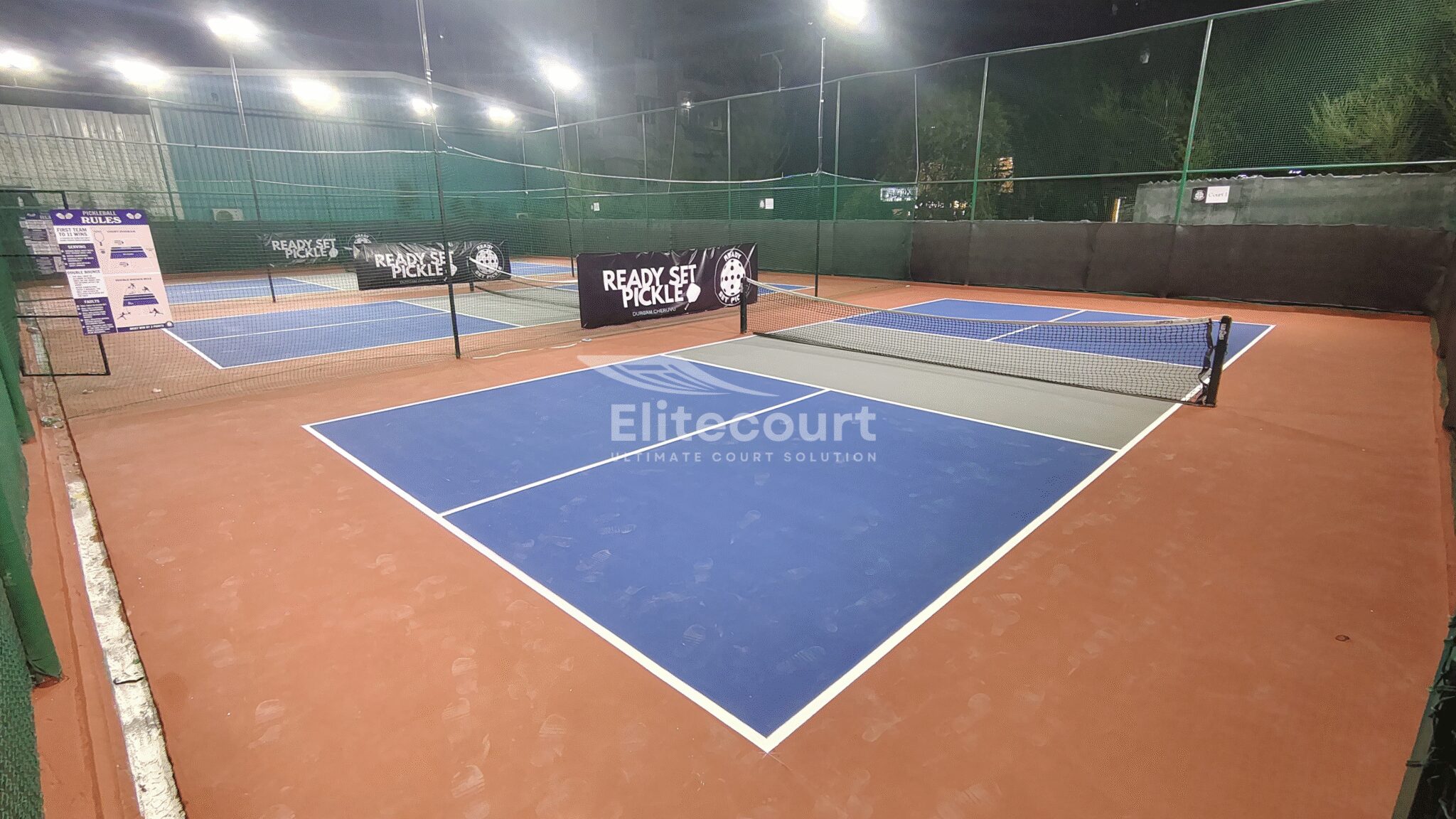
Acrylic-coated concrete or asphalt clearly offers the most pickleball-specific performance, balancing the sport’s need for precision with practical durability, which explains its status as the go-to for serious installations.
Why acrylic over concrete/asphalt is best for pickleball?
Consistent, predictable ball bounce
Pickleball’s gameplay revolves around precise placement, dinks, and fast exchanges at the non-volley zone, all of which hinge on a surface that delivers reliable ball response every time. Acrylic coatings excel here by forming a uniform, sealed surface that eliminates micro-unevenness, ensuring the ball bounce remains identical across baselines, sidelines, and the kitchen. This consistency allows players to develop muscle memory for shots, from lobs to drives, without adapting to quirky dead spots or erratic rebounds common on untreated surfaces.
Beyond initial perfection, these systems maintain their bounce profile through environmental stresses, as the acrylic layers resist softening from heat or hardening from repeated impacts. In tournament settings, where fairness demands uniformity, acrylic’s ability to sustain medium-fast pace supports diverse playing styles, making it indispensable for clubs aiming to host events or nurture talent.
Optimized traction and grip
Modern pickleball requires explosive lateral moves, split-steps, and directional changes that test a surface’s grip under pressure. Elitecourt-style acrylic systems incorporate silica and performance fillers to create a texture that provides high-friction, non-slip grip precisely when players need it most, such as braking into a defensive stance or accelerating for a volley. This engineered friction prevents slips without the abrasiveness of raw concrete, which can lead to skin irritation during slides or falls.
The beauty of acrylic traction lies in its adaptability—surfaces can be fine-tuned for different intensities, from recreational doubles to aggressive singles, while remaining reliable in light dew or dust. Players report greater confidence in movement, knowing the court responds predictably, which translates to fewer interruptions and more fluid rallies over time.
Player comfort and joint protection
Pickleball attracts players of all ages and fitness levels, making joint-friendly surfaces a priority without sacrificing sport-specific responsiveness. Acrylic systems enhance comfort through multi-layer builds with cushion coats that absorb minor impacts, easing stress on ankles, knees, and hips during prolonged play or repetitive drills. Compared to bare slabs, the acrylic film spreads point loads evenly, reducing the jarring feedback that contributes to fatigue or overuse injuries.
For senior leagues or family-oriented facilities, this subtle cushioning creates an inviting environment where players can enjoy longer sessions comfortably. The textured layer further bolsters safety by minimizing slip risks on slightly damp courts, ensuring the surface prioritizes protection alongside performance.
Weather and UV resistance
India’s intense sunlight, monsoons, and temperature swings pose unique challenges for outdoor sports surfaces, demanding materials built for resilience. Synthetic acrylic sports coatings handle these extremes by resisting UV-induced fading and chalking, preserving vibrant colors and clear lines even after prolonged exposure. Their flexible binders accommodate base slab movements from heat expansion, preventing cracks that plague brittle alternatives.
Routine exposure to rain and humidity tests a surface’s integrity, but acrylic’s sealed composition repels water ingress, maintaining texture integrity and preventing mold or delamination. This robustness ensures courts remain playable year-round, supporting India’s burgeoning pickleball scene without seasonal downtime.
Visual clarity and court lines
Clear sightlines elevate gameplay, especially in fast-paced exchanges where tracking the perforated ball against boundaries is critical. Acrylic systems enable high-contrast, non-reflective colors that stand out under harsh sunlight or artificial lighting, reducing eye strain and enabling precise calls on close plays. The matte finish eliminates distracting glare, allowing focus on strategy rather than visual distractions.
Customizable color zones for the kitchen, service areas, and sidelines align perfectly with official layouts, fostering an intuitive court feel. Over time, UV-stable pigments keep contrasts sharp, ensuring the court looks professional and performs visually as intended.
Transform Your Sports Facility Today!
Contact us for high-quality synthetic sports flooring material and elevate your space!
How a high-performance acrylic pickleball court is built?
Elitecourt manufactures synthetic acrylic coating systems precisely calibrated for pickleball, providing installers with reliable materials for layering over engineered sub-bases. This layered approach transforms a basic slab into a specialized surface, where each component contributes to overall playability and endurance. Proper sequencing during application ensures adhesion and uniformity, critical for long-term success.
Facility owners benefit from understanding this build process, as it informs base specifications and highlights why partnering with experienced contractors yields superior results. Elitecourt’s technical guidance supports this workflow, focusing on material performance to complement professional execution.
Typical layer structure for an acrylic pickleball court
A performance-focused pickleball court surface usually follows this stack:
- Compacted sub-base (soil and granular layers prepared by civil works)
- Concrete or asphalt base slab
- Primer to ensure strong adhesion between base and acrylic system
- Base coats / resurfacer layers to smooth and seal the surface
- Optional cushion coats for enhanced shock absorption
- Acrylic color coats with integrated texture for traction
- Line markings for pickleball in contrasting colors
Concrete vs asphalt as the base
Both concrete and asphalt serve as robust foundations for acrylic pickleball courts, each bringing strengths suited to different site conditions. Concrete offers exceptional stability and resistance to rutting, ideal for high-traffic venues where slab integrity underpins decades of use. Proper vapor barriers and curing prevent issues like bubbling under acrylic layers, ensuring a flawless topcoat bond.
Asphalt provides inherent flexibility to handle minor ground shifts, common in expansive Indian sites, while demanding meticulous compaction for a smooth acrylic base. Resurfacers bridge any porosity, creating an ideal canvas for performance layers. Site drainage and slope uniformity remain non-negotiable for both, preventing water accumulation that could undermine the system.
Court dimensions and surface space
Adhering to official dimensions guarantees fair play and safety, with acrylic surfaces extending these specs across the full playing envelope. USA Pickleball rules specify 20 feet wide by 44 feet long for lines, expanding to 30×60 feet or more with buffers for unrestricted movement. This footprint accommodates aggressive baseline rallies and kitchen-line battles, with acrylic ensuring uniform response throughout.
Larger safety margins enhance tournament viability, allowing spectator proximity without interference. Acrylic’s scalability makes it perfect for multi-court arrays, where consistent material application maintains identical play characteristics across adjacent surfaces.
For detailed, globally recognized technical guidance, planners often refer to the USA Pickleball official rules and court specifications, which outline dimensions, space requirements, and line configurations in depth.

Elitecourt’s approach to acrylic pickleball flooring
Elitecourt specializes in synthetic acrylic sports coating systems optimized for India’s climate and pickleball’s performance needs, drawing on proven formulations for racket sports. These materials undergo rigorous testing to deliver surfaces that withstand daily demands while preserving the sport’s finesse-oriented dynamics.
By prioritizing binder quality, filler precision, and pigment stability, Elitecourt ensures every batch supports installers in crafting courts that exceed player expectations. This manufacturer-led innovation bridges material science with practical sports needs, fostering reliable outcomes nationwide.
Engineered systems for pickleball performance
Elitecourt’s acrylic materials are formulated to support:
- True and consistent bounce that aligns closely with expectations on competitive courts.
- Optimized texture using carefully graded fillers to balance grip and sliding control.
- UV-resistant pigments and binders to maintain color and surface life in strong sun.
- Optionally cushioned builds to reduce impact while retaining the “hard court” play essential to pickleball.
Support for diverse project types
Elitecourt’s synthetic acrylic systems are suitable for many project scenarios:
- Dedicated pickleball complexes with multiple courts
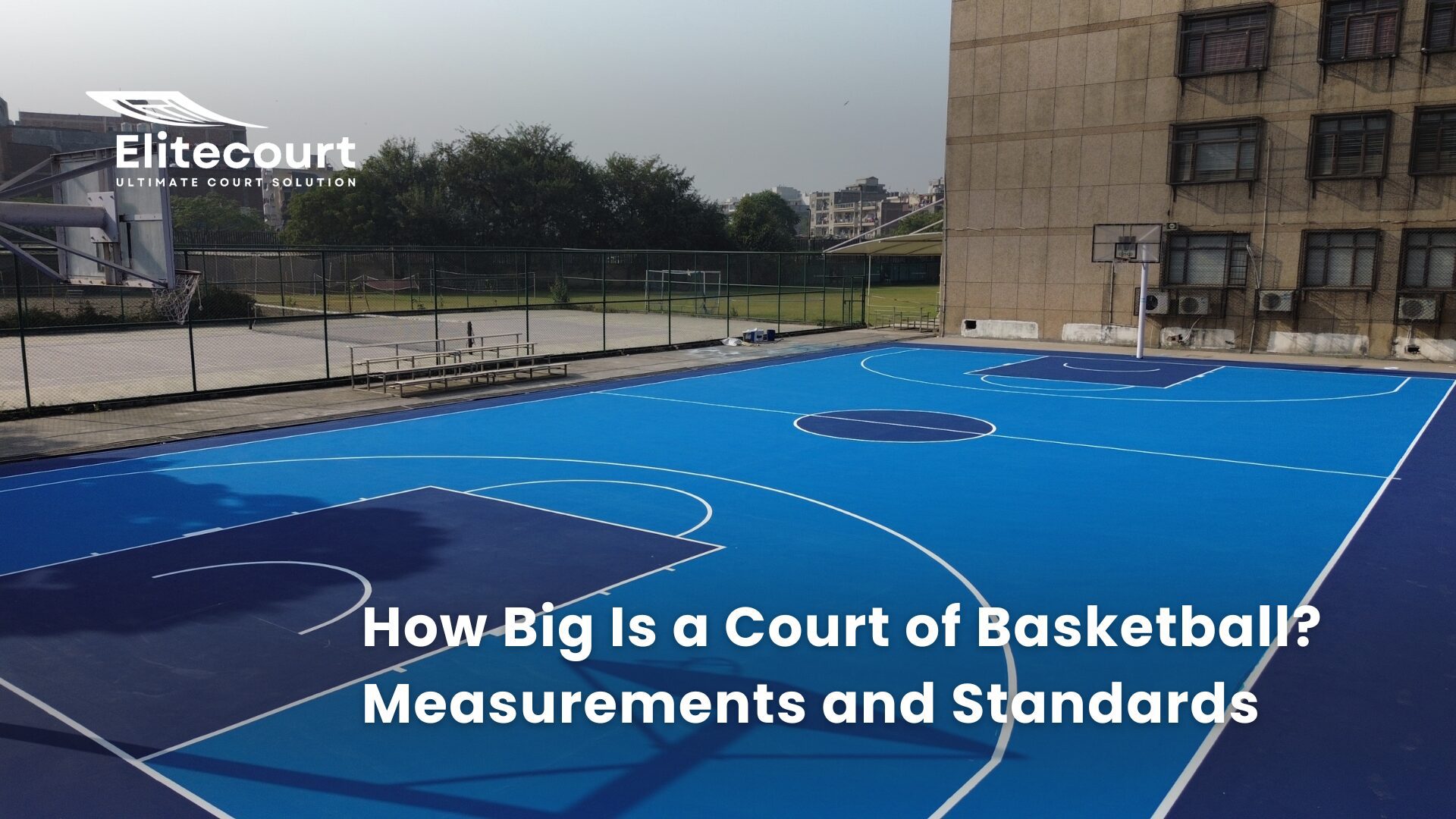
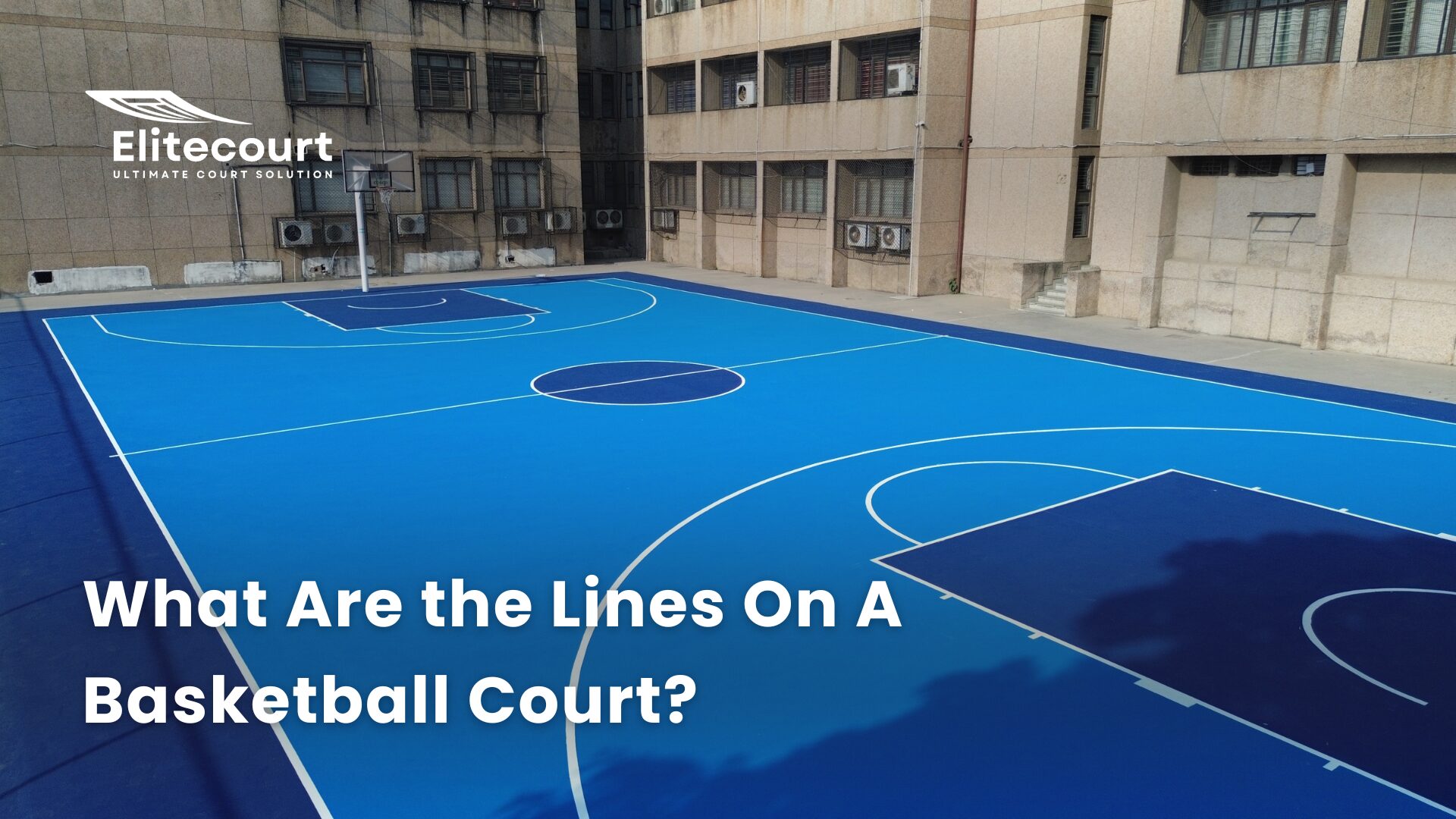
- Conversions of existing tennis or basketball courts to pickleball layouts
- Residential or community courts in villas, clubs, and group housing
- School and institutional facilities adding pickleball to their sports mix
Technical data sheets and specifications guide selection for each context, ensuring optimal layer configurations for base types, usage intensity, and environmental factors. This versatility positions Elitecourt as a key partner for India’s pickleball infrastructure growth.
Evaluating if acrylic is right for your pickleball project?
While acrylic dominates dedicated pickleball courts, thoughtful evaluation ensures it aligns with specific project goals and constraints. This guide walks through key decision points, helping owners match surface choice to intended use and site realities without compromising on quality.
Projects vary from elite academies to neighborhood setups, and acrylic’s adaptability shines across this spectrum when specs are tailored thoughtfully.
Step 1: Clarify the primary use
Ask what the court will be used for most of the time:
- Dedicated pickleball only: Acrylic over concrete/asphalt is usually the best choice, delivering tournament-style performance and durability.
- Multi-sport use with heavy wheels/bikes: Some facilities may have to compromise or protect the surface, since aggressive wheeled use can damage acrylic coatings.
- Recreational backyard play: Acrylic still offers excellent performance but may be paired with softer or customized textures for comfort and quietness.
Elitecourt’s systems can be matched to these different use profiles through layer selection and surface texture options.
Step 2: Assess climate and environment
Key climate-related questions:
- Do you face intense sun and UV for most of the year? Acrylic’s UV stability and colorfastness become especially important.
- Is there heavy monsoon rainfall or standing water risk? Proper surface slope, drainage, and sealed acrylic topcoats help minimize damage.
- Are courts near trees, dust, or industrial pollution? A smooth, sealed acrylic surface is easier to clean than porous raw concrete or rough asphalt.
Elitecourt’s synthetic acrylic coatings are formulated with weather-resilient binders and pigments, making them well-suited to demanding outdoor conditions.
Step 3: Consider player profile and comfort
For facilities serving players of all ages and skill levels, surface comfort becomes critical. Acrylic systems with optional cushioning help:
- Reduce joint fatigue during long sessions or back-to-back matches.
- Make the court more welcoming for older players or beginners.
- Maintain the true bounce required for competitive practice while being slightly kinder to joints than bare concrete.
Fine-tuning these aspects through Elitecourt’s material system selection lets planners align flooring with their audience.
Technical characteristics of a good pickleball flooring system
Surface texture and friction
Optimal pickleball surfaces feature micro-texture from precisely dosed silica and fillers, delivering grip that supports aggressive cuts and pivots without excess drag. This balance prevents slips during wet conditions or quick stops, while avoiding the harshness that wears on shoes or skin. Longevity is key—the texture endures foot traffic, retaining effectiveness far longer than alternatives that polish smooth prematurely.
Elitecourt’s synthetic acrylic coatings are designed with controlled texture profiles that maintain traction and surface feel across extended use cycles.
Ball speed and bounce modulation
The perforated pickleball demands a surface tuned for true vertical bounce and medium pace, enabling tactical depth from power smashes to finesse dinks. Acrylic achieves this through uniform hardness and sealed composition, free of soft spots that disrupt rhythm. Cushion variants modulate energy just enough for comfort, without muting the ball’s lively response essential to the sport.
Synthetic acrylic systems are well-suited to this balancing act, which explains their dominance in modern court construction for pickleball.
Color, reflectance, and visibility
Visibility underpins accurate play, with non-reflective, matte finishes cutting glare for sustained focus during day or night sessions. High-contrast schemes highlight lines and zones, aiding split-second judgments at the net. Durable pigments ensure this clarity persists, unaffected by bleaching or dirt accumulation.
Elitecourt’s acrylic systems make use of color-stable, UV-resistant formulations to maintain visual performance.
Maintenance and longevity of acrylic pickleball courts
Acrylic pickleball courts thrive on straightforward upkeep, balancing ease with effectiveness to extend peak performance. Routine care like debris removal keeps the surface clean and grippy, preventing buildup that alters play or harbors contaminants. This minimal intervention suits busy facilities, freeing staff for programming over scrubbing.
Long-term, acrylic’s renewability sets it apart—resurfacing revitalizes worn layers, bridging minor base imperfections without full reconstruction. Quality formulations from manufacturers like Elitecourt amplify this cycle, yielding surfaces that evolve gracefully under stress.
Routine care
To keep an acrylic pickleball court in good playing condition, facility teams typically:
- Sweep or blow off loose dirt, leaves, and debris regularly.
- Rinse the surface with clean water to remove dust buildup as needed.
- Address small stains or localized contamination with mild detergents compatible with acrylic coatings.
Long-term surface preservation
Over time, all outdoor courts endure wear from UV, weather cycles, and traffic. Acrylic systems are advantageous because:
- The top layers can be renewed by resurfacing, restoring color and texture without rebuilding the base slab.
- Minor cracks in the underlying concrete or asphalt can often be treated and bridged within resurfacing scopes.
- Quality acrylic formulations hold their structure for many seasons when maintained correctly.
Elitecourt’s material systems are designed to integrate into such planned maintenance cycles, partnering with contractors and consultants who handle resurfacing work.
Is acrylic flooring suitable for both indoor and outdoor pickleball courts?
Yes. Synthetic acrylic systems are widely used both outdoors and in covered or partially indoor environments, provided the base construction and ventilation are appropriate. Outdoors, their weather resistance and UV stability shine in exposed settings, while indoors they deliver a clean, uniform texture and predictable bounce ideal for controlled climates and high-volume training. Versatility across environments makes acrylic a flexible choice for expanding facilities.
Can existing tennis or basketball courts be converted to pickleball with acrylic coatings?
In many projects, existing hard courts are successfully converted to pickleball by:
- Inspecting and repairing the base slab (cracks, levelness, drainage).
- Applying or renewing acrylic coatings to restore texture and color.
- Adding pickleball line markings according to official dimensions and layouts.
Elitecourt’s acrylic systems support such conversions by providing consistent material performance tailored to multi-sport or dedicated pickleball configurations.
What makes Elitecourt’s synthetic acrylic materials suitable for Indian pickleball courts?
Elitecourt’s products are engineered with weather-resistant resins, UV-stable pigments, and a performance texture calibrated for outdoor sports in demanding climates. These systems respond well to India’s heat, sunlight, and monsoon patterns, supporting contractors and planners in delivering courts that remain stable, vibrant, and playable through seasonal changes.
Transform Your Sports Facility Today!
Contact us for high-quality synthetic sports flooring material and elevate your space!
Expert tips when planning a pickleball court surface
Expert Tip 1 – Prioritize the base before the coating
Even the best acrylic material cannot compensate for a poorly prepared base. Ensure the concrete or asphalt slab has correct slope, drainage, and curing, as recommended in professional guidelines, to minimize blistering, ponding, and cracking under the acrylic system.
Expert Tip 2 – Choose the right texture level
Work with your design and installation team to select a texture profile that aligns with player expectations: slightly smoother for casual play, or more aggressive for competitive training needing maximum grip.
Expert Tip 3 – Plan for line visibility from day one
Color and line choices should be finalized early so the finished court offers high-contrast, non-glare visibility for fast rallies and accurate calls. Acrylic systems make this easier by supporting robust, pigmented topcoats and durable line paints.
Expert Tip 4 – Build a realistic maintenance plan
Acrylic courts remain high-performing when supported by simple but consistent maintenance—regular cleaning, periodic inspections, and scheduled resurfacing when wear becomes visible. Including this in the planning phase ensures court owners protect their investment over the long term.
FAQs
The best flooring for a pickleball court is synthetic acrylic over a concrete or asphalt base. This system provides tournament-quality consistent bounce, optimal traction, player safety, weather resistance, and long-term durability for clubs and facilities worldwide.
Yes, synthetic acrylic coatings are engineered to withstand intense UV exposure, heat, and rain when applied over properly prepared bases. They perform reliably in India’s sunny climates and monsoon seasons.
Optional cushion layers reduce joint impact while maintaining accurate ball bounce, and the slip-resistant texture enhances safety during movement. This makes acrylic ideal for players of all ages.
Routine daily sweeping and occasional water rinsing keep the surface clean and grippy. Periodic resurfacing every few years refreshes texture and color.
While playable, bare concrete delivers higher joint impact, inconsistent traction, and unpredictable bounce. Acrylic coating transforms it into a high-performance, specialized pickleball surface.
For planners, architects, and sports consultants seeking authoritative design references, the USA Pickleball official court specifications remain a valuable resource for dimensions, layouts, and surface requirements, and pair effectively with Elitecourt’s synthetic acrylic systems to deliver professional-grade pickleball courts.