Introduction: What Goes Into Badminton Court Construction?
Badminton court construction is far more involved than simply marking lines on a flat surface. Whether you are building a court for a residential complex, a school, a sports academy, or a professional tournament venue, the quality of your construction determines not just how the court looks — but how it plays, how safe it is for athletes, and how long it lasts before requiring costly repairs or replacement.
At its core, badminton court construction involves site preparation, sub-base engineering, the choice and installation of a surface material, precise line marking, and net post placement — all governed by international standards set by the Badminton World Federation (BWF). Get any of these elements wrong, and you risk uneven ball bounce, player injury, premature surface degradation, and non-compliance with competition requirements.
This guide walks you through every dimension of badminton court construction in detail — from understanding the standard court layout and sub-surface requirements, to selecting the right flooring material and ensuring your court meets performance and safety benchmarks. Whether you are a facility manager, an architect, a sports academy owner, or a contractor, this is the most complete resource you will find on the subject.
The Foundation of Badminton Court Construction: Understanding BWF Standards
Before any construction begins, it is essential to understand the international regulatory framework that governs badminton court design. The Badminton World Federation (BWF) is the global governing body for the sport, and its Laws of Badminton and Tournament Regulations define the exact specifications that every competitive court must meet.
Even for recreational courts, following BWF guidelines helps players develop proper technique and allows the facility to upgrade for competition use later.
Standard Court Dimensions
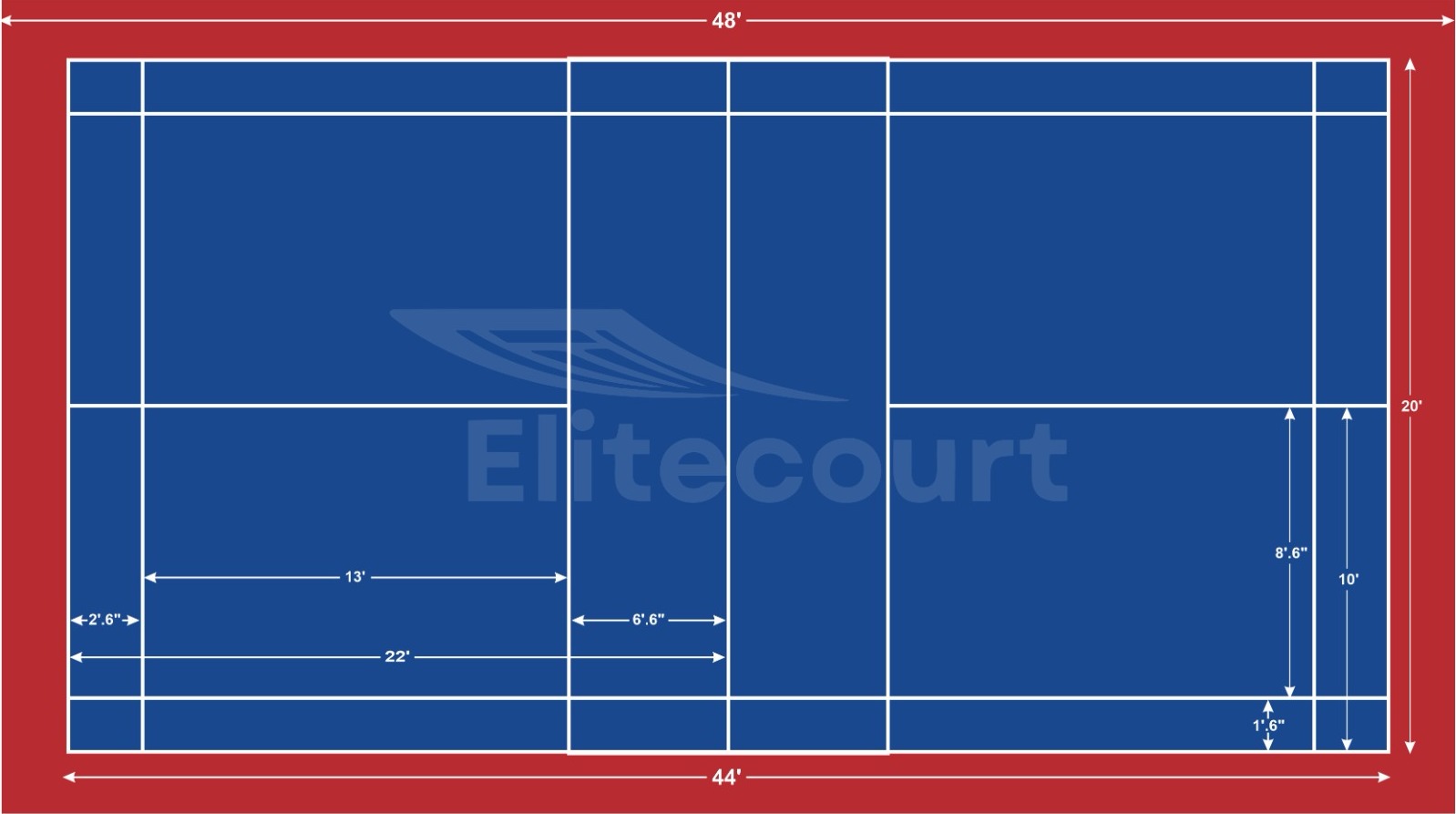
The regulation badminton court is a rectangle measuring 13.4 metres in length and 6.1 metres in width for doubles play. For singles, the court narrows to 5.18 metres, though installers typically mark the lines for both formats on the same surface.
Key Measurements at a Glance
| Measurement | Specification |
|---|---|
| Full Court Length | 13.4 m (43 ft 11 in) |
| Doubles Width | 6.1 m (20 ft) |
| Singles Width | 5.18 m (17 ft) |
| Short Service Line (from net) | 1.98 m (6 ft 6 in) |
| Long Service Line – Doubles (from back boundary) | 0.76 m (2 ft 6 in) |
| Net Height at Centre | 1.524 m (5 ft) |
| Net Height at Posts | 1.55 m (5 ft 1 in) |
| Line Width | 40 mm (all lines) |
Beyond the playing area itself, adequate clearance space is essential. Professional tournaments typically require at least 2 metres of free space on every side of the court. For multi-court halls, corridors between adjacent courts should be at least 2 metres wide, with a recommended height clearance of 9 metres from the floor to the lowest overhead obstruction — whether that is a beam, light fitting, or the roof itself.
Site Selection and Pre-Construction Planning
Successful badminton court construction begins well before the first shovel breaks ground. Proper site selection and planning prevent structural problems, drainage failures, and surface incompatibilities that become expensive to fix after the fact.
Evaluating the Site
The first consideration is whether the court will be indoor or outdoor. This fundamentally shapes every subsequent decision — from the type of sub-base required, to the surface material selected, to the type of lighting system installed.
Outdoor courts face constant assault from rain, UV radiation, temperature variation, and biological growth. They require robust drainage systems, UV-stable surface materials, and anti-slip textures that perform reliably when wet.
Indoor courts offer a more controlled environment but require careful attention to ventilation, humidity control, and the acoustic properties of the floor.
For both types, the site must be evaluated for:
- Soil bearing capacity — the sub-soil must be stable enough to support a concrete or asphalt base without significant settling or cracking over time.
- Natural drainage — the site should slope gently or have drainage channels to prevent water pooling beneath or around the court surface.
- Sun orientation — outdoor courts benefit from an east-west orientation that minimises direct sunlight in players’ eyes during peak hours.
- Access and zoning — proximity to changing rooms, parking, and compliance with local building codes and land use regulations.
Designing the Court Layout
Once the site is confirmed, detailed design drawings should be prepared. These should include not just the court boundaries, but also:
- The full surrounding safety zone
- Net post placement and footing design
- Lighting pole or fixture positions
- Drainage channels and slopes
- Access pathways
A well-prepared design prevents conflicts between the court layout and surrounding infrastructure, and serves as the reference document for all contractors involved in the build.
Design Your Own Sports Court With Elitecourt’s Design Tool.
Use our online design tool to design your indoor or outdoor court, made for every sport you love.
Sub-Base Construction: The Structural Core of Your Court
The sub-base is the structural foundation on which your badminton court surface sits. It is, in many ways, the most critical phase of badminton court construction — because no matter how premium your surface material is, a poorly constructed base will cause uneven play, surface cracking, and premature failure.
Earthwork and Compaction
The first step is clearing and levelling the site. Workers must clear all vegetation, topsoil, and organic matter from the site. Mechanical rollers then compact the exposed sub-soil to achieve the required bearing capacity.
In most cases, contractors lay a compacted granular sub-base layer — typically crushed stone or gravel — over the prepared soil. This layer provides stability, assists with drainage, and prevents the surface from shifting seasonally due to moisture changes in the ground.
Choosing Between Concrete and Asphalt Base
Reinforced concrete and dense graded asphalt dominate as the two most widely used base materials in badminton court construction. Each has specific applications and advantages.
Reinforced Concrete Base
Concrete provides a rigid, highly stable surface that is resistant to deformation. It is the preferred choice for indoor courts and for regions where temperature fluctuations are significant. Key specifications for a concrete base include:
- Minimum thickness: 100 mm for recreational courts; 125–150 mm for high-use or competition courts
- Concrete grade: M25 or higher for structural integrity
- Reinforcement: Mild steel mesh or rebar to prevent cracking
- Expansion joints: Placed every 3–4 metres to accommodate thermal expansion and prevent random cracking
- Surface finish: A broom or floated finish to provide a mechanically bonded substrate for the sports surface
Concrete must cure fully — a minimum of 28 days — before any surface material is applied. Applying a sports surface too early traps moisture and causes adhesion failure, blistering, and premature delamination.
Asphalt (Bituminous) Base
Contractors commonly choose dense graded asphalt for outdoor courts because of its flexibility, rapid drainage characteristics, and ease of repair. It is also generally faster to install than concrete.
Key specifications include:
- Minimum thickness: 75 mm for light use; 100 mm for heavy-duty or commercial applications
- Aggregate size: 10–14 mm well-graded aggregate for a stable, tight matrix
- Compaction: Achieved using vibrating roller to 95% of maximum dry density
- Surface regularity: No deviation greater than 3 mm under a 3-metre straight edge
One important consideration with asphalt is oxidation and aging over time — the binder can become brittle, leading to surface cracking. Choosing a high-quality synthetic acrylic sports surface from Elitecourt provides a protective coat that significantly extends the life of the asphalt base beneath it.
Sub-Base Drainage Design
Regardless of whether you use concrete or asphalt, the design must incorporate drainage into the sub-base. A cross-fall of between 0.5% and 1% channels surface water away from the playing area. Contractors should position perimeter channels or catch pits at the low side of the court to collect this runoff.
Poor drainage causes water to pool on the surface, which accelerates surface degradation, promotes algae and moss growth, and creates serious slip hazards for players.
Selecting the Right Surface Material for Badminton Court Construction
The choice of surface material is arguably the most important quality decision in badminton court construction. It directly affects player performance, comfort, safety, and the long-term maintenance demands of the facility.
What Makes a Good Badminton Court Surface?
A high-performance badminton court surface must meet several interrelated requirements:
- Consistent ball bounce — the shuttlecock should respond predictably from any point on the court
- Optimal traction — sufficient grip to prevent slipping, but not so much that it catches cleats and causes ankle injuries
- Shock absorption — the surface should reduce impact stress on joints during repeated jumping and lateral movement
- Surface regularity — no undulations, bumps, or depressions that could cause uneven play or trip hazards
- UV stability — for outdoor courts, resistance to colour fading and material degradation under sunlight
- Weather resistance — the surface must drain quickly and resist the growth of algae, moss, and mould
- Durability — the ability to withstand thousands of hours of play without significant wear
Synthetic Acrylic Sports Surfaces: The Professional Standard
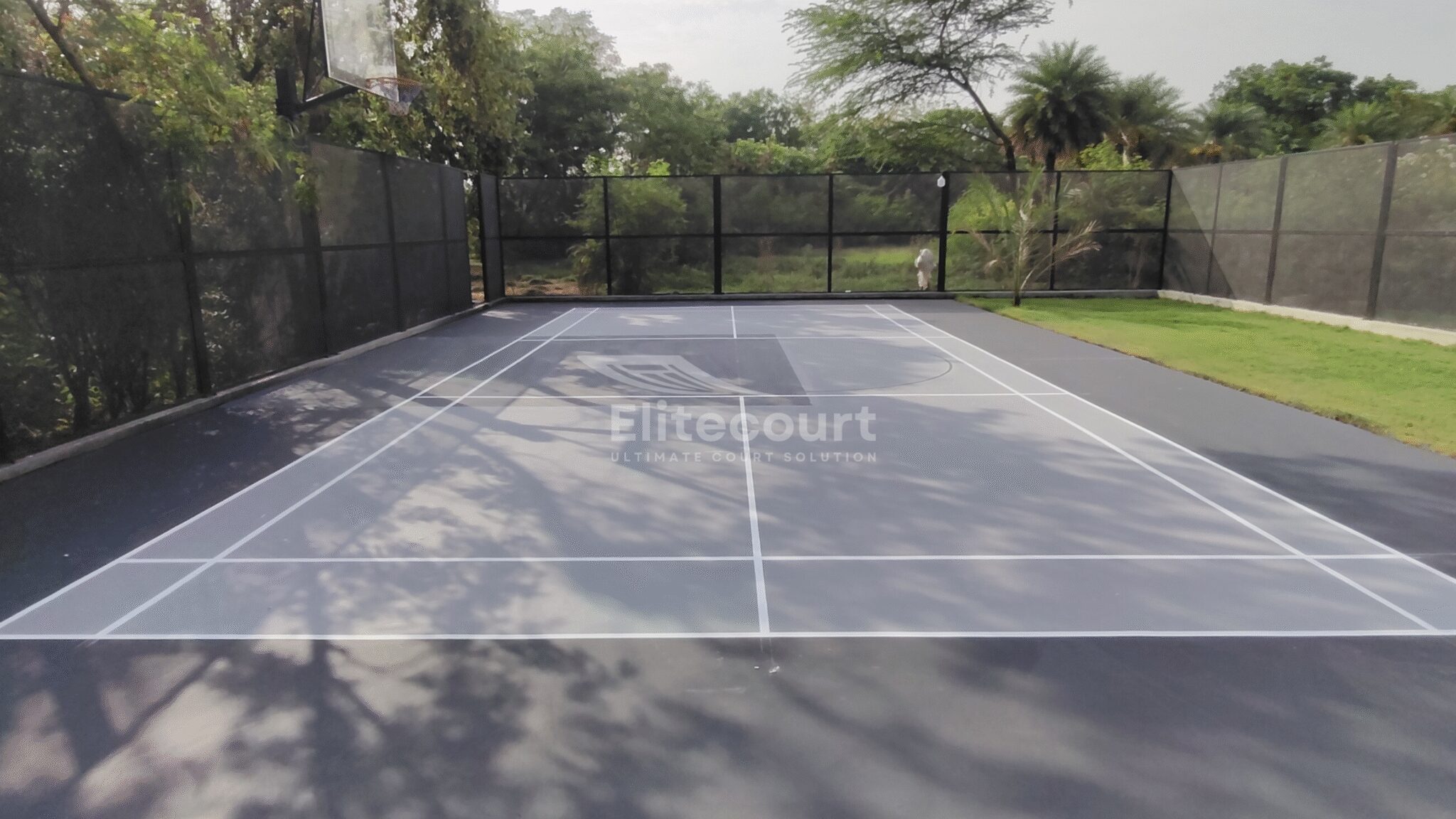
Among all surface options available for badminton court construction, synthetic acrylic sports court flooring has become the most widely specified material globally — particularly for outdoor and semi-covered courts. Elitecourt manufactures a range of synthetic acrylic surface systems specifically engineered for badminton and other racket sports.
Why Synthetic Acrylic?
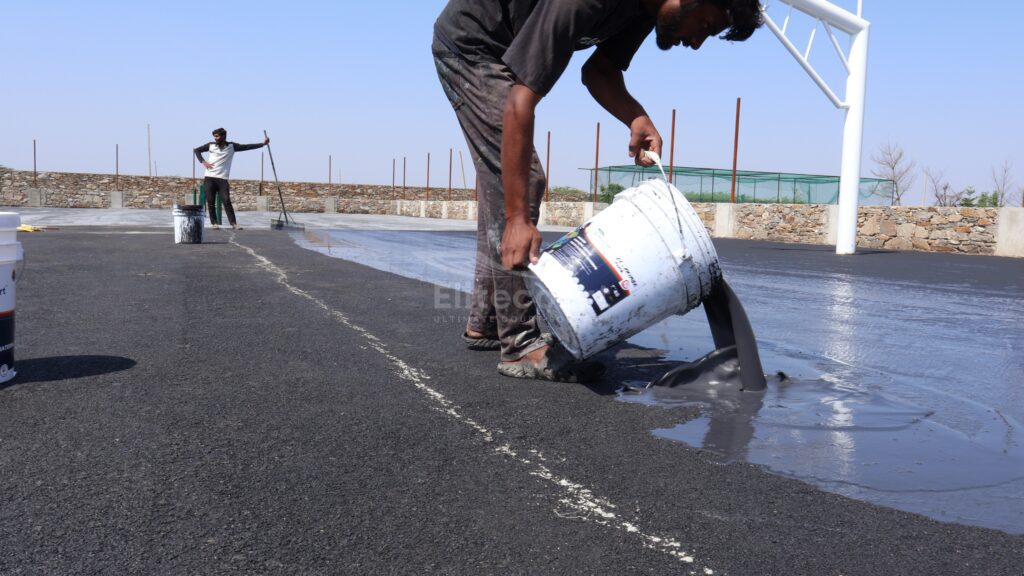
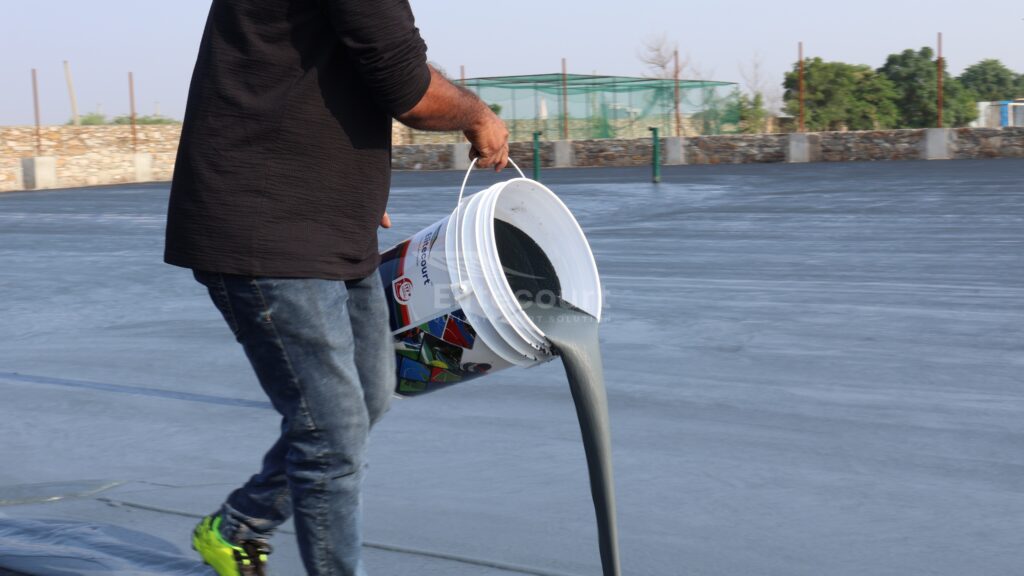
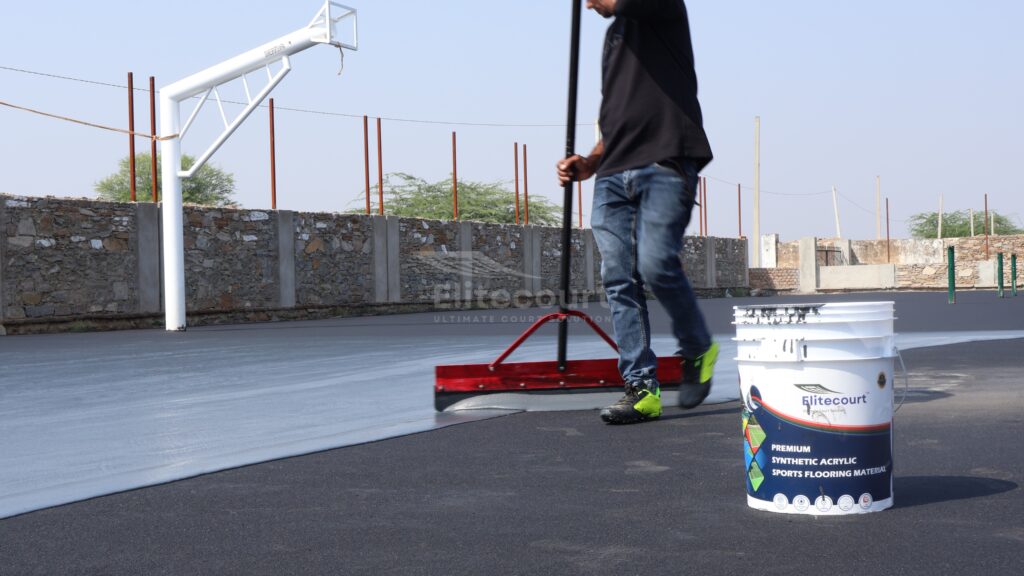
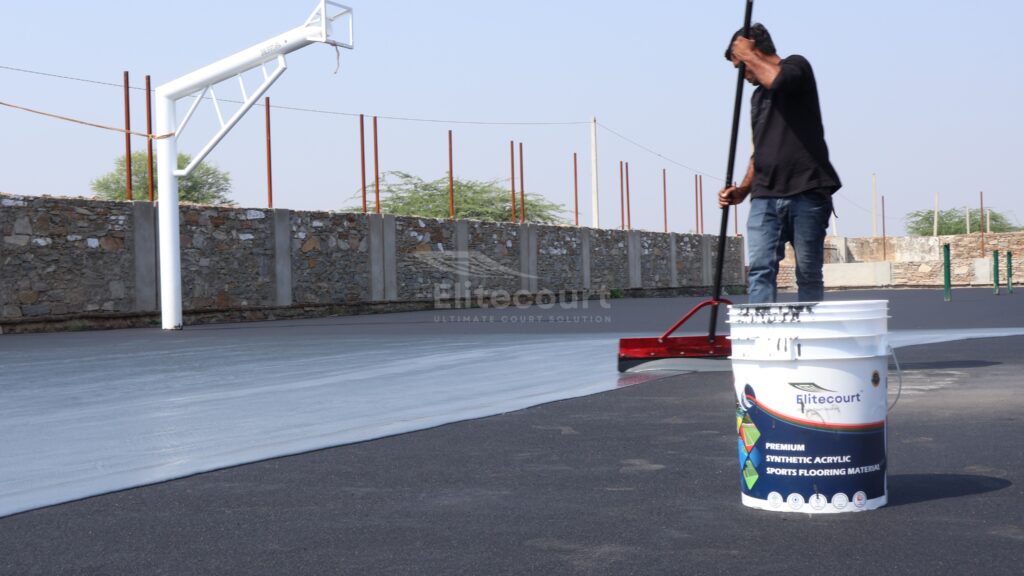
Manufacturers compose synthetic acrylic surfaces from multiple applied layers — a levelling/resurfacing coat, a cushioning or textured base coat, and a colour-finish top coat — and applicators install them directly onto a prepared concrete or asphalt substrate. The result is a seamless, durable, and highly consistent playing surface.
Key advantages of synthetic acrylic surfaces include:
- Uniform texture — the fine silica aggregate in the top coat creates consistent surface friction across the entire court, ensuring predictable play
- Colour stability — UV-resistant pigments maintain vibrant court colours without fading, even after years of outdoor exposure
- Low maintenance — the impermeable surface can be cleaned with water and resists biological growth when maintained correctly
- Customisability — courts can be specified in any colour combination, with contrasting line colours for maximum visibility
- Breathability — properly designed acrylic surfaces allow minimal moisture vapour transmission, reducing the risk of blistering from sub-surface moisture
- Cost-effective life cycle — the combination of durability and easy maintenance makes synthetic acrylic an excellent long-term investment
Expert Tip from Elitecourt: Always apply synthetic acrylic surfaces in multiple coats rather than a single thick coat. Each layer bonds to the previous one and to the base, creating a homogeneous system that is far more resistant to peeling and cracking than a single thick application.
Surface System Layers Explained
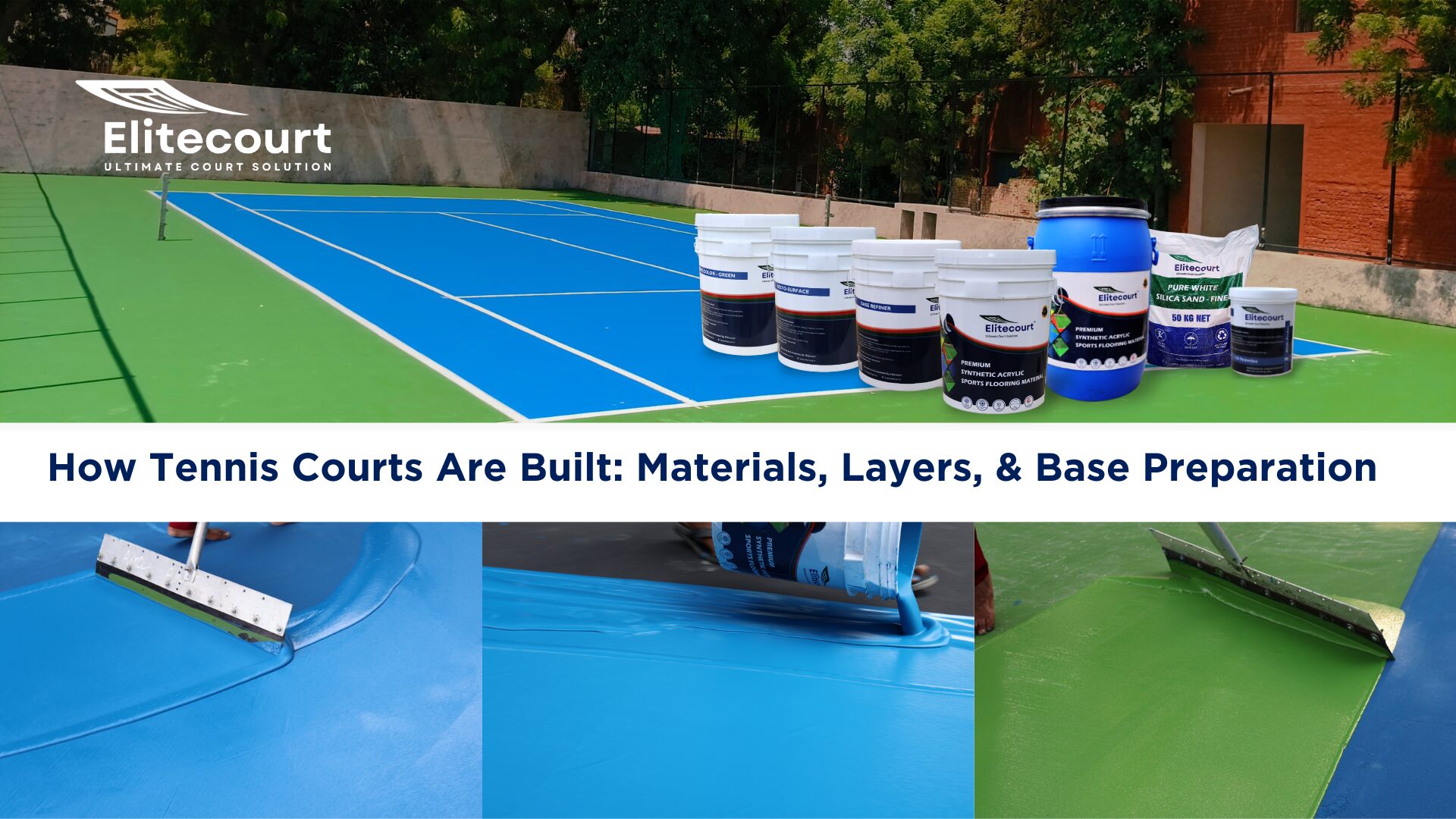
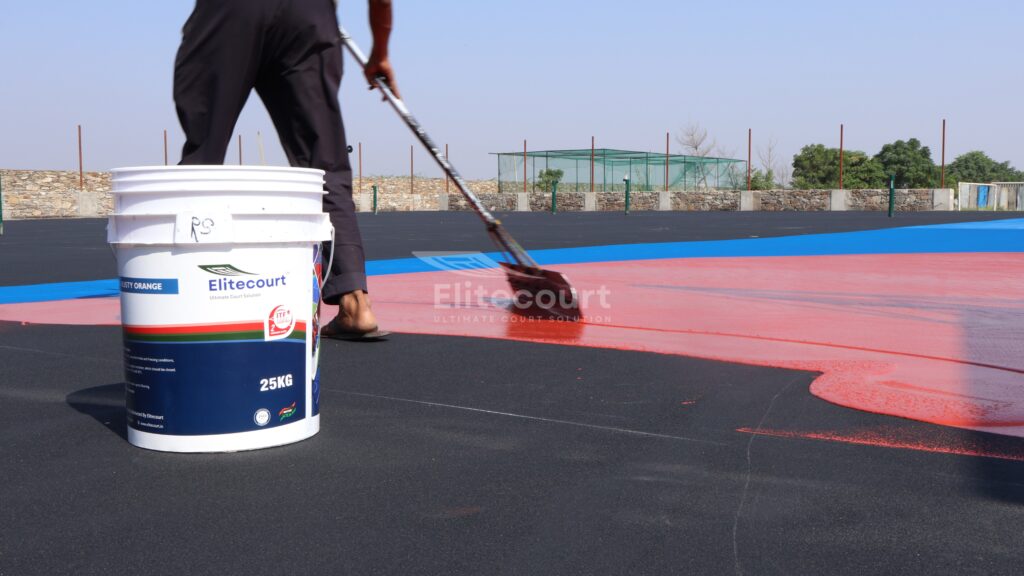
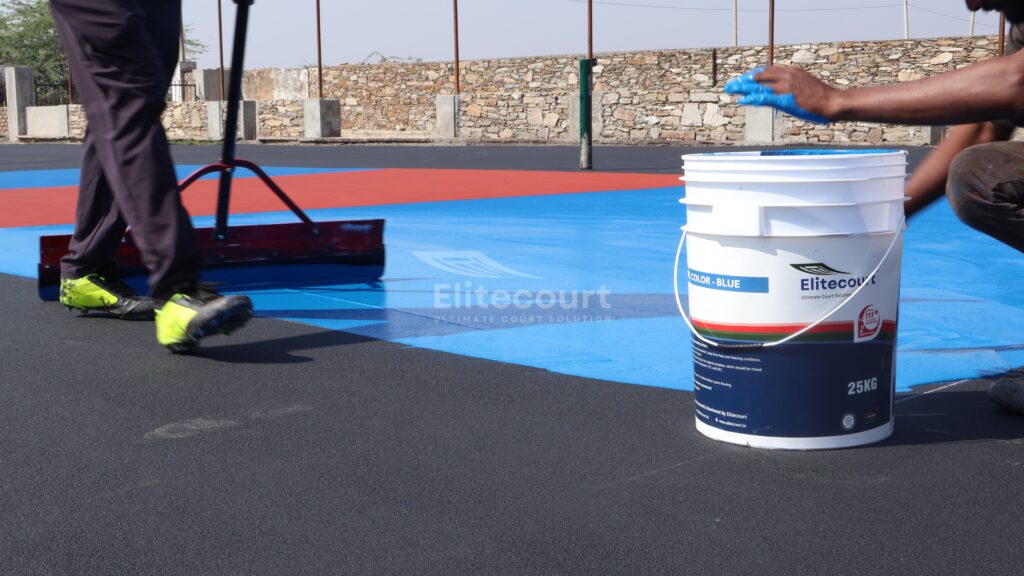
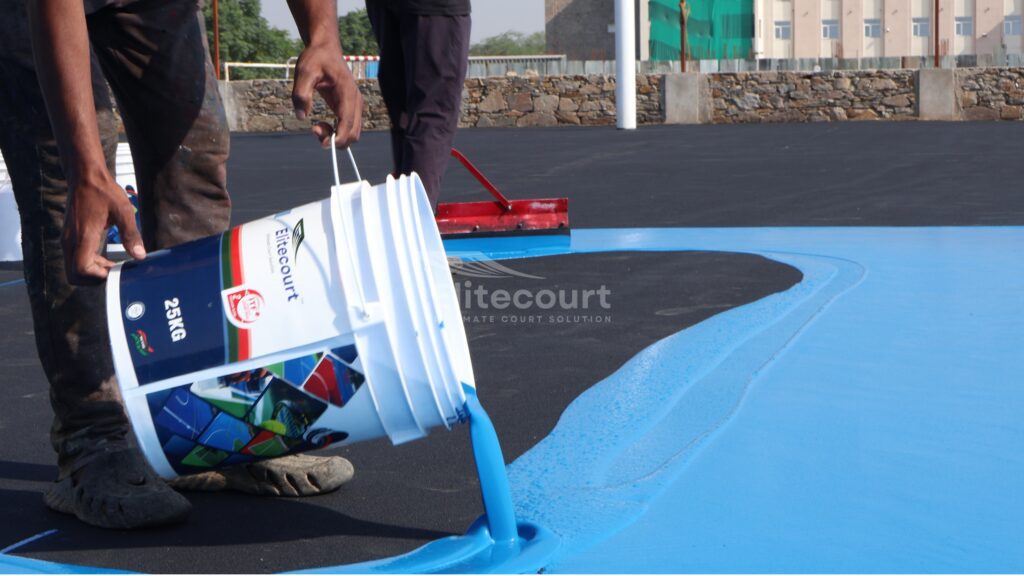
Applicators install a typical Elitecourt synthetic acrylic surface system for badminton court construction in a structured sequence of layers, each serving a specific function:
Crack Filler / Base Leveller
Before applying any colour coat, installers must inspect the substrate for cracks, depressions, or surface irregularities. They then apply a polymer-modified crack filler or skim coat to bring the surface to a uniform level. This step is critical — any unevenness in the base will telegraph through the finished surface.
Acrylic Resurfacer
The resurfacer coat — a heavily filled acrylic compound — creates the primary interface between the sub-base and the performance surface system. It fills the pores of the concrete or asphalt, creates a uniform absorption rate across the substrate, and bonds the layers above it firmly to the base below.
Cushion System
For courts where player comfort and joint protection take priority — such as training academies and competition venues — installers can incorporate a cushion system between the resurfacer and the colour coat. This consists of multiple coats of an acrylic rubber compound that introduces controlled resilience into the surface, reducing fatigue and impact stress on knees, hips, and ankles.
Acrylic Colour Coat (Base Colour)
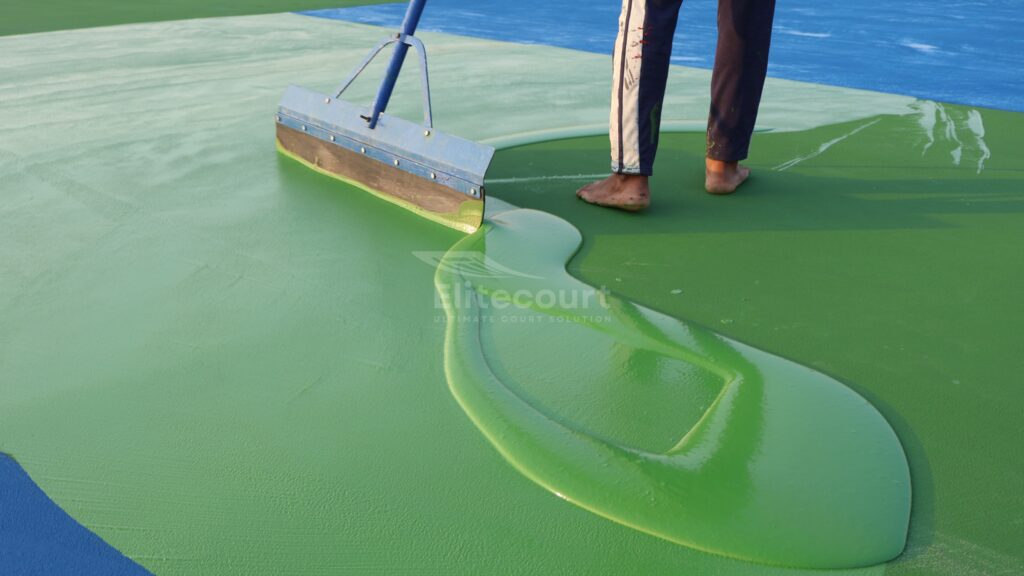
Applicators apply the colour coat in two or more passes, typically in the designated base colour of the court (commonly green, blue, or terracotta for badminton). The acrylic binder and silica aggregate in this coat create the primary playing texture.
Acrylic Top Coat (Sport Surface Finish)
Applicators lay the final top coat in the performance colour, incorporating precisely graded silica sand to achieve the specified surface texture and friction characteristics. This is the layer players interact with directly, so its formulation is critical for consistent ball bounce and player traction.
Line Marking
Once the surface coats fully cure (typically 24–48 hours per coat under good conditions), installers apply court lines using high-quality acrylic line paint. All lines must be 40 mm wide, as specified by BWF regulations, and clearly contrasting with the court’s base colour.
Badminton Court Construction for Indoor Facilities
Indoor badminton courts present their own set of construction considerations. While the court dimensions and surface specifications remain the same, the surrounding built environment — the hall structure, flooring system, lighting, and ventilation — has a profound effect on the quality and usability of the facility.
Structural Considerations for Indoor Courts
The hall structure must accommodate:
- Clear height of at least 9 metres from floor level to the lowest overhead obstruction, ensuring the shuttlecock can travel naturally through its full arc without obstruction
- Spans free of columns within the playing area, which typically means a structural steel or reinforced concrete frame with long-span roof beams
- Adequate wall setback — a minimum of 2 metres from the side boundaries of the outermost court to any wall, fence, or obstruction
For multi-court facilities, the number of courts that can fit within a given hall is determined by these clearance requirements. A typical four-court indoor badminton facility requires a hall approximately 30 metres wide and 20 metres long internally.
Flooring Options for Indoor Badminton
Indoor badminton welcomes several surface types, and the level of play and the facility’s budget together drive the final choice.
Synthetic Acrylic on Concrete Slab
For permanent indoor badminton courts, a synthetic acrylic surface applied over a concrete slab is one of the most common and durable solutions. The concrete slab must be smooth, level, and fully cured before applicators install the acrylic system. Because the indoor environment eliminates UV and rain exposure, the surface delivers significantly greater longevity than outdoor applications.
Elitecourt specially formulates its indoor acrylic systems for internal use, calibrating surface textures to match the typical speed of indoor play.
Suspended Timber (Sprung Wood) Floors
At the elite competitive level — particularly for national and international tournaments — facility managers and specifiers often prefer sprung timber flooring systems. These consist of hardwood or engineered wood boards supported on an elastomeric underlay or spring rail system that provides exceptional shock absorption and energy return.
However, sprung timber floors are significantly more complex and expensive to install, and require careful humidity control to prevent swelling or warping. Many training facilities and club-level courts opt for synthetic acrylic on concrete as a more practical and cost-effective alternative.
Indoor Lighting for Badminton Courts
Lighting is one of the most technically demanding aspects of indoor badminton court construction. The shuttlecock moves at exceptional speeds — professional smashes can exceed 400 km/h — and players must be able to track it throughout its full trajectory.
BWF recommended lighting levels for competition courts are:
- Minimum 500 lux at floor level for club and recreational play
- 750–1000 lux for district and state-level competition
- 1000–2000 lux for national and international events
The type of luminaire and its placement are equally important. Designers should position lights to minimise glare in players’ eyes when they look upward to track a high lob or clear shot. Installers should mount luminaires with anti-glare louvres or lenses above and to the side of the courts — not directly overhead in the flight path of the shuttlecock.
LED lighting has become the standard for new indoor badminton facilities, offering:
- High lumen output with excellent colour rendering (CRI > 80 recommended)
- Long operational life (50,000+ hours), reducing maintenance costs
- Instant full-brightness operation with no warm-up time
- Dimmability for energy management during non-competition use
Outdoor Badminton Court Construction: Special Considerations
Outdoor badminton courts introduce challenges that simply do not exist for indoor facilities. Weather, UV radiation, biological growth, and thermal expansion all work against the longevity of an outdoor court when the construction design fails to accommodate them.
Drainage Engineering
Water management is the single most critical factor in outdoor badminton court construction longevity. A poorly drained court will experience:
- Surface blistering from trapped sub-surface moisture
- Algae and moss growth, which dramatically reduce surface friction and create slip hazards
- Frost heave in colder climates, where freeze-thaw cycles cause the base to crack and shift
- Accelerated wear from the erosive action of water running across the surface
The recommended approach combines a cambered surface — a gentle cross-slope of 0.5–1% — with perimeter drainage channels. For multi-court installations, channels between courts direct water to collection sumps or outfalls.
Shading and Wind Conditions
For outdoor courts, consider the effect of sun angle and prevailing winds. Direct sun in players’ eyes is a safety and performance issue, and strong crosswinds make it nearly impossible to play badminton outdoors. For this reason, many facility owners choose to semi-cover outdoor badminton courts — fitting a roof structure that provides shade and wind protection while still allowing natural ventilation.
If a shade structure is included in the badminton court construction project, it must be designed to:
- Provide full shade over the court at peak playing hours
- Allow adequate daylight for play if artificial lighting is not installed
- Resist the structural loads imposed by wind and rain without transmitting vibration or noise to the playing surface
- Not intrude into the 9-metre vertical clearance zone above the court
UV Resistance and Surface Longevity
Elitecourt formulates its outdoor synthetic acrylic surfaces with UV-stable pigments and acrylic binders that actively resist colour fading and material degradation. However, all outdoor surfaces will show some degree of wear and colour change over time, particularly in regions with intense sunlight.
To maximise the life of an outdoor badminton court surface:
- Apply a UV-resistant topcoat as the final layer of the surface system
- Plan for periodic re-coating — typically every 5–8 years depending on UV intensity and usage levels
- Keep the surface clean — regular brushing and rinsing to remove debris, dirt, and biological growth
- Address cracks immediately — small cracks, if left untreated, allow water ingress that accelerates degradation dramatically
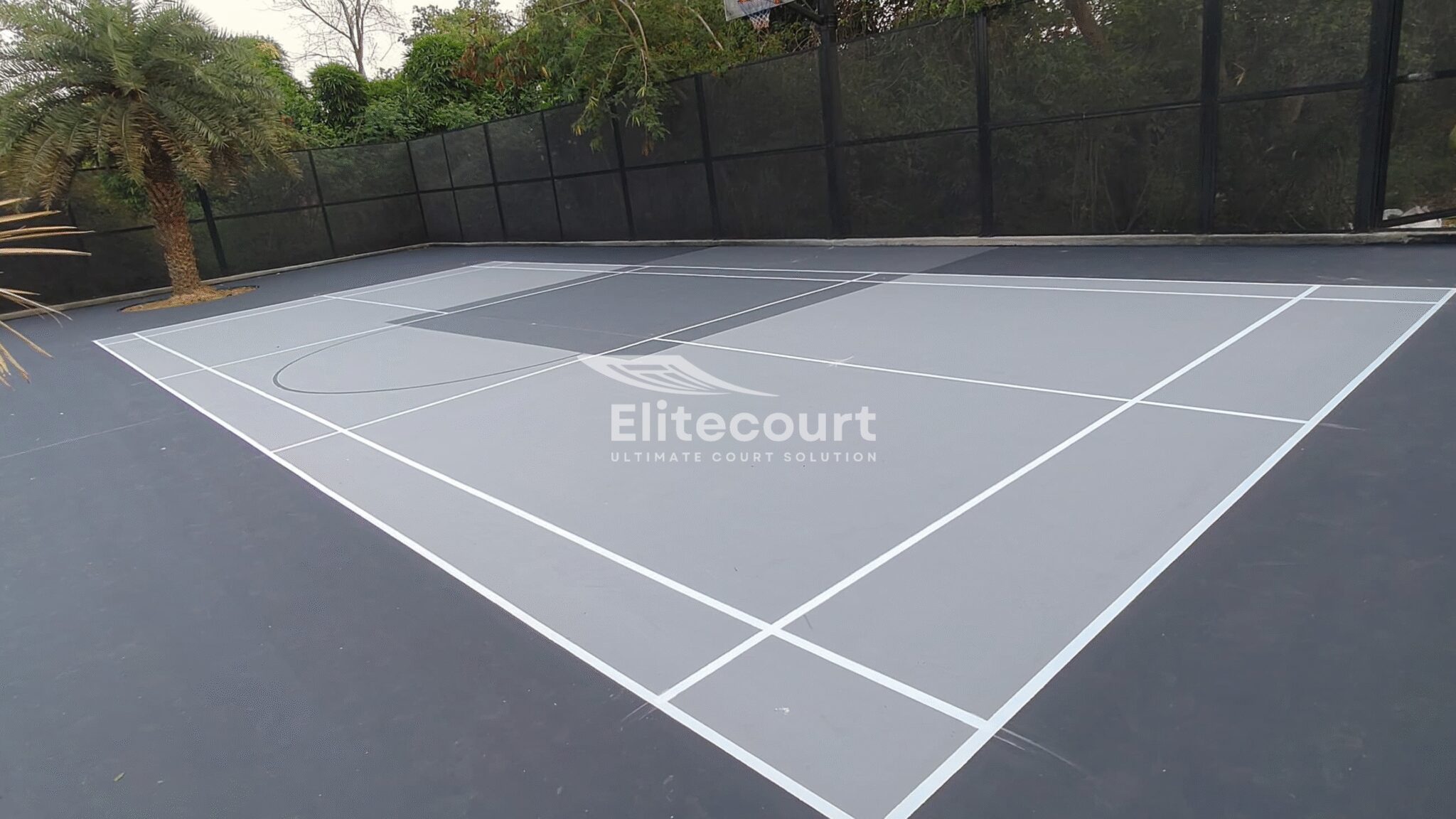
Line Marking: Precision in Badminton Court Construction
Line marking is deceptively simple — but errors in line placement can make a court non-compliant and can create genuine gameplay disputes. Installers must mark all lines precisely according to BWF specifications, using high-quality acrylic line paint that bonds firmly to the playing surface and resists wear.
How Lines Are Applied
Professionals mark badminton court lines using a mechanically guided line marker — a wheeled machine that sprays or rolls a precise 40-mm width of paint in a straight line. Installers use templates or measuring guides to confirm all dimensions before painting begins.
The sequence of line application matters:
- All main boundary lines are marked first
- Service lines (short and long) are added
- The centre line (for singles) is added last
Applicators should lay all lines in a single, continuous pass to ensure consistent width and edge definition. Multiple thin coats of line paint are preferable to a single thick coat, as they bond more effectively to the playing surface and resist peeling.
Line Colour Considerations
BWF regulations specify that lines must be clearly visible against the court surface colour. The most common combinations include:
- White lines on a green or blue court — the most common for both outdoor and indoor courts
- Yellow lines — sometimes used for visibility in high-ambient-light environments or for television broadcast
- Red or orange lines — occasionally used for multi-sport courts where lines for different sports need to be differentiated
For multi-sport courts where installers mark badminton lines alongside tennis, basketball, or volleyball lines, using distinct colours for each sport’s lines is essential to avoid confusion.
Net Posts and Net Installation
The net is a central structural element in badminton court construction. BWF regulations require the net to measure 760 mm in depth, consist of dark-coloured fine mesh, and hang from a white or yellow tape along the top edge that folds over a cord or cable running through it.
Net Post Requirements
Net posts must be:
- 1.55 metres tall from the court surface to the top of the post
- Positioned on the doubles sideline, not in the centre of the court
- Firmly anchored to prevent movement during play
- Smooth-topped to prevent injury
Manufacturers typically construct net posts from galvanised steel for outdoor courts (to resist corrosion) or powder-coated steel or aluminium for indoor use. Installers must position the posts precisely on the doubles sideline — any placement error directly affects the tension and height of the entire net.
For indoor multi-court facilities, retractable or sleeve-mounted net posts offer a practical solution, letting staff configure courts quickly for different uses and sweep or clean the floor without obstruction.
Transform Your Sports Facility Today!
Contact us for high-quality synthetic sports flooring material and elevate your space!
Quality Control in Badminton Court Construction
Maintaining quality throughout the construction process requires systematic inspection and testing at each stage. Skipping quality checks in the interest of speed is one of the most common causes of premature court failure and disputes between facility owners and contractors.
Surface Level Testing
Once the sub-base is complete and the surface system is in place, installers must test the court surface for flatness using a 3-metre straight edge. BWF guidelines recommend a maximum deviation of 3 mm under the straight edge anywhere on the court. Greater deviations signal base unevenness that installers must correct before proceeding.
Surface Texture and Friction Testing
The coefficient of friction (CoF) of a badminton court surface is critical for player safety and performance. A surface that is too slippery causes falls; one that is too grippy causes ankle injuries from the foot catching during rapid direction changes.
Recommended CoF values for badminton courts typically fall in the range of 0.4–0.6 (measured using standardised sliding methods), though specific standards vary by country and governing body.
Moisture Testing of Substrates
Before applying any acrylic surface system, the moisture content of the concrete or asphalt substrate must be verified. Excess moisture in the base is the leading cause of surface blistering and adhesion failure.
Moisture content can be measured using:
- Plastic sheet test — a sheet of polythene is taped to the surface and left for 24 hours; condensation on the underside indicates excess moisture
- Calcium chloride test — a more quantitative method that measures the rate of moisture vapour emission from the slab
- Electronic moisture meters — convenient for spot-checking multiple locations quickly
As a general rule, concrete substrates should have a moisture content of below 6% before surface application begins.
Maintenance of Badminton Court Surfaces
Even the highest-quality badminton court construction will deteriorate prematurely without proper maintenance. A structured maintenance programme protects your investment and ensures the court remains safe and playable for as long as possible.
Routine Maintenance Tasks
Daily or after each session of play:
- Brush or sweep the surface to remove dust, dirt, and debris that accumulates during play
- Check for and remove any standing water on outdoor courts
Weekly:
- Wash the surface with clean water — a pressure washer on a low setting is effective for outdoor courts
- Inspect the surface for cracks, lifting edges, or areas of surface wear
- Check line markings for fading or damage
Monthly / Quarterly:
- Apply a light algaecide treatment to outdoor courts in humid or shaded environments to prevent biological growth
- Check net tension and post stability
- Inspect the perimeter drainage channels for blockages
Annual:
- Conduct a comprehensive surface inspection, checking flatness, friction, and colour integrity
- Plan and schedule any required resurfacing, crack repair, or line repainting
Resurfacing: When and Why
No synthetic acrylic surface lasts indefinitely. The decision to resurface is based on a combination of visual and performance factors:
- Significant colour fading that affects visibility of lines and court boundaries
- Surface cracking that cannot be addressed by spot repair
- Loss of surface texture causing reduced friction and potential slip hazard
- Blistering or delamination from moisture vapour or adhesion failure
When these signs appear, a full or partial resurfacing using Elitecourt materials — applied over the existing cured surface (after thorough cleaning and crack repair) — restores the court to its original performance standard.
Transform Your Sports Facility Today!
Contact us for high-quality synthetic sports flooring material and elevate your space!
Common Questions About Badminton Court Construction
What is the most important factor in badminton court construction?
The most critical factor is the quality of the sub-base. A perfectly applied surface over a poorly prepared or uneven base will develop problems quickly — cracks, undulations, and drainage failures. Invest time and resources in getting the base right, and the surface will perform as designed for many years.
How long does badminton court construction take?
The timeline varies significantly based on the scope of the project:
- Sub-base construction: 2–4 weeks for concrete (including 28 days of curing time)
- Surface application: 3–7 days for a full acrylic system, including curing time between coats
- Line marking and finishing: 1–2 days
A complete outdoor badminton court construction project, from earthworks to final marking, typically takes 6–10 weeks from start to finish. Indoor courts within an existing hall can often be completed more quickly.
Can an existing concrete slab be used as a base for a new badminton court?
Yes — in many cases an existing concrete slab can serve as the substrate for a badminton court surface. However, it must be carefully evaluated for:
- Flatness (deviation < 3 mm under a 3-m straight edge)
- Moisture content (< 6% before surface application)
- Structural integrity (no active cracks, no settlement)
- Surface contamination (oil, paint, or chemical residues must be removed)
If the existing slab passes these checks and any existing cracks are repaired, Elitecourt’s synthetic acrylic system can be applied directly onto it — making full use of the existing structural investment.
What colours are available for badminton court surfaces?
Synthetic acrylic badminton court surfaces are available in a wide range of colours. The most commonly specified colours for badminton include:
- Green (the most traditional and widely used)
- Blue (increasingly popular for competition and professional venues)
- Brick red / terracotta
- Grey
- Custom colours upon request for branding or club identity
The BWF does not mandate a specific court colour for all levels of play, giving facility owners considerable flexibility in design.
How many badminton courts can fit in a standard sports hall?
A regulation indoor badminton court requires a footprint of approximately 13.4 m × 6.1 m, plus 2 m clearances on all sides. In practical terms, each court needs a space of approximately 17.4 m × 10.1 m of hall floor.
A standard sports hall of 36 m × 18 m can typically accommodate 4 badminton courts side by side, with adequate inter-court clearance. Larger halls can accommodate 6, 8, or more courts.
FAQs
Synthetic acrylic sports surfaces are the best option for outdoor badminton courts. They are UV-stable, weather-resistant, and quick-drying, providing consistent friction and ball response in all conditions. Applied over a properly prepared concrete or asphalt base, they offer excellent longevity with straightforward maintenance.
Reinforced concrete (M25 grade or higher, minimum 100 mm thick) is the most widely recommended sub-base for badminton courts in India. It performs reliably across the country’s varied climate zones and provides the stable, rigid foundation that a synthetic acrylic surface system requires.
While BWF specifications are mandatory only for accredited competition venues, building to these standards for club courts is strongly recommended. It ensures players develop proper technique, delivers consistent ball response, and future-proofs the court for lower-tier competition use without any modification.
Regular sweeping, prompt crack repair, periodic algaecide treatment (for outdoor courts), and avoiding harsh chemical cleaners are the foundations of good surface maintenance. A periodic maintenance re-coat of the acrylic system every few years will restore texture and colour without requiring full resurfacing.
A hard court applies the acrylic system directly onto the base — firm, fast, and suited to recreational and club use. A cushioned court adds one or more acrylic rubber layers beneath the colour coat, absorbing impact energy and reducing joint stress. Cushioned courts are preferred for high-frequency training academies and competition venues where player welfare is a priority.
Elitecourt: Your Manufacturing Partner for Badminton Court Flooring
Elitecourt occupies a unique position in the badminton court construction ecosystem. As a manufacturer of synthetic acrylic sports court flooring materials — not a construction contractor — Elitecourt provides the surface systems, technical data, and application guidance that enable skilled local contractors and flooring installers to deliver world-class results.
This distinction is important to understand. Elitecourt does not carry out installation work. Instead, we supply the right materials, in the right formulations, for each specific court application — whether that is a residential outdoor court, a school sports facility, a professional training academy, or a competition venue.
What Sets Elitecourt Materials Apart?
Years of experience in the sports flooring industry have given Elitecourt a deep understanding of what makes a badminton court surface perform at its best. Our products are:
- Formulated specifically for sports performance — not generic industrial coatings adapted for sports use, but products engineered from the ground up for racket sports applications
- Tested for consistency — each batch of Elitecourt product is quality-controlled to ensure that colour, viscosity, texture, and performance characteristics are consistent between production runs and across large projects
- Supported by technical documentation — comprehensive Technical Data Sheets, Safety Data Sheets, and application guides are available for every product, enabling installers to apply surfaces correctly the first time
- Suitable for the Indian climate — our formulations are optimised for the temperature extremes, humidity levels, and UV intensities found across India’s diverse geography
Working with Elitecourt
For architects, facility managers, and contractors planning a badminton court construction project, Elitecourt offers:
- Product selection guidance — helping you identify the right surface system for your specific application, base type, and performance requirements
- Technical data and specifications — detailed product data that can be incorporated into project specifications and tender documents
- Application training support — guidance to ensure that the installation team applies Elitecourt materials according to the correct methodology
When you build a badminton court with Elitecourt surface materials, you are not just applying a coloured coating to concrete. You are installing a proven, engineered performance system that meets international standards, enhances player experience, and delivers long-term value for your facility.
Transform Your Sports Facility Today!
Contact us for high-quality synthetic sports flooring material and elevate your space!
Conclusion: Getting Badminton Court Construction Right
Badminton court construction is a multi-faceted undertaking that demands careful planning, precise execution, and high-quality materials at every stage. From the initial site selection and sub-base design, through the choice of surface system and the precision of line marking, every decision contributes to the final quality of the court — and to the experience of every player who steps onto it.
The key principles that underpin excellent badminton court construction are:
- Follow BWF standards for dimensions, clearances, and surface specifications
- Invest in a quality sub-base — this is the foundation that everything else depends on
- Choose a purpose-engineered surface material that is formulated for sports performance, UV resistance, and durability
- Apply the surface in multiple coats according to the manufacturer’s guidelines
- Implement a structured maintenance programme from day one
- Work with trusted, experienced suppliers who can provide technical support throughout the project
Elitecourt is committed to being that trusted partner — supplying the synthetic acrylic surface materials and technical knowledge that help badminton courts across India and beyond reach their full potential.