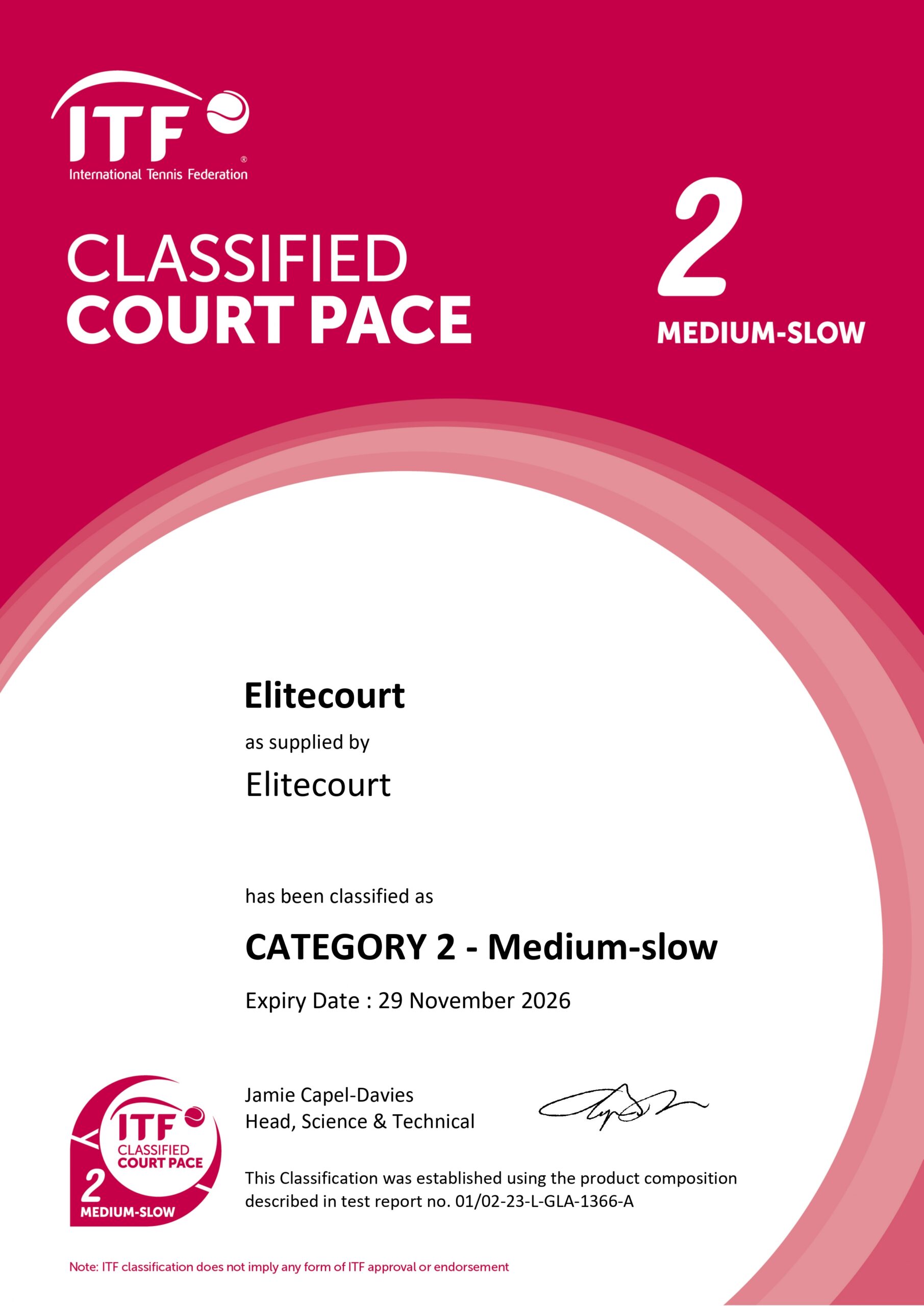
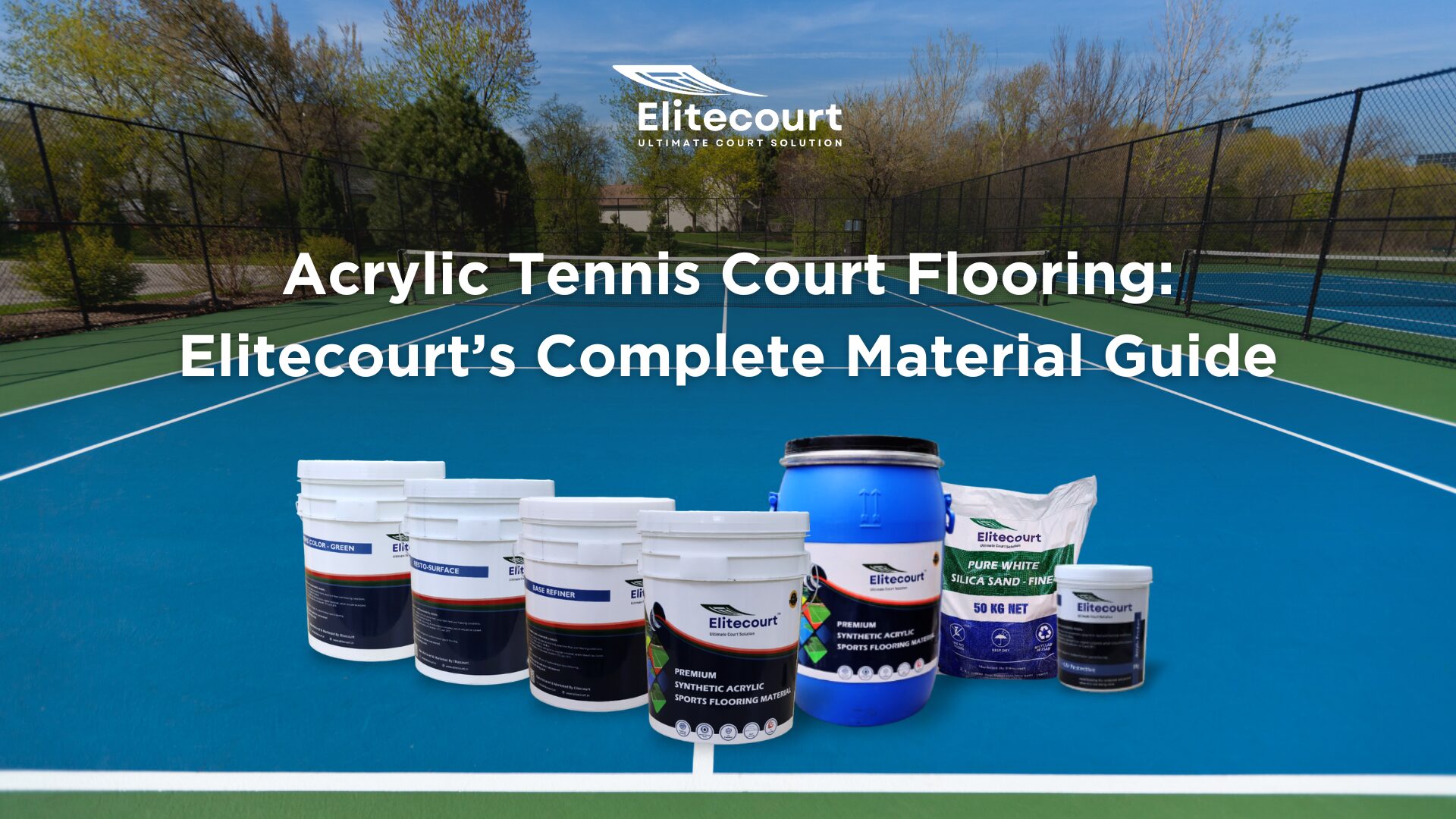
As a specialized manufacturer of synthetic acrylic sports court flooring, Elitecourt focuses solely on developing and supplying materials, empowering professional contractors and facility owners to build world‑class tennis courts using robust, performance‑driven systems. Elitecourt’s product range follows ITF expectations for pace, bounce, and consistency, giving you a ready‑to‑use solution for high‑quality acrylic tennis court flooring without compromise.
What Is Acrylic Tennis Court Flooring?
Acrylic tennis court flooring is a multi‑layer, resin‑based sports surface system built over a rigid base—typically asphalt or concrete—using a combination of acrylic primer, resurfacer, cushion layers (optional), and colored topcoats. This surface falls under the hard court category, and players at professional, institutional, and recreational tennis facilities widely use it because it offers consistent ball bounce, reliable traction, and strong weather resistance with relatively low maintenance.
In most modern facilities, decision‑makers prefer synthetic acrylic tennis court flooring over traditional clay or natural grass because it offers a predictable playing experience all year round and allows manufacturers to engineer it to different pace categories as per ITF classification. When you pair it with a high‑quality material manufacturer like Elitecourt, the system delivers a long‑lasting surface that supports comfortable training, match play, and multi‑hour coaching sessions with reduced fatigue when coaches and players choose cushioned configurations.
Why Acrylic Tennis Court Flooring Is the Modern Standard
Performance, Safety, and Longevity in One System
Modern tennis facilities need surfaces that blend playability, player safety, and durability under diverse conditions. Acrylic tennis court flooring hits this sweet spot because the layered acrylic system allows manufacturers to optimize surface texture, friction, and resilience without sacrificing aesthetics.
Key advantages of acrylic tennis court flooring include:
- Consistent ball bounce thanks to a uniform hard‑court structure and precisely graded silica fillers.
- Optimized surface friction for secure footing, reducing slip risks while allowing controlled slides on wide shots.
- UV‑resistant color coats that help maintain surface integrity and appearance even in intense sunlight.
- Weather resistance against rain, heat, and temperature variations when applied on a stable base.
- Compatibility with ITF pace categories, enabling courts to be calibrated for specific game speeds.
- Low routine maintenance, focused on cleaning and repainting at longer intervals rather than constant repairs.
For academies and clubs, this translates into a court surface that players can trust day after day, season after season, especially when the material system is designed and manufactured specifically for sports—like Elitecourt’s acrylic tennis court flooring range.
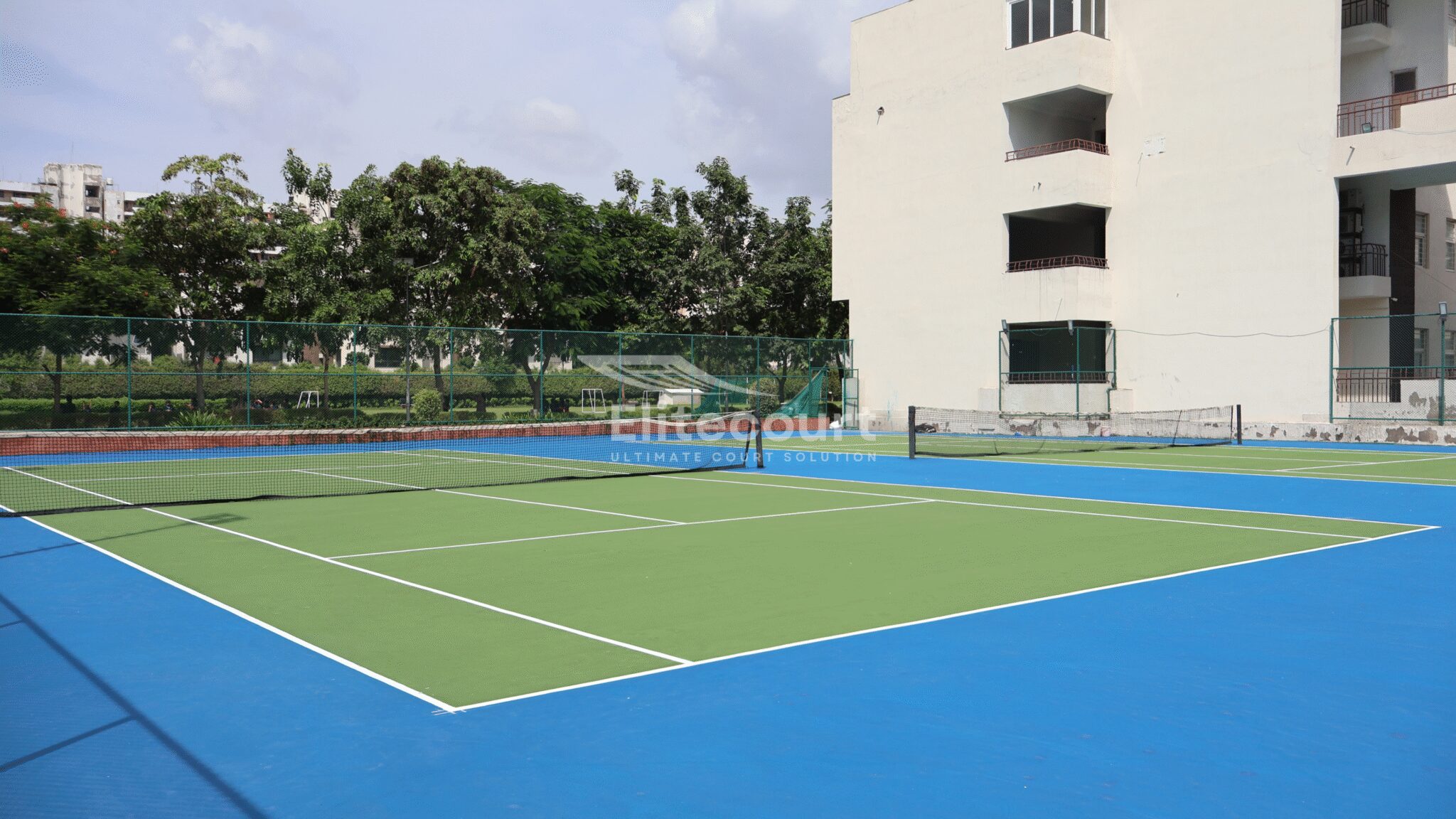
Elitecourt’s Role in Acrylic Tennis Court Flooring
A Specialist Manufacturer of Synthetic Acrylic Sports Flooring
Elitecourt is a dedicated manufacturer of synthetic acrylic sports court flooring material, serving tennis, basketball, pickleball, badminton, volleyball, and jogging tracks. Instead of acting as a contractor or installer, Elitecourt focuses purely on research, formulation, and production of high‑performance acrylic systems tailored for sports surfaces.
This specialization gives Elitecourt a distinct advantage in acrylic tennis court flooring:
- Sports‑specific formulations: Acrylic binders, pigments, and fillers are chosen to meet the demands of high‑intensity, multi‑directional movement.
- ITF‑oriented product range: Elitecourt’s tennis materials are designed to align with ITF‑classified hard court expectations and court pace categories.
- Robust quality control: Materials are engineered to deliver consistent texture, coverage, and curing behavior when applied by trained contractors.
- Multi‑sport compatibility: The same technology platform extends to basketball and other courts, further validating the durability and performance of the material system.
Elitecourt collaborates with contractors, sports consultants, and facility owners, providing them with acrylic tennis court flooring materials, technical data sheets, and application guidance so that the finished court meets performance and longevity expectations.
Elitecourt Expert Tip
When choosing acrylic tennis court flooring materials, always ask for technical specifications, recommended system build‑up, and ITF‑related guidance from the manufacturer to ensure your court aligns with performance goals.
Core Components of Acrylic Tennis Court Flooring Systems
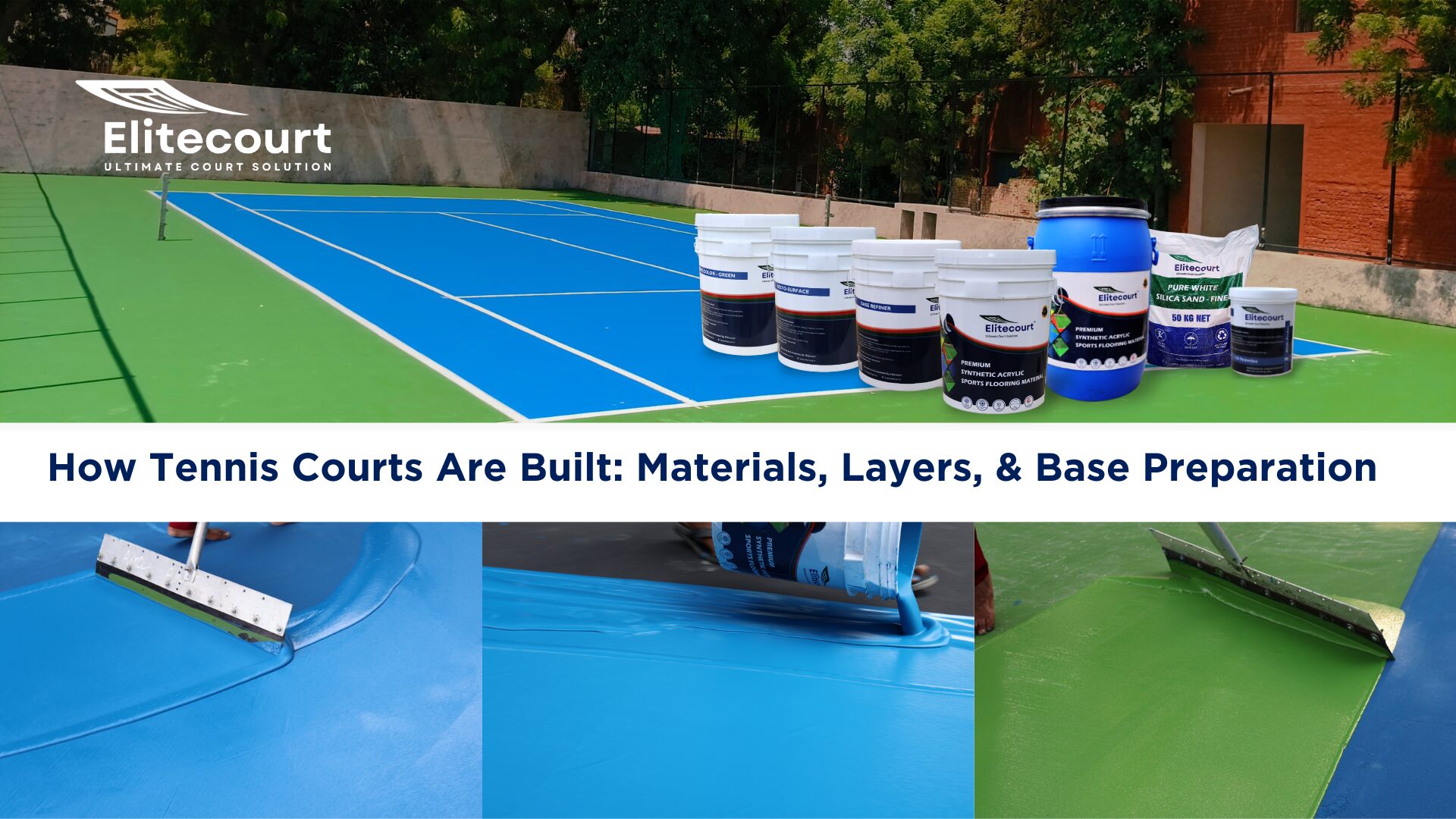
Acrylic tennis court flooring is not a single product but a system of coordinated layers, each playing a specific role in performance and durability. Elitecourt’s synthetic acrylic tennis systems are built around the following core components:
Acrylic Primer
The primer forms the interface between the rigid base (asphalt or concrete) and the acrylic system.
- Promotes strong adhesion between base and subsequent layers.
- Helps seal minor surface porosity and micro‑dusting.
- Supports uniform absorption and curing of resurfacer and cushion coats.
A reliable primer is essential to prevent delamination and blistering in acrylic tennis court flooring, especially in outdoor environments with temperature and moisture variations.
Acrylic Resurfacer (With Silica)
The resurfacer is a high‑solids acrylic layer often blended with carefully graded silica sand.
- Smooths minor undulations and repairs small surface imperfections.
- Establishes the base texture that influences traction and ball response.
- Fills hairline cracks and voids, enhancing surface uniformity.
In a typical Elitecourt system, multiple coats of acrylic resurfacer contribute significantly to the visual uniformity and structural reliability of the acrylic tennis court flooring.
Cushion Layers
Cushioned systems incorporate elastic cushion coats between the resurfacer and topcoats.
- Improve shock absorption to reduce player fatigue during long training sessions.
- Provide more forgiving underfoot feel while retaining hard‑court characteristics.
- Help mitigate impact stress on ankles, knees, and lower back, especially for high‑volume play environments like academies and performance centers.
Sports authorities highlight cushioned synthetic acrylic systems as a preferred choice for long hours of training due to their player comfort benefits.
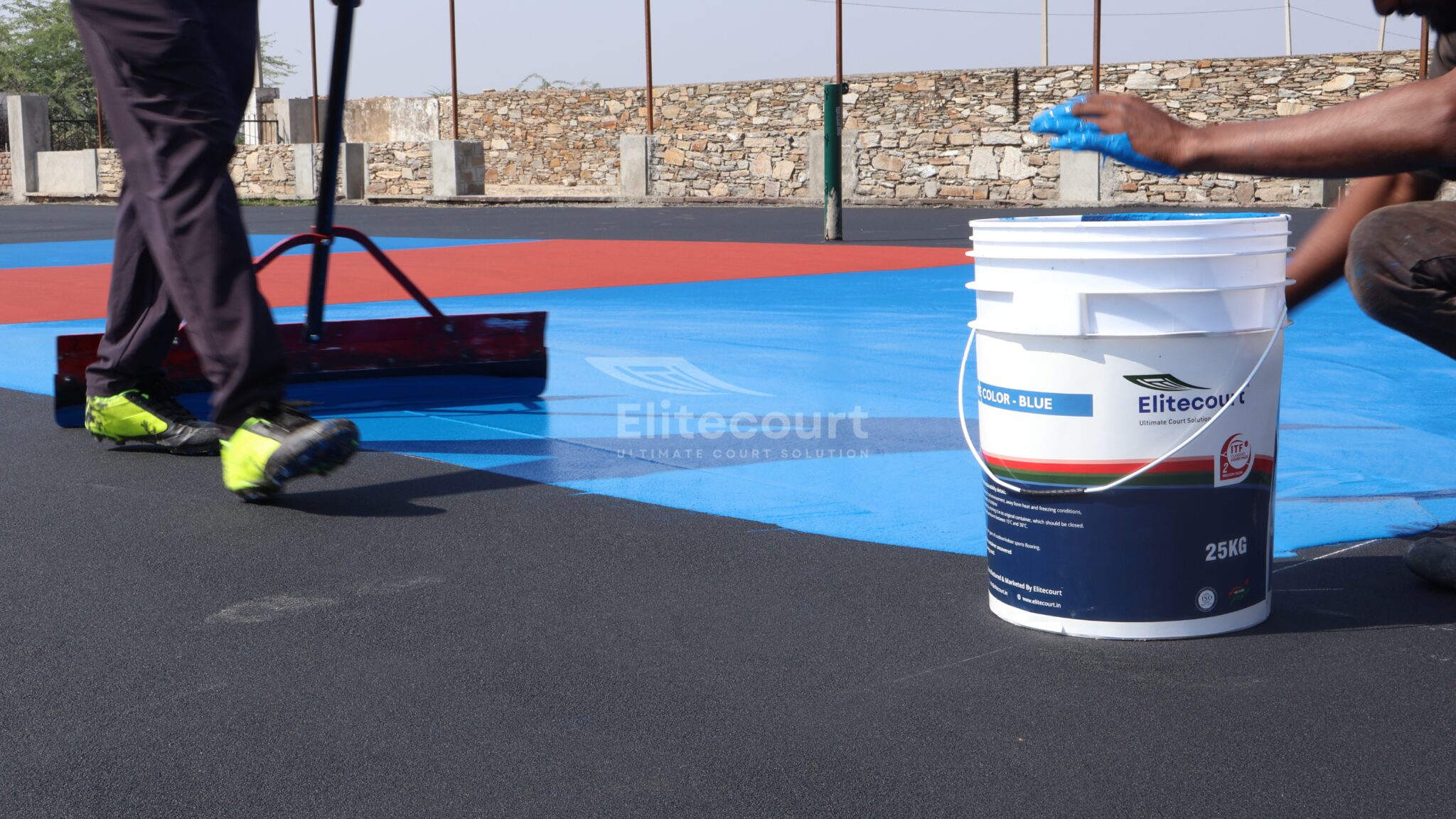
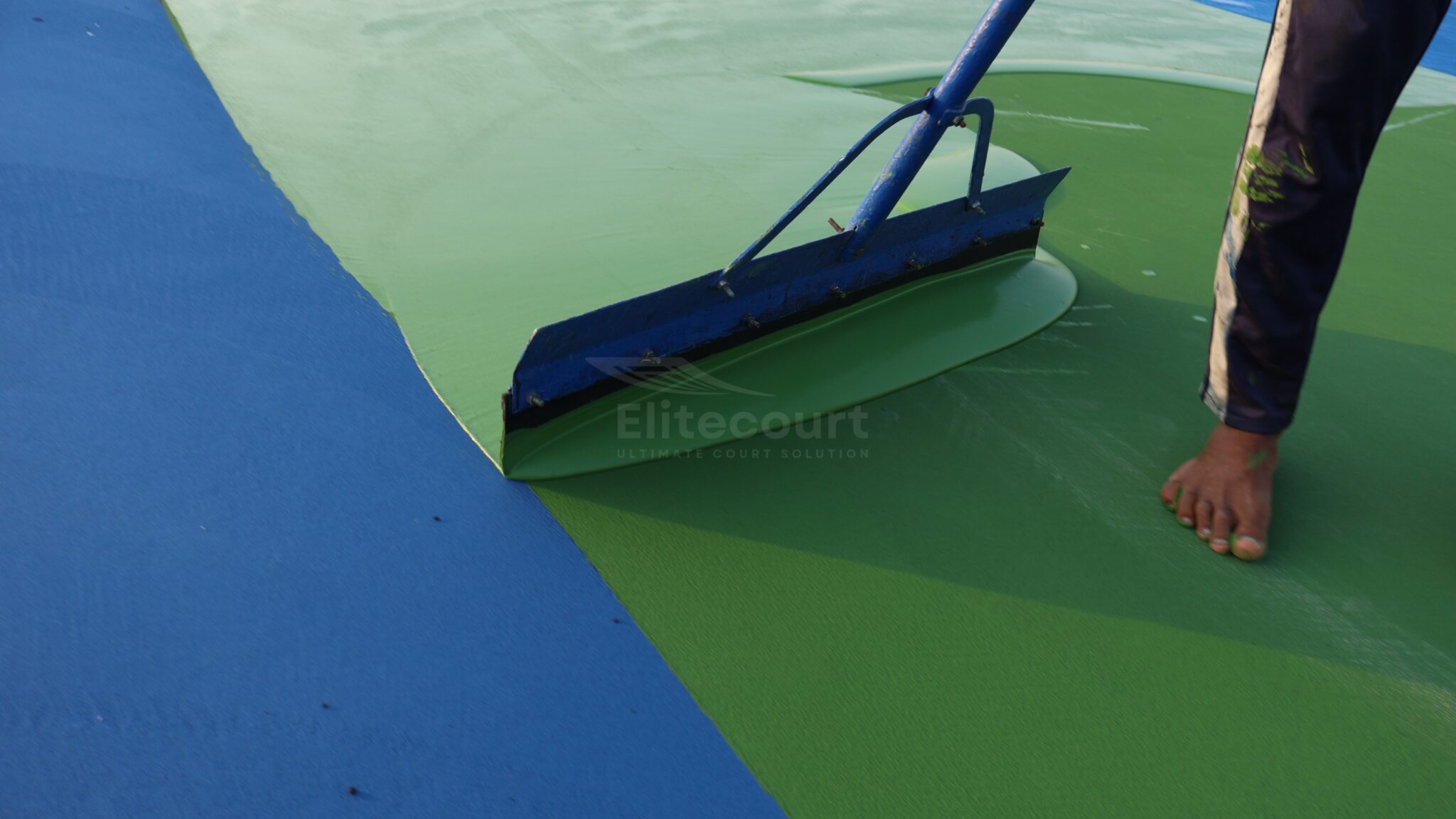
Acrylic Color Topcoats
The color topcoats are pigmented acrylic layers that define the final appearance and tactile feel of the court.
- Provide UV resistance, helping colors stay vibrant over time.
- Offer anti‑slip properties through controlled texture, improving player safety.
- Protect underlying layers from direct weathering and foot traffic.
- Enable classic tennis color schemes (green, blue, red, etc.) or custom branding.
Elitecourt’s topcoats serve sports applications, using quality binders and pigments to withstand outdoor exposure while they maintain the performance of the acrylic tennis court flooring system.
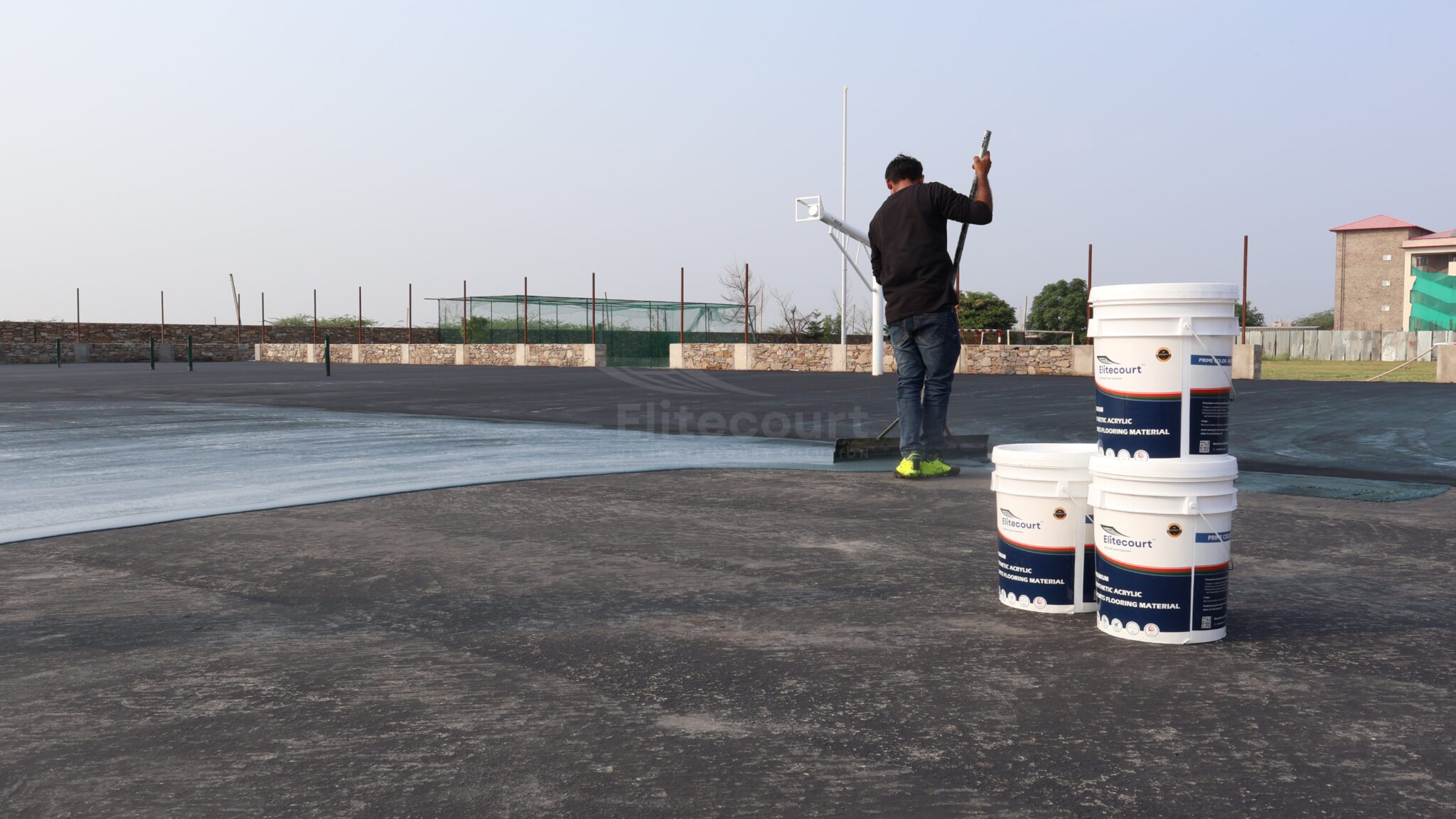
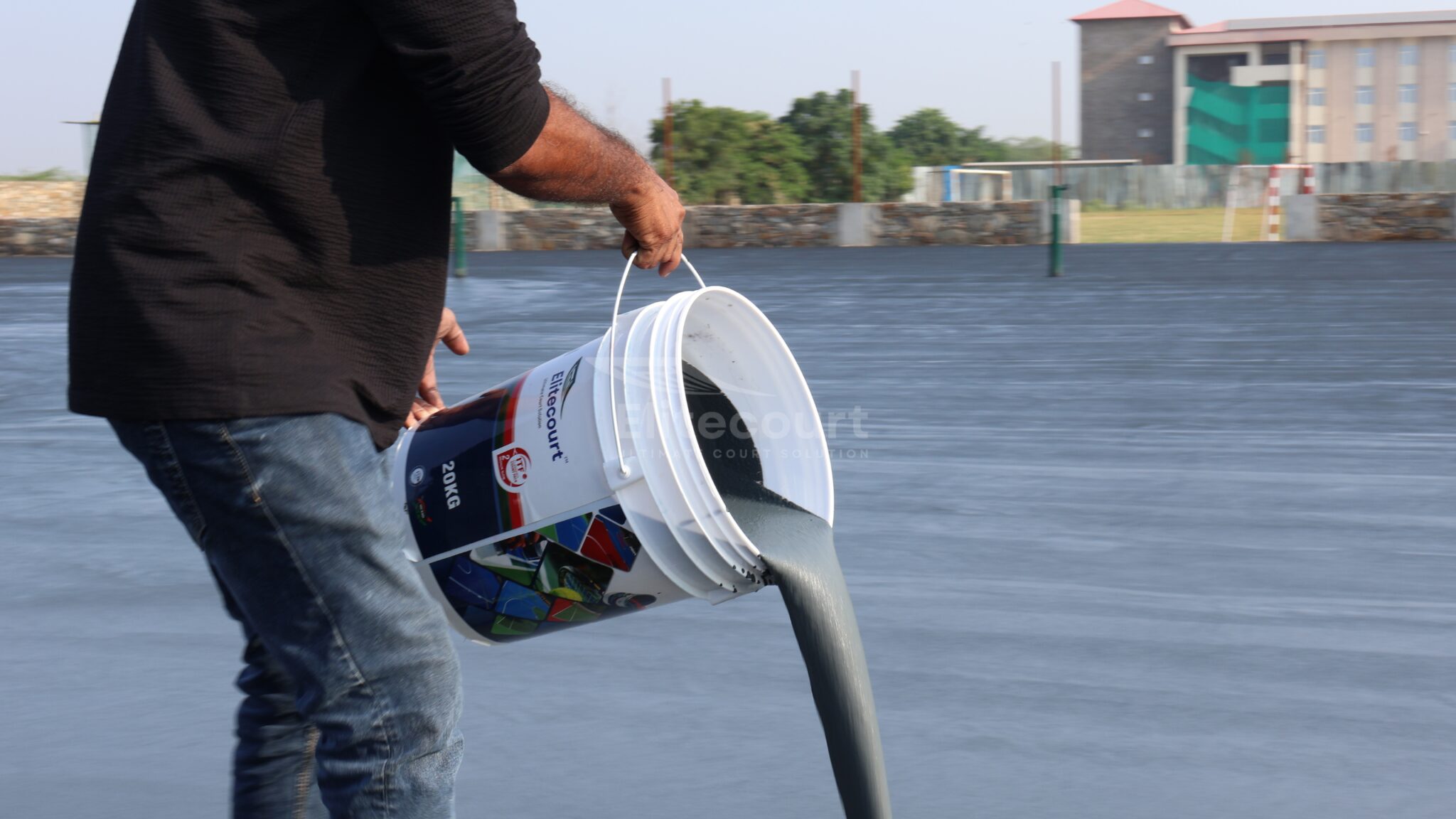
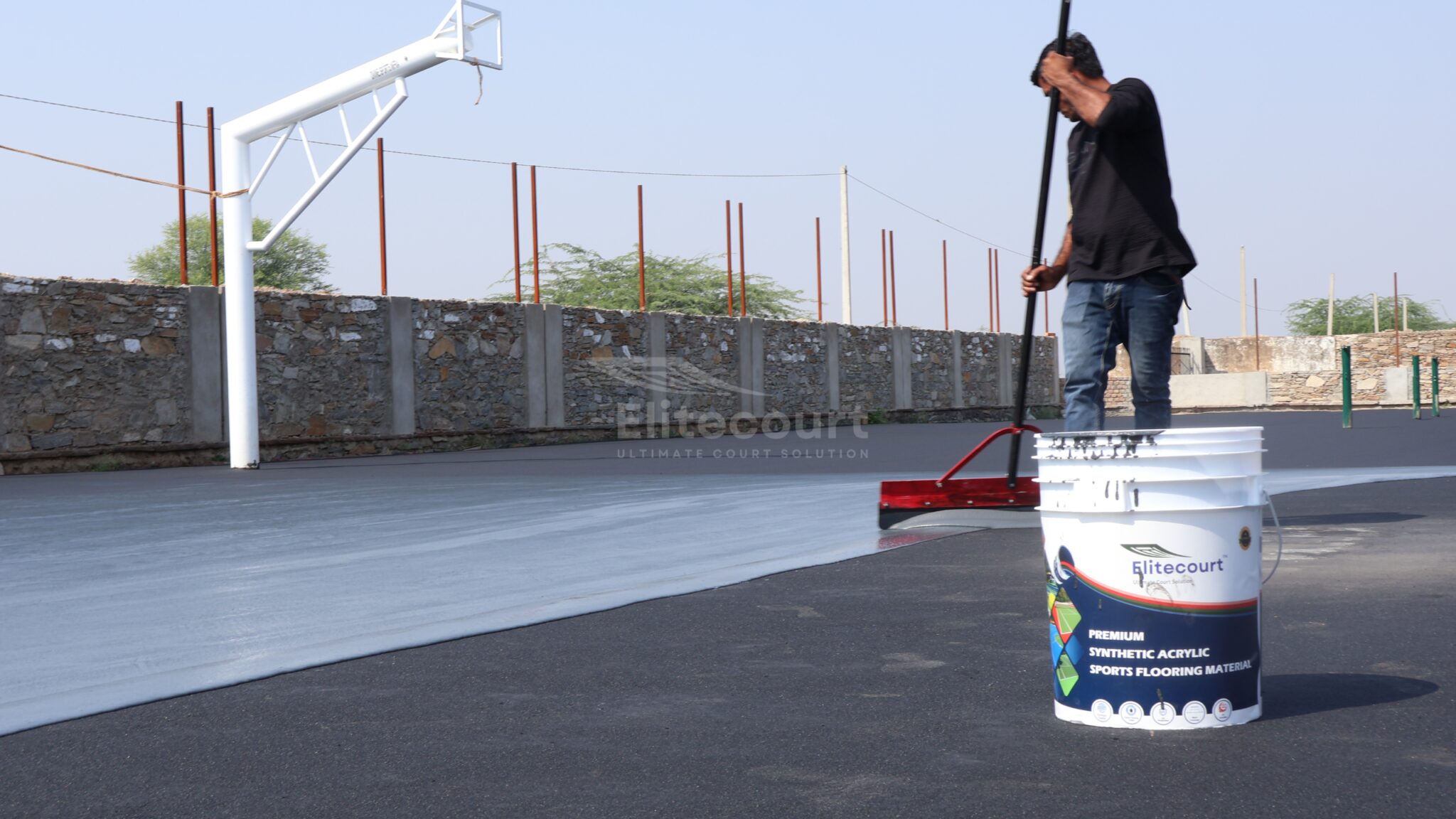
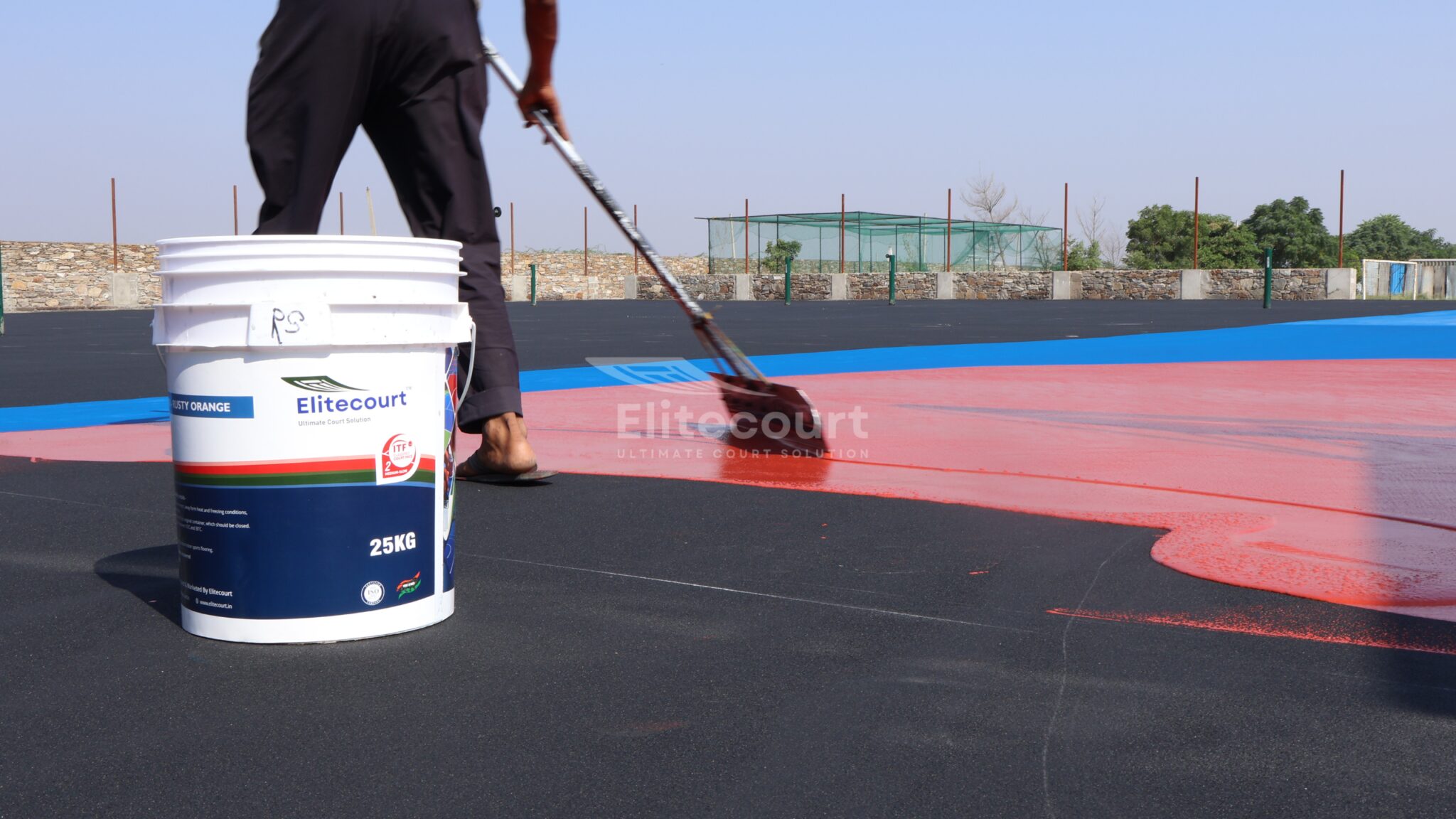
Transform Your Sports Facility Today!
Contact us for high-quality synthetic sports flooring material and elevate your space!
Typical Layer Configurations in Acrylic Tennis Court Flooring
Elitecourt’s acrylic systems offer different layer builds depending on the performance requirement—training courts, recreational play, or higher‑intensity competitive use.
Non‑Cushioned System (Training / Recreational)
A common non‑cushioned acrylic tennis court flooring system may follow a structure such as:
- Acrylic primer (1 coat)
- Acrylic resurfacer with silica (2 coats)
- Acrylic color topcoat (2 coats)
This configuration offers:
- Solid hard‑court feel
- Reliable traction and ball bounce
- Straightforward maintenance
Cushioned System (High‑Volume Training / Competitive)
A cushioned system introduces multiple cushion layers between resurfacer and color coats:
- Acrylic primer
- Acrylic resurfacer with silica (1–2 coats)
- Cushion coats (multiple layers)
- Acrylic color topcoat (2 coats)
This design is recommended where player comfort and reduced fatigue are priorities, such as tennis academies or performance centers with extended training schedules.
Illustration Table: Simplified System Comparison
How Acrylic Tennis Court Flooring Aligns With ITF Expectations
Understanding ITF Classification and Hard Courts
The International Tennis Federation (ITF) categorizes court surfaces based on pace and requires surfaces used in certain competitive environments to meet defined criteria for ball speed and bounce. Acrylic tennis court flooring typically falls under the hard court category and can be engineered to produce different pace levels (slow, medium‑slow, medium, etc.).
Elitecourt focuses its tennis systems around ITF‑aligned hard‑court performance, enabling contractors and facilities to work with materials suitable for ITF classification when installed and tested according to official guidelines. This is crucial for facilities that host tournaments or want their training courts to mirror the characteristics of recognized competitive surfaces.
For in‑depth technical detail, the ITF’s official resources on court surface classification are a valuable reference.
Authoritative outbound reference: ITF – Court Pace Classification
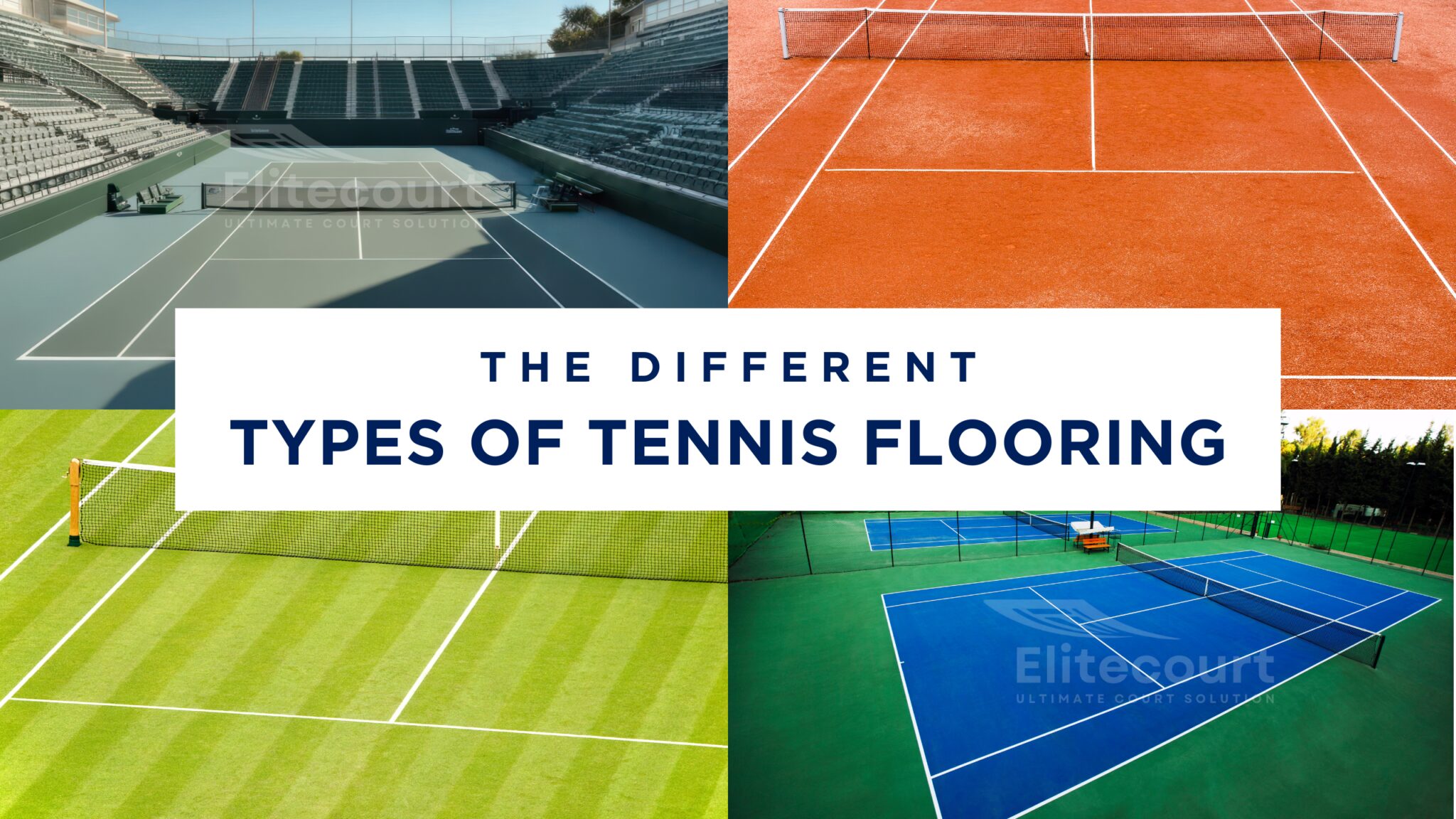
Acrylic Tennis Court Flooring vs Other Tennis Surface Types
When facility owners evaluate acrylic tennis court flooring, they often compare it to other surface options such as clay, natural grass, or synthetic turf.
Key Differences at a Glance
Acrylic hard courts, when built using quality materials, offer a blend of predictability, moderate maintenance, and excellent all‑weather playability, making acrylic tennis court flooring the default choice for many modern facilities.
Transform Your Sports Facility Today!
Contact us for high-quality synthetic sports flooring material and elevate your space!
Where Acrylic Tennis Court Flooring Works Best
Elitecourt’s acrylic materials are designed to adapt across a variety of tennis environments.
Tennis Academies and Training Centers
- Need courts that support long, daily training hours.
- Often prefer cushioned acrylic systems to reduce fatigue and impact stress.
- Benefit from consistent surfaces that replicate tournament‑style hard courts.
Clubs and Sports Complexes
- Require surfaces that balance performance with manageable upkeep.
- Appreciate the aesthetic flexibility of acrylic tennis court flooring for branding and zoning.
- Often use multi‑sport zones where the same acrylic technology supports tennis and other courts.
Schools, Colleges, and Universities
- Look for durable, weather‑resistant surfaces suitable for student training and inter‑institutional matches.
- Need surfaces that remain safe and stable with varied usage intensity.
- Value low maintenance demands over long service life.
Community and Public Courts
- Benefit from robust, non‑cushioned acrylic systems engineered for high usage.
- Need slip‑resistant, visibly clear, and easy‑to‑maintain surfaces.
- Often look for ITF‑aligned performance to encourage serious training on public infrastructure.
In all these scenarios, high‑quality acrylic tennis court flooring material from a sports‑focused manufacturer like Elitecourt provides a reliable foundation for contractors to deliver long‑lasting courts.
Transform Your Sports Facility Today!
Contact us for high-quality synthetic sports flooring material and elevate your space!
Critical Performance Factors in Acrylic Tennis Court Flooring
Ball Bounce and Pace
The hallmark of good acrylic tennis court flooring is predictable ball bounce and controlled pace across the entire court.
- Resurfacer and topcoat texture affect friction and ball behavior.
- Layer thickness and filler selection influence pace and response.
- ITF‑oriented designs aim for specific court pace ranges, aligning training courts with tournament surfaces.
Surface Friction and Player Traction
Surface friction must balance secure grip and smooth movement.
- Excessive smoothness increases slip risks, especially in wet or dusty conditions.
- Excessive roughness can cause undue shoe wear and increase impact loads.
- Controlled texturing in Elitecourt’s acrylic tennis court flooring systems helps maintain safe, responsive traction.
Shock Absorption (With Cushioned Systems)
While standard hard courts are inherently firm, cushioned acrylic systems introduce elastomeric layers that improve shock absorption.
- Useful in academies and high‑volume training programs.
- Help reduce cumulative fatigue and stress on joints.
- Maintain a hard‑court play feel while softening impact.
UV and Weather Resistance
Outdoor tennis courts face intense solar exposure, temperature swings, and occasional water pooling.
- UV‑resistant pigments and stable acrylic binders mitigate fading and chalking.
- Quality topcoats resist peeling and micro‑cracking under thermal cycling.
- Correctly designed systems maintain functional texture for many seasons.
Elitecourt’s synthetic acrylic formulations are built specifically for outdoor sports use, manufactured using premium binders and pigments to withstand demanding environments.
Planning an Acrylic Tennis Court Flooring Project
Although Elitecourt does not perform installation, understanding the end‑to‑end journey helps owners coordinate with their chosen contractors more effectively.
Step-1: Define the Court’s Purpose
Before choosing a system, clarify the primary use of your court:
- Academy training vs casual club play
- Tournament‑style practice vs recreational sessions
- Single‑court private facility vs multi‑court complex
This decision influences whether a cushioned or non‑cushioned acrylic tennis court flooring system makes more sense for your project.
Step-2: Confirm Base Construction
Acrylic systems depend on a solid asphalt or concrete base built with proper slopes and compaction.
- Drainage and slope must accommodate water runoff.
- Base must be structurally sound and stable.
- Surface irregularities should be within tolerances recommended by your contractor and material manufacturer.
Step-3: Select the Material System
Work with your contractor and Elitecourt’s technical information to select:
- System type (cushioned or non‑cushioned).
- Number of resurfacer and color coats.
- Target performance profile and color scheme.
Elitecourt’s system‑based acrylic tennis court flooring guidance helps align material selection with your objectives.
Step-4: Application and Curing
Your installation partner will manage surface preparation, layer application, and curing times based on Elitecourt’s specifications and local conditions.
- Ambient temperature and humidity influence curing.
- Each layer must dry adequately before applying the next.
- Line marking is executed after full curing of topcoats.
Step-5: Ongoing Court Care
Acrylic tennis court flooring is relatively low‑maintenance but benefits greatly from consistent care.
- Routine cleaning to remove dust, debris, and organic matter.
- Prompt removal of standing water and leaf litter.
- Periodic inspection for surface wear, spot repairs, and recoating at appropriate intervals.
Transform Your Sports Facility Today!
Contact us for high-quality synthetic sports flooring material and elevate your space!
Key Benefits of Elitecourt Acrylic Tennis Court Flooring Material
Elitecourt’s synthetic acrylic systems are developed specifically for sports courts, not generic industrial coatings.
Sports‑Engineered Formulations
Elitecourt designs its acrylic tennis materials around real‑world tennis demands:
- Consistent texture to support stable footwork and predictable play.
- Controlled friction to balance grip and movement.
- High‑quality binders and pigments for long‑term performance and color stability.
Versatile, Multi‑Sport Proven Technology
The same material science platform powering Elitecourt’s tennis systems is also used for basketball, volleyball, pickleball, and jogging tracks.
- Demonstrates robustness across different sports.
- Validates durability under varied movement patterns.
- Supports multi‑court complexes where a unified visual and performance theme is desired.
ITF‑Focused Design and Guidance
Elitecourt’s acrylic tennis court flooring is engineered with ITF hard‑court expectations in mind, supporting facilities that aim to align with international norms in pace and ball behavior.
- ITF‑oriented system guidance for contractors.
- Materials compatible with ITF classification pathways when installed as per required specifications.
- Emphasis on quality and repeatability across projects.
Reliable Manufacturing and Technical Support
As a focused acrylic sports flooring manufacturer, Elitecourt provides:
- Technical specification sheets and product data to support correct application.
- Clear system recommendations for different court purposes.
- Material support for contractors seeking dependable acrylic tennis court flooring solutions.
Maintenance Best Practices for Acrylic Tennis Court Flooring
Even the best acrylic tennis court flooring requires thoughtful maintenance to retain performance and appearance.
Routine Cleaning
- Use soft bristle brooms or blowers to remove dust, leaves, and debris.
- Wash surfaces periodically with water and mild cleaning agents compatible with acrylic coatings.
- Avoid harsh chemicals that could damage acrylic binders or alter surface texture.
Environmental Control
- Address drainage issues early to prevent standing water.
- Trim surrounding vegetation to reduce organic debris and shade‑related moisture problems.
- Protect the court from oil spills, paint drips, or other contaminants from nearby activities.
Periodic Inspection and Recoating
- Monitor surface for fading, localized wear, or texture loss.
- Plan recoating cycles in alignment with usage intensity and local conditions.
- Engage professionals familiar with acrylic tennis court flooring to execute surface renewals using compatible acrylic systems.Elitecourt Expert Tip
Regular light cleaning and prompt attention to small surface issues can significantly extend the functional life and visual appeal of your acrylic tennis court flooring, delaying the need for full resurfacing and ensuring safer play.
Common Misconceptions
“Acrylic Courts Are Too Hard on Players”
While standard hard courts are firm, cushioned acrylic systems introduce shock‑absorbing layers that reduce impact stress on joints, particularly beneficial for players who train several hours a day. When specified correctly, cushioned acrylic tennis court flooring provides a comfortable training environment without sacrificing performance.
“Any Exterior Paint Can Work”
Generic exterior coatings are not designed for the unique friction, elasticity, and wear demands of tennis. Sports‑engineered acrylic systems like Elitecourt’s incorporate appropriate fillers, resins, and pigments, resulting in a surface that can withstand repetitive high‑speed footwork and ball impacts.
“All Acrylic Systems Perform the Same”
Acrylic tennis court flooring systems can vary considerably in resin quality, filler selection, UV stability, and layer structure. Working with a manufacturer that specializes in synthetic acrylic sports flooring—such as Elitecourt—helps ensure the system is designed and tested for sports‑specific performance rather than generic applications.
Technical Considerations When Specifying Acrylic Tennis Court Flooring
When planners, consultants, or contractors specify Elitecourt’s acrylic materials for tennis courts, they typically evaluate several technical parameters using manufacturer data sheets and, where applicable, standards references.
Surface Evenness and Base Preparation
- Base tolerances should align with recommendations so puddling is minimized.
- Crack repair, patching, and leveling are critical prior to acrylic application.
- Edge detailing and joint treatments must be compatible with acrylic tennis court flooring systems.
Layer Thickness and System Build
- Total system thickness varies with cushioned vs non‑cushioned designs.
- Resurfacer and cushion coats must be applied at appropriate rates.
- Over‑ or under‑application can influence court performance and durability.
Environmental and Application Conditions
- Temperature, humidity, and wind impact drying and curing.
- Manufacturers often advise specific application conditions for best results.
- Experienced contractors interpret these guidelines in the context of local climate.
Why Elitecourt Is a Trusted Partner
Elitecourt has established itself as a reliable supplier of synthetic acrylic sports flooring materials for tennis and other courts, serving facilities and contractors who prioritize quality and performance.
Focus on Sports Flooring Materials
Elitecourt concentrates exclusively on synthetic acrylic sports court flooring materials, meaning its formulations and R&D are centered on the needs of athletes, coaches, and facility managers rather than general‑purpose coatings.
Broad Sports Application Experience
The same material expertise that powers Elitecourt’s tennis court systems is leveraged for:
- Basketball courts
- Pickleball courts
- Volleyball courts
- Jogging and running tracks
This cross‑sport experience provides strong feedback loops on wear, traction, and comfort under diverse conditions, informing ongoing improvements in acrylic tennis court flooring materials.
Commitment to Quality and Standards
Elitecourt emphasizes ITF‑oriented design for tennis surfaces and provides information and guidance aligned with recognized expectations for hard courts, including the importance of ITF classification and pace characteristics. Facilities and contractors benefit from systemized, standards‑aware acrylic materials that support high‑quality court construction.
Transform Your Sports Facility Today!
Contact us for high-quality synthetic sports flooring material and elevate your space!
FAQs
Acrylic tennis court flooring is a layered hard‑court system applied over asphalt or concrete, using acrylic primer, resurfacer, optional cushion layers, and colored topcoats for durable, consistent play.
Yes. Properly specified and installed acrylic tennis court flooring can deliver consistent bounce, reliable pace, and safe traction suitable for high‑level training and competitive‑style play.
Cushioned acrylic tennis court flooring adds shock‑absorbing layers under the topcoats, reducing impact on joints and player fatigue while keeping the feel and response of a hard court.
With a sound base, quality materials, and regular cleaning and recoating, acrylic tennis court flooring can remain safe, playable, and visually stable for many seasons.
Maintenance focuses on sweeping or blowing off debris, occasional washing, clearing standing water, and scheduling recoats when color or texture wears, so performance and grip stay consistent.