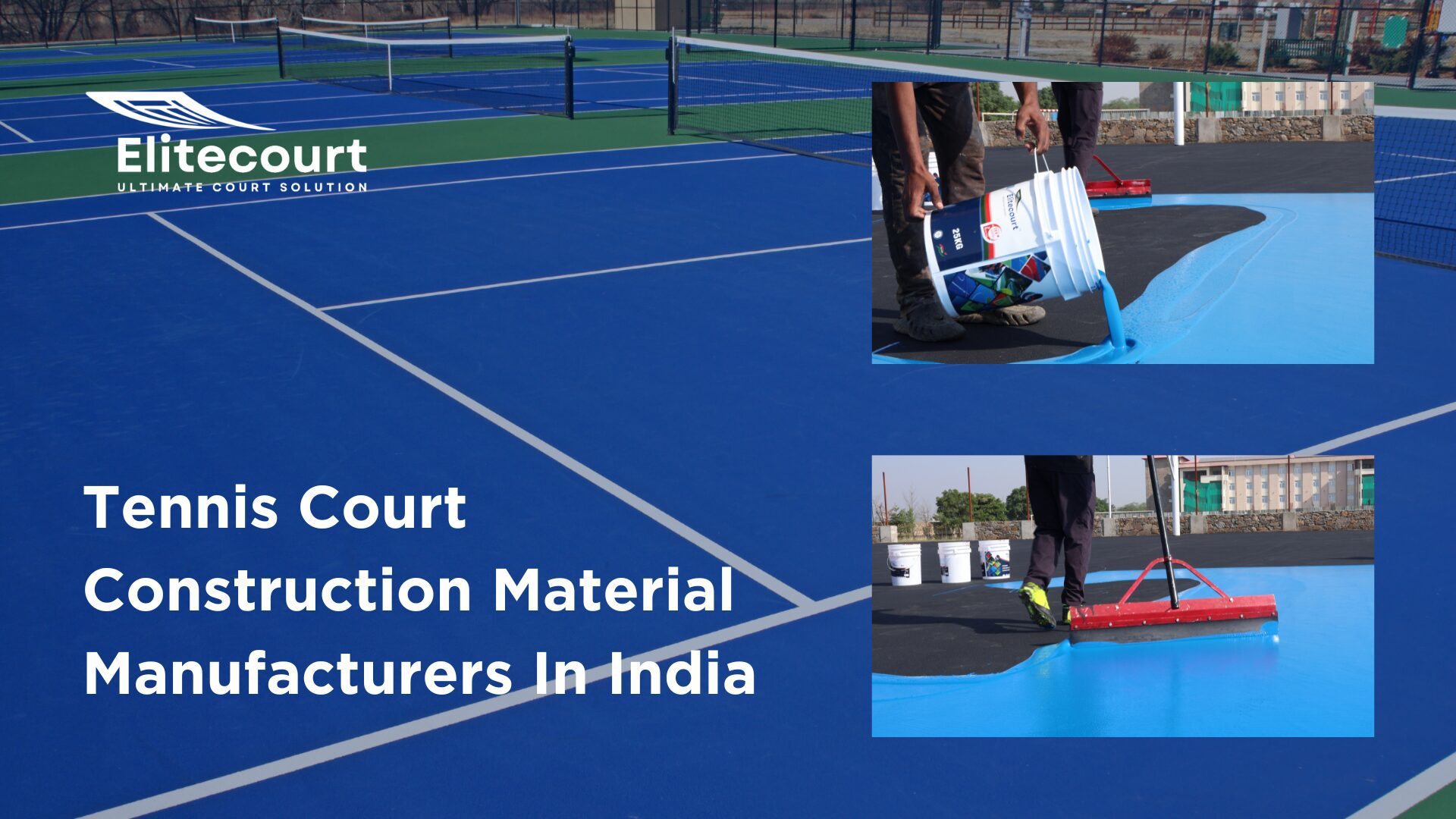
When we talk about tennis court construction, the conversation often revolves around the finished product—the thrill of the game, the bounce of the ball, and the aesthetic appeal of the court. However, the true foundation of a high-performance court lies deep within the layers of materials used to build it. For facility managers, sports clubs, and educational institutions in India, understanding the nuances of construction materials is the first step toward creating a lasting sporting asset.
At Elitecourt, we understand that a tennis court is more than just a painted surface; it is an engineered system designed for safety, performance, and longevity. This comprehensive guide will walk you through the essential aspects of tennis court construction, focusing on the advanced synthetic acrylic materials that define modern sports flooring. Whether you are upgrading an existing facility or planning a new project, knowing what goes into the ground is just as important as the game played on top of it.
The Evolution of Tennis Court Surfaces
To appreciate modern tennis court construction, we must look at how far the industry has come. Historically, tennis was played on grass or crushed brick (clay). While these surfaces offer specific playing characteristics, they come with significant maintenance challenges. Grass requires constant watering and mowing, while clay needs regular brushing and moisture management.
The shift toward hard courts, specifically those finished with synthetic acrylics, revolutionized the sport. These surfaces offer a consistent ball bounce, true footing for players, and drastically reduced maintenance requirements. For a manufacturer like Elitecourt, the goal is to produce materials that replicate the best qualities of traditional surfaces while adding the durability required for India’s diverse climate.
Why Acrylic is the Gold Standard
Synthetic acrylic flooring has become the dominant choice for tennis court construction globally. The reasons are multifaceted:
- All-Weather Durability: Unlike natural surfaces, acrylic systems are designed to withstand heavy rain, intense UV radiation, and temperature fluctuations without losing their structural integrity.
- Customizable Pace: The speed of the court can be engineered by adjusting the texture and composition of the topcoats.
- Player Safety: Modern acrylic systems often include cushioning layers that reduce impact on joints, allowing for longer play times with less fatigue.
- Aesthetic Flexibility: With a wide range of vibrant colors available, courts can be customized to match team colors or architectural designs.
Understanding the Anatomy of a Synthetic Hard Court
When you look at a hard court, you are seeing the final finish, but tennis court construction involves a complex layering system. As a manufacturer, Elitecourt focuses on producing the high-quality chemical components that make up these layers. A typical high-performance acrylic court consists of several distinct stages of application.
The Sub-Base: The Unseen Foundation
While we specialize in the surfacing materials, the importance of the sub-base cannot be overstated in tennis court construction. The sub-base is usually made of asphalt (bitumen) or reinforced concrete. This rigid foundation provides the structural strength to support the weight of the players and the surfacing materials.
- Asphalt: Preferred for its slight flexibility, which pairs well with acrylic coatings. It must be properly cured (usually 14-28 days) to allow volatile oils to escape before any coating is applied.
- Concrete: Offers immense durability but requires a vapor barrier to prevent moisture from rising and blistering the surface. It also requires acid etching or mechanical grinding to ensure the acrylic materials adhere properly.
Expert Tip: A flawless sub-base is critical. No amount of high-quality acrylic coating can hide a structural failure in the concrete or asphalt. Ensure the slope is correct (usually 1%) for drainage before applying any Elitecourt products.
The Resurfacer Layer
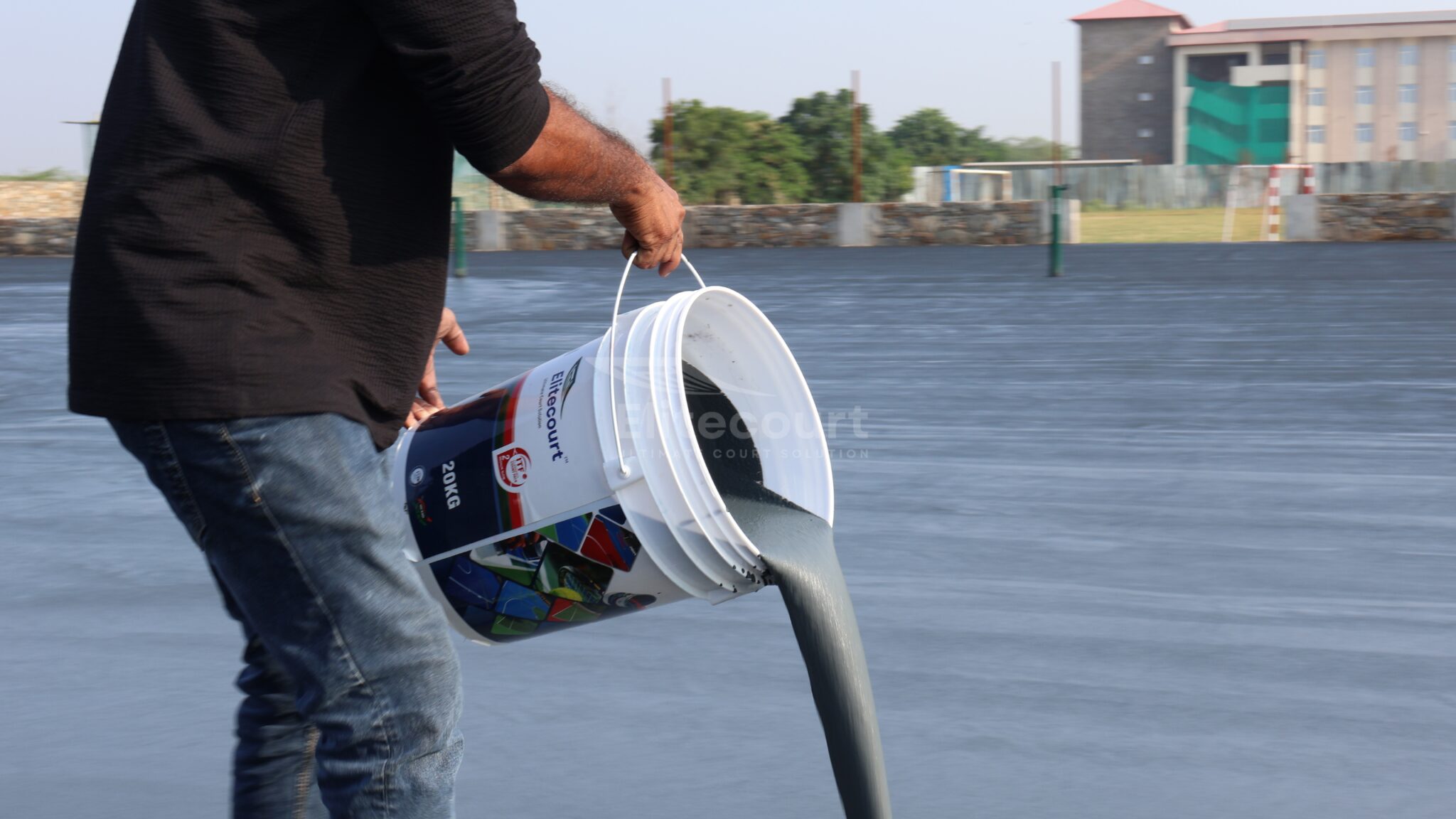
Once the sub-base is prepared, the first step in the coating process involves the Resurfacer. This is a heavy-bodied acrylic emulsion mixed with sand. Its primary function is to fill minor voids, varying textures, and porosity in the asphalt or concrete surface.
Think of the Resurfacer as the primer that sets the stage. In tennis court construction, skipping this step can lead to a surface that looks patchy or wears unevenly. The Resurfacer creates a uniform texture that allows subsequent layers to bond effectively.
The Cushion System
For premium courts, a cushioning system is applied on top of the resurfacer. This is where tennis court construction transitions from basic utility to high performance. The cushion layers consist of acrylic binders mixed with rubber granules.
These layers provide shock absorption. When a player lunges for a ball, the surface compresses slightly, absorbing energy that would otherwise travel up the player’s leg. This reduces the risk of shin splints and knee injuries. Elitecourt manufactures cushion components that maintain their resilience over years of play, ensuring that the “soft feel” doesn’t harden over time.
The Color Coats
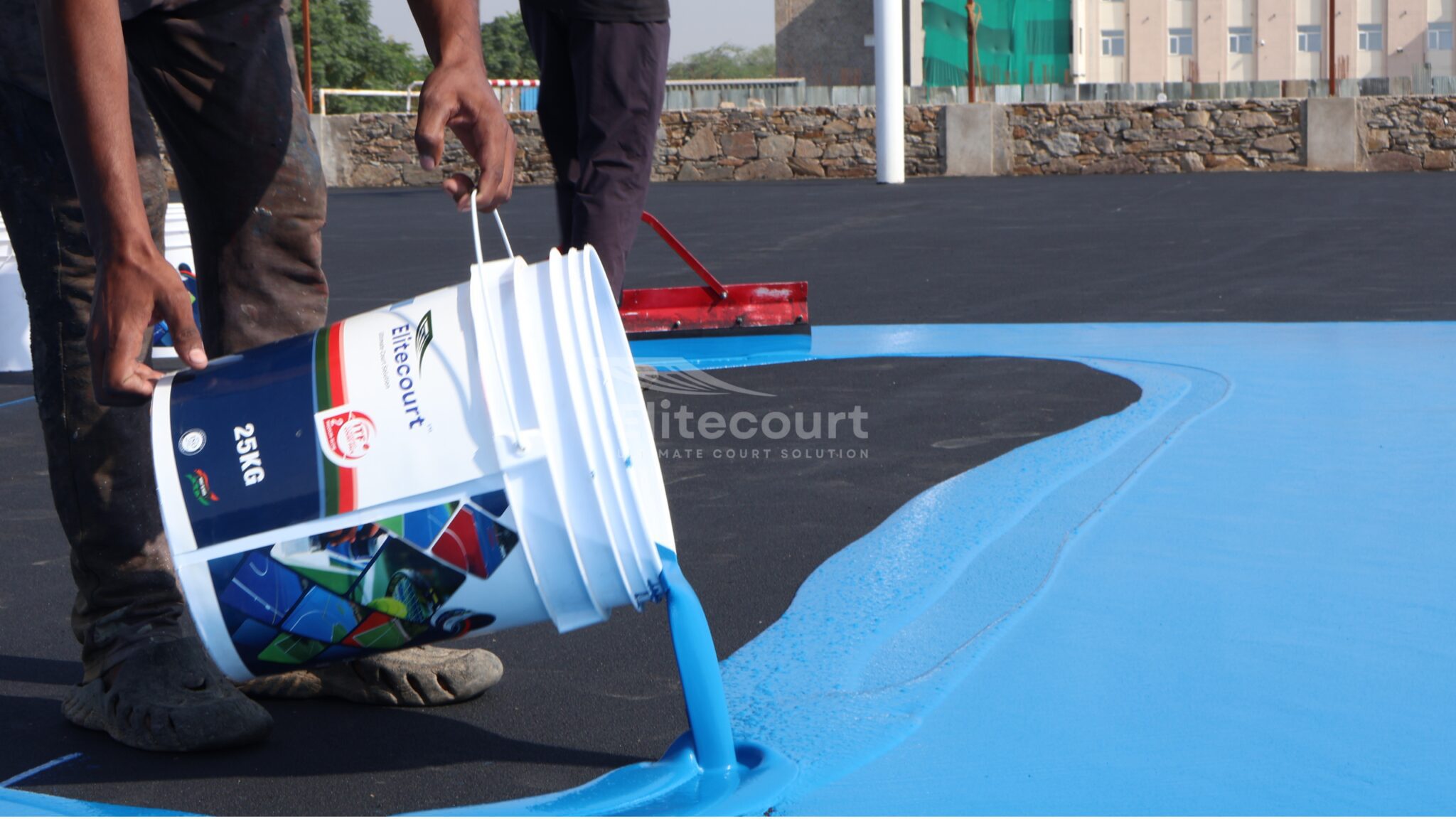
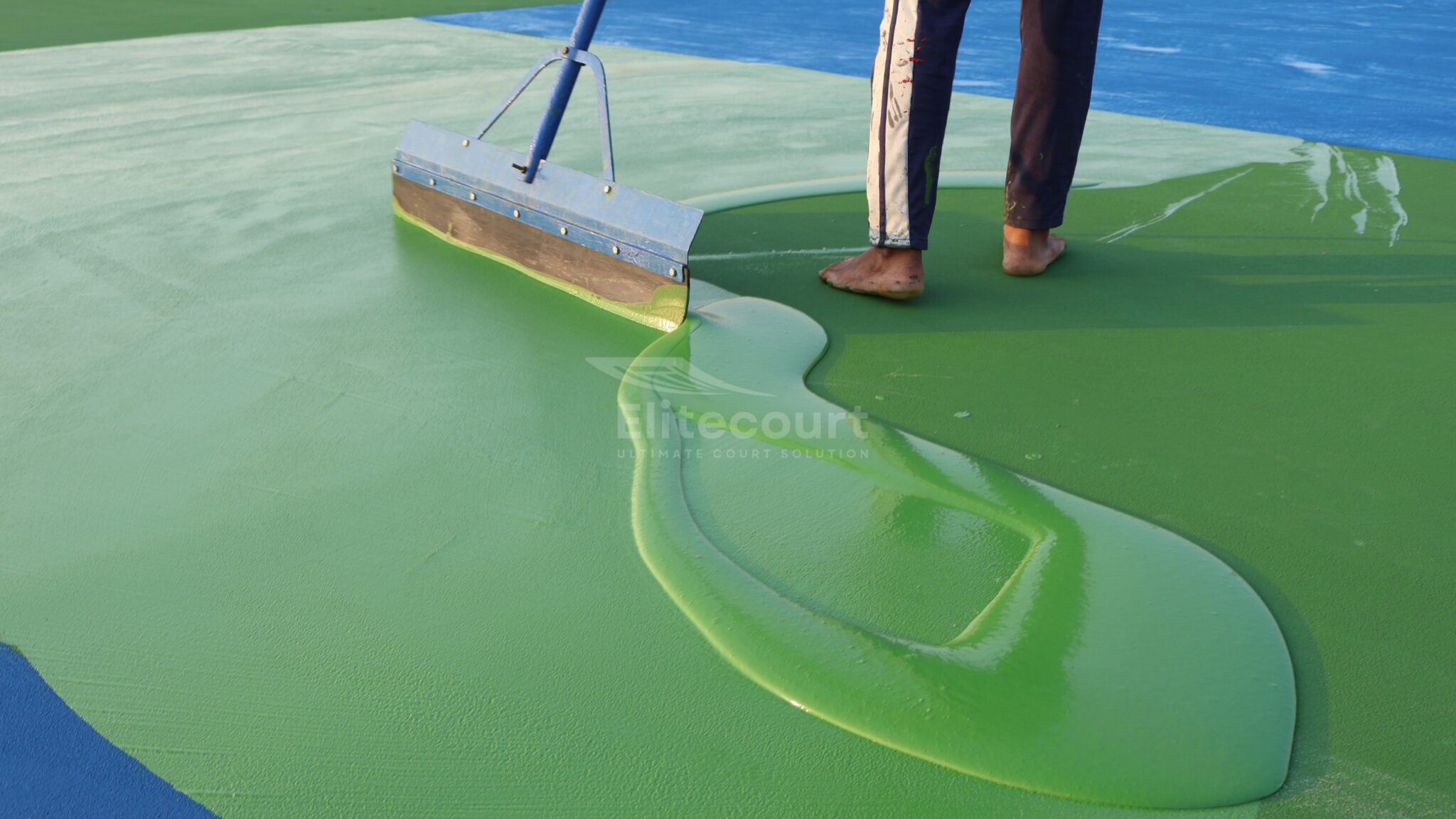
This is the layer that players interact with directly. The color coats are highly pigmented acrylic latex emulsions. In tennis court construction, these coats serve two purposes: aesthetics and performance.
- UV Resistance: High-quality pigments prevent the colors from fading under the harsh Indian sun.
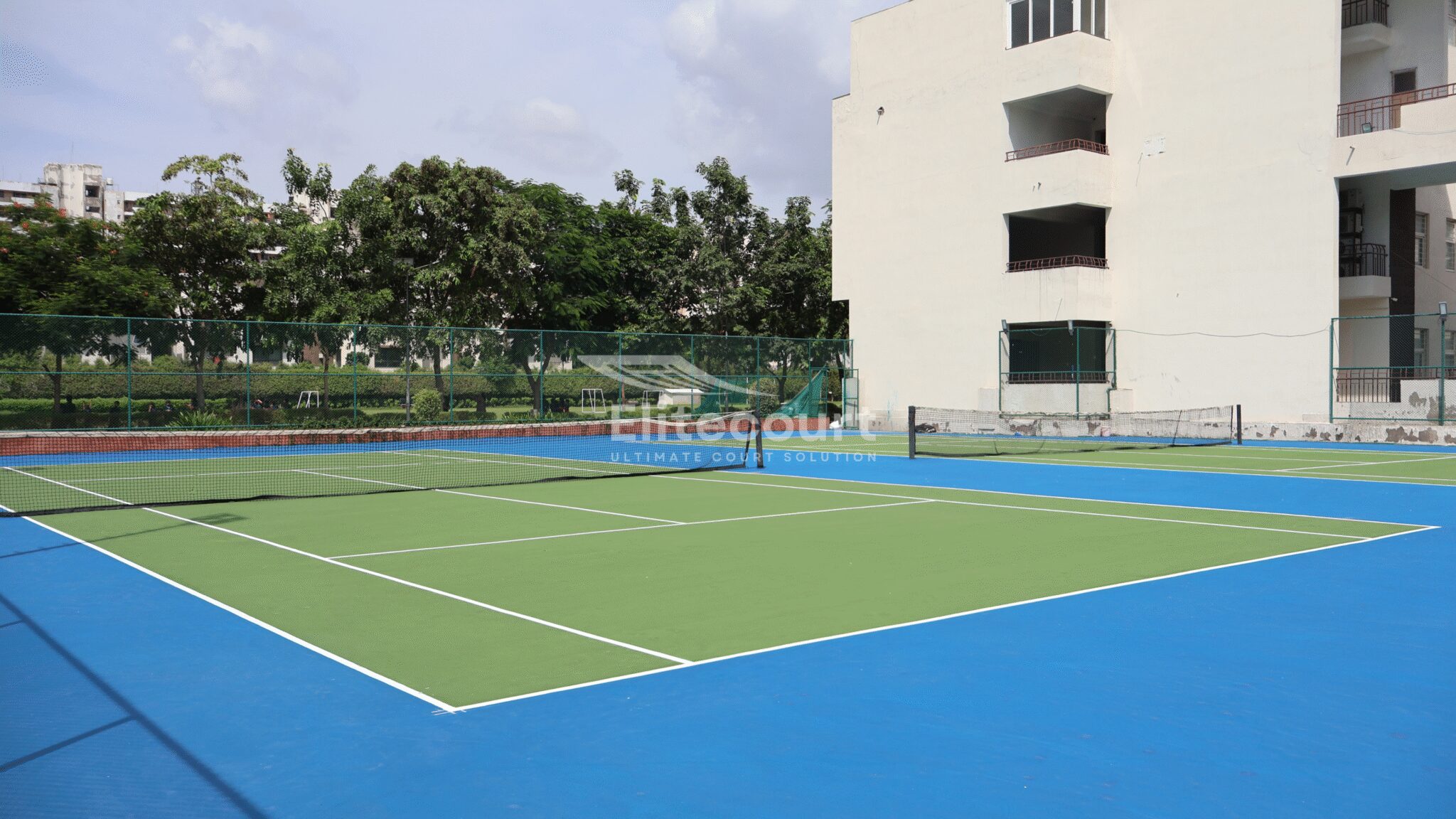
- Texture: Silica sand is mixed into the color coats to control the speed of the court. A finer sand mix results in a faster court, while a coarser mix creates a slower surface with more grip.
The Line Markings
The final step is the application of line paint. This isn’t just standard white paint; it is a specialized heavy-bodied acrylic designed to provide sharp, crisp edges and high visibility. It must also have the same texture as the rest of the court to prevent players from slipping when they step on a line.
Transform Your Sports Facility Today!
Contact us for high-quality synthetic sports flooring material and elevate your space!
Key Considerations for Tennis Court Construction in India
India presents unique challenges for tennis court construction. From the humid coasts of Chennai to the arid heat of Rajasthan and the heavy monsoons of Mumbai, the materials used must be versatile and robust.
Dealing with UV Radiation
The sun is the enemy of synthetic materials. Intense UV radiation can break down chemical bonds, causing surfaces to chalk, fade, or become brittle. Elitecourt formulations are specifically engineered with UV stabilizers. These additives act like sunscreen for the court, absorbing or reflecting harmful rays to preserve the vibrant color and structural integrity of the acrylic layers.
Managing Moisture and Drainage
Water is another significant threat. While acrylic surfaces are impermeable to water from above, they are vulnerable to hydrostatic pressure from below. If the ground water table is high or the sub-base lacks a vapor barrier, water vapor can push up against the coating, causing blisters or delamination.
In tennis court construction, we emphasize the use of “breathable” coatings where necessary, or ensure that the base construction includes proper moisture mitigation strategies. Our materials are formulated to have high adhesion strength to resist these pressures to a significant degree.
Thermal Expansion and Contraction
In many parts of India, the temperature difference between day and night can be extreme. This causes the asphalt or concrete base to expand and contract. If the acrylic coating is too rigid, it will crack. Elitecourt materials possess excellent elongation properties. They are flexible enough to move with the sub-base without snapping, maintaining a seamless surface even in fluctuating temperatures.
The Role of Sand in Court Texture
One of the most technical aspects of tennis court construction involves the selection and integration of silica sand. Sand is not just a filler; it is the primary determinant of the court’s Pace Rating (CPR).
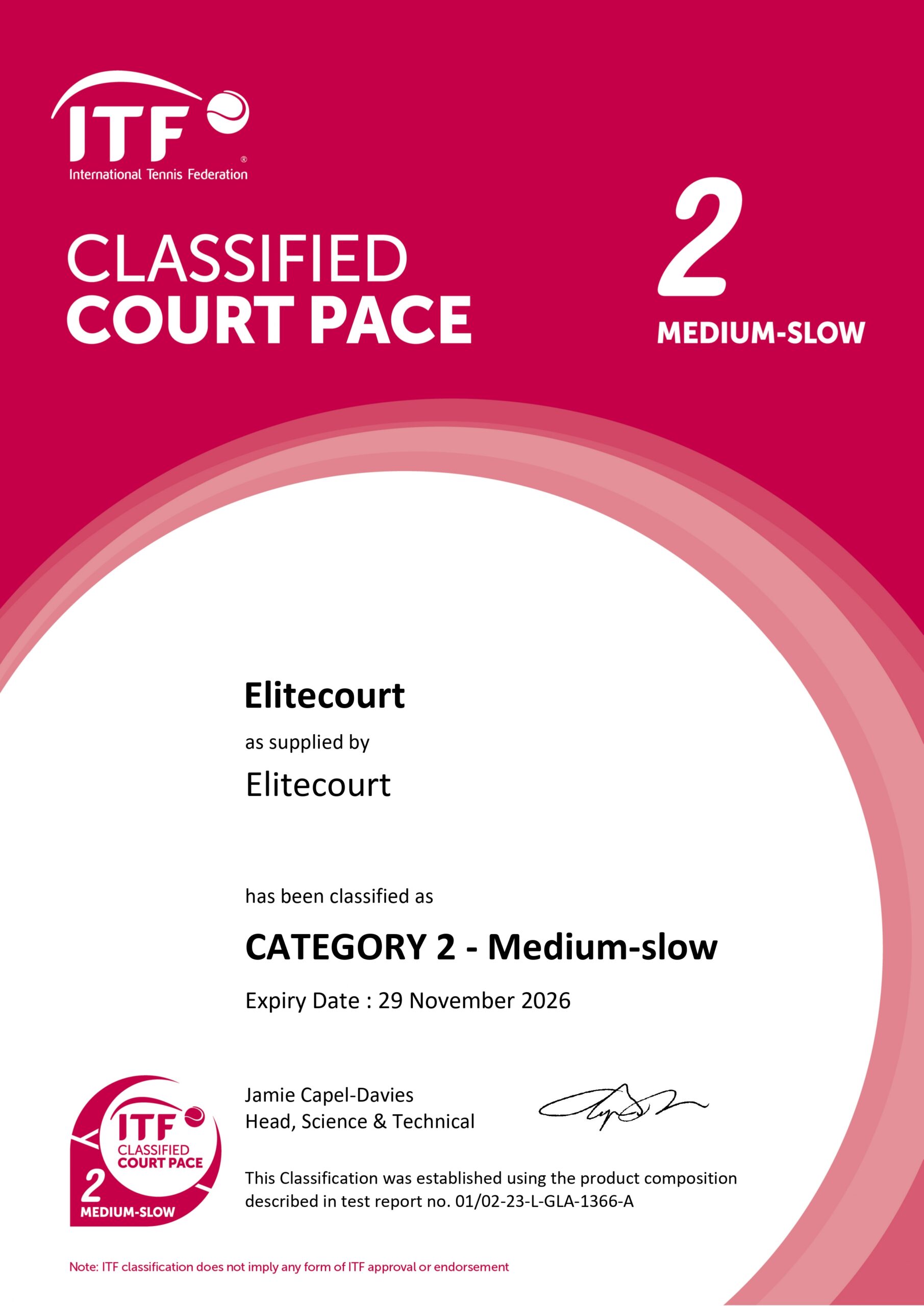
The International Tennis Federation (ITF) classifies courts into categories ranging from Slow (Category 1) to Fast (Category 5). The difference lies in the mesh size and quantity of sand mixed into the acrylic color coats.
- Slow Courts: Use larger, angular sand particles. This increases friction between the ball and the surface, causing the ball to slow down and bounce higher. This favors defensive baseliners.
- Fast Courts: Use finer, rounded sand particles. This reduces friction, allowing the ball to skid through with a lower bounce. This favors serve-and-volley players.
- Medium Courts: Use a balanced blend, offering a neutral playing field suitable for all styles.
At Elitecourt, we provide precise specifications for sand mixing to ensure that the final surface meets the desired pace rating. This level of customization is crucial for academies training professional players who need to adapt to different court speeds.
Comparison: Acrylic vs. Other Surfaces
To understand why we specialize in acrylics, it helps to compare them with other common options used in tennis court construction.
| Feature | Synthetic Acrylic (Hard Court) | Natural Grass | Clay (Crushed Brick) | Polypropylene Tiles |
|---|---|---|---|---|
| Maintenance | Low (Sweep/Wash) | Very High (Mow/Water) | High (Brush/Water) | Low |
| Durability | Excellent | Low (Wears quickly) | Moderate | Good |
| Ball Bounce | Consistent | Variable/Low | Slow/High | Fast/Sometimes Hollow |
| Weather Resistance | All-Weather | Dry Weather Only | Dry Weather Only | All-Weather |
| Speed Customization | High | None | Low | Low |
This table highlights why acrylic is the practical choice for the majority of projects in India. It offers the best balance of performance, durability, and ease of ownership.
Essential Components of Elitecourt Materials
Our manufacturing process is driven by science. We don’t just mix paint; we formulate complex chemical systems. Here is a deeper look into the components that make our products stand out in the realm of tennis court construction.
High-Solid Acrylic Resins
The backbone of our coatings is 100% acrylic resin. Unlike vinyl or styrene-based copolymers, pure acrylics do not yellow or become brittle over time. They retain their flexibility and color clarity for years. High-solid content means that when the liquid evaporates, a thick, substantial layer of material remains on the court.
Durable Pigments
We use iron oxide and organic pigments that are proven to withstand weathering. These pigments are ground to a fine dispersion to ensure consistent color throughout the mix. This prevents “streaking” during application and ensures the court looks uniform from every angle.
Mineral Fillers
To give the coating body and toughness, we incorporate specific mineral fillers. These fillers reinforce the acrylic film, making it resistant to the abrasion caused by shoes and ball impacts.
Addressing Common Concerns
To improve your understanding of tennis court construction, we have compiled a series of mini-blogs addressing specific questions we often receive.
Does the thickness of the acrylic layer matter?
Absolutely. A common misconception is that all acrylic courts are the same. However, the number of layers applied directly correlates to the longevity and performance of the court. A standard “recoating” might only involve two coats of color. A new tennis court construction project typically requires a 5 to 7-layer system (resurfacer + multiple color coats). For cushioned courts, this can go up to 9 or more layers. Thicker systems wear longer and provide better UV protection for the asphalt base.
Can old concrete courts be converted to acrylic?
Yes, but surface preparation is key. Old concrete often has cracks, oil stains, or spalling. These issues must be repaired first. Furthermore, concrete is rigid, so we recommend using a specialized primer to ensure the acrylic bonds well. In some cases, if the concrete is severely damaged, a slip-sheet system or a fresh asphalt overlay might be required before the acrylic materials can be applied.
How do environmental factors affect the curing process?
During tennis court construction, the weather plays a huge role in how the materials set. Acrylics are water-based and rely on evaporation to cure. High humidity (common in coastal India) slows down drying. Ideally, application should happen when temperatures are above 10°C and rising, with low humidity. Applying materials in the rain or when rain is imminent is a recipe for disaster, as the uncured coating can wash away.
The Importance of ITF Standards
When planning a tennis court construction project, you will often hear about ITF certification. The International Tennis Federation sets the global standards for court dimensions, slope, and surface pace.
While Elitecourt manufactures the materials, adherence to ITF standards also depends on the installation quality. However, using ITF-classified materials ensures that the surface can meet these rigorous requirements. It guarantees that the ball bounce is true (no weird dead spots) and that the pace is consistent across the entire playing area.
For competitive venues, having an ITF-classified surface is often mandatory. It signals to players and tournament organizers that the facility is of professional quality.
For detailed information on technical specifications and court classification, you can refer to the International Tennis Federation (ITF) Technical Centre.
Transform Your Sports Facility Today!
Contact us for high-quality synthetic sports flooring material and elevate your space!
Maintenance: Protecting Your Investment
Even the best tennis court construction materials require care to maximize their lifespan. While acrylic courts are low maintenance, they are not “no maintenance.”
Routine Cleaning
Dirt, leaves, and pine needles can accumulate on the surface. If left, they hold moisture and can lead to the growth of mold or mildew, which eats into the acrylic. Regular sweeping or blowing with an air blower keeps the surface clean.
Water Removal
After heavy rains, water should be removed using a foam roller squeegee. Standing water, especially if it sits for days in low spots (birdbaths), can act like a magnifying glass for sunlight, prematurely aging that specific spot of the coating.
Shoe Policy
The most common cause of premature wear is improper footwear. Players should only wear non-marking tennis shoes. Running shoes with black soles or hard cleats can scuff the surface and wear down the texture, altering the playing characteristics.
Sustainable Practices in Manufacturing
At Elitecourt, we are conscious of our environmental footprint. Modern tennis court construction is moving towards greener solutions. Our manufacturing processes prioritize:
- Low VOC Formulations: Volatile Organic Compounds (VOCs) are harmful to the atmosphere. Our water-based acrylics have very low VOC content, making them safer for the applicators and the environment.
- Recyclable Packaging: We strive to use packaging materials that can be recycled, reducing job site waste.
- Durability as Sustainability: The longer a court lasts, the fewer resources are needed to resurface or rebuild it. By engineering high-durability materials, we reduce the lifecycle carbon footprint of the facility.
Troubleshooting Common Surface Issues
In the world of tennis court construction, problems can arise if best practices aren’t followed. Recognizing these issues early can save significant repair costs.
Blistering
Blisters look like bubbles on the court surface. This is almost always caused by moisture trapped beneath the coating. As the sun heats the court, the water turns to vapor and expands, pushing the coating up. This is a drainage/base issue, not a material failure, but breathable coatings can help mitigate it.
Cracking
Cracks usually mirror structural failures in the sub-base. “Reflective cracking” occurs when a crack in the asphalt or concrete telegraphs through the acrylic topcoat. While acrylics are flexible, they cannot bridge wide structural gaps. These must be repaired with specialized crack-filling compounds before resurfacing.
Peeling
Peeling often indicates improper surface preparation. If the base wasn’t cleaned of dirt, grease, or algae before the acrylic was applied, the bond will fail. It can also happen if the layers were applied too thickly in one go, preventing the bottom of the layer from curing properly.
The Future of Sports Flooring in India
The demand for high-quality sports infrastructure in India is exploding. From private residential complexes to government sports cities, tennis court construction is a booming sector.
We are seeing a trend towards multi-sport surfaces. Facilities often want a court that can host tennis, basketball, and volleyball. Acrylic surfaces are uniquely suited for this. By adjusting the texture and line markings, a single court can serve multiple sports without compromising performance for any of them.
Another trend is the demand for cushioned surfaces. As the population becomes more health-conscious, the focus on injury prevention is increasing. Cushioned acrylic systems, once reserved for elite tournaments, are now becoming standard in clubs and schools.
Selecting the Right Colors
While green and blue are the traditional choices (often called “Tournament Blue” or “US Open Blue”), tennis court construction offers immense creative freedom.
- Heat Reduction: Lighter colors reflect more sunlight, keeping the court surface cooler. This is a significant consideration in India’s hot climate. A lighter inner court with a darker outer court is a popular configuration.
- Visibility: The contrast between the ball (yellow) and the court color is vital. Dark blue or purple inner courts provide excellent contrast, making it easier for players to track the ball.
- Aesthetics: Two-tone combinations define the playing area clearly. Using a different color for the perimeter (run-off area) helps players orient themselves spatially during fast-paced rallies.
Why Choose Elitecourt Materials?
In the competitive landscape of tennis court construction material manufacturers, Elitecourt stands apart through a commitment to quality and innovation.
- Indigenously Manufactured: We understand the Indian climate because we make our products here. We don’t just import foreign formulas; we adapt technology to suit local conditions.
- Consistency: Every batch of material undergoes rigorous quality control testing to ensure color consistency and viscosity.
- Technical Support: We don’t just sell buckets of paint. We provide detailed technical specifications and application guides to ensure that the final result meets our high standards.
- Comprehensive Range: From primers and resurfacers to cushion layers and topcoats, we offer the complete system under one roof.
Transform Your Sports Facility Today!
Contact us for high-quality synthetic sports flooring material and elevate your space!
Final Thoughts on Building Your Court
Embarking on a tennis court construction project is a significant investment. It requires careful planning, skilled labor for installation, and, most importantly, the right materials. The surface is the interface between the player and the game. It dictates the speed, the safety, and the enjoyment of the sport.
By choosing high-performance synthetic acrylic materials, you are ensuring that your facility remains a premier destination for tennis enthusiasts for years to come. Whether you are building a single court for a private villa or a ten-court complex for a state academy, the principles of quality materials and proper application remain the same.
FAQs
A quality acrylic surface can last 5–8 years before resurfacing is needed; the base may last 20+ years with proper care.
Yes, but the driveway must meet proper slope and smoothness standards, so a professional assessment is recommended.
Cushioned courts have extra layers for shock absorption and player comfort, while both have similar ball bounce.
Contrasting colors improve ball visibility and help players maintain spatial awareness during matches.
Yes, new asphalt should cure for 14–28 days before coating to ensure adhesion and coating quality.
Strategic Planning for Long-Term Success
When you strip away the nets and the fencing, a tennis court is essentially a specialized floor. In the industrial flooring sector, precision is key, and sports flooring is no different. The chemistry involved in creating a surface that can withstand the baking sun, the pounding rain, and the constant friction of rubber shoes is complex.
At Elitecourt, we have dedicated ourselves to mastering this chemistry. We believe that tennis court construction in India deserves world-class materials. By understanding the layers, the purpose of each component, and the maintenance required, you can ensure that your project is a resounding success.
The Role of Testing in Manufacturing
To ensure our materials perform as promised, we conduct rigorous testing. We test for:
- Abrasion Resistance: How much sand and pigment is lost after thousands of cycles of friction?
- Adhesion: How well does the coating stick to the substrate?
- Weathering: How does the color hold up after hundreds of hours of simulated UV exposure?
This data drives our innovation. It ensures that when you specify Elitecourt for your tennis court construction, you are getting a product that has been proven in the lab and on the field.
Transform Your Sports Facility Today!
Contact us for high-quality synthetic sports flooring material and elevate your space!
Conclusion
The journey of tennis court construction is one of precision and passion. It bridges the gap between civil engineering and sports science. As the manufacturer of the materials that make the game possible, Elitecourt takes pride in every square meter of flooring that bears our name.
From the sub-base preparation to the final line marking, every step matters. We hope this guide has provided you with the insights needed to navigate the complexities of building a court. Remember, a great game starts with a great surface, and a great surface starts with the right materials.