
Introduction: Understanding the Core Difference Between Padel vs Pickleball
The conversation around padel vs pickleball has accelerated rapidly as sports infrastructure developers, facility owners, and players look to understand which sport better fits their space, audience, and long-term vision. While both sports use paddles and smaller courts compared to tennis, their design philosophy, movement patterns, and surface interactions are fundamentally different. This distinction becomes especially important when planning courts that deliver safety, performance consistency, and longevity.
At the heart of the padel vs pickleball comparison lies a critical factor that often goes overlooked—the sports court flooring system. Flooring is not just a base layer; it defines how the game is played, how players move, and how the ball behaves. A well-designed surface enhances playability, while a poorly specified one can compromise the entire sporting experience.
The debate is not about which sport is better. Instead, it is about understanding how padel and pickleball differ from the ground up. From court enclosure to player footwork, from ball rebound to traction control, every element interacts directly with the flooring. That is why this guide focuses strongly on court and surface performance, offering clarity before diving into technical comparisons.
The sections ahead deliver a clear, authoritative breakdown of padel vs pickleball, with particular emphasis on synthetic acrylic sports flooring, helping readers understand why surface engineering plays a decisive role in both sports.
Is Padel Easier to Learn Than Pickleball?
When comparing padel vs pickleball, ease of learning depends largely on a player’s background and physical comfort rather than the complexity of rules alone. Pickleball is often perceived as easier at the entry level because of its smaller court, slower ball speed, and simplified stroke mechanics. New players can rally quickly, which creates early engagement and confidence.
Padel, while also beginner-friendly, introduces additional layers such as wall play and enclosed-court awareness. These elements take time to master but also reduce the need for raw power, allowing players to rely on positioning and strategy. From a surface perspective, padel courts must support varied movement patterns early on, while pickleball surfaces focus on stability and comfort for repetitive footwork.
Ultimately, neither sport is universally easier—the experience depends on how naturally a player adapts to space usage, ball behavior, and surface interaction.
Which Sport Is More Physically Demanding: Padel or Pickleball?
The physical demands in padel vs pickleball differ in nature rather than intensity. Padel involves longer rallies, broader court coverage, and continuous movement in all directions. Players frequently accelerate, decelerate, and change direction, placing greater emphasis on cardiovascular endurance and joint stability.
Pickleball, on the other hand, demands sharp reflexes and quick bursts of movement within a smaller area. While the court is compact, repeated stopping and starting can still stress joints if the surface lacks proper shock absorption. This makes flooring performance equally critical in both sports, though for different reasons.
In both cases, synthetic acrylic flooring plays a crucial role in managing physical load by providing consistent traction and controlled energy return.
Does Court Surface Affect Gameplay More in Padel or Pickleball?
Court surface quality is critical in both sports, but its impact manifests differently in padel vs pickleball. In padel, surface consistency affects not only footwork but also ball rebound after wall contact. Any inconsistency in texture or bounce becomes immediately noticeable during rallies.
In pickleball, the surface influences comfort, balance, and reaction speed. Since play often concentrates near the net, even minor variations in grip can affect performance. Players rely on predictable traction to execute controlled shots and quick pivots.
This is why surface engineering must align with the sport’s movement patterns rather than adopting a one-size-fits-all approach.
Can One Court Design Support Both Padel and Pickleball?
This is a frequent question in the padel vs pickleball discussion, especially for multi-sport facilities. While both sports commonly use synthetic acrylic flooring, their court designs and performance needs differ enough that shared infrastructure requires careful planning.
Padel courts rely on enclosures and wall integration, while pickleball courts are open and net-focused. Flooring systems can be adapted for both sports, but surface texture, cushioning layers, and wear tolerance must be tuned appropriately. Without this consideration, one sport may experience compromised performance.
The key is not whether one court can host both sports, but whether each sport receives the surface behavior it requires.
Why Is Flooring Often Overlooked in the Padel vs Pickleball Debate?
Flooring is often overlooked because it is less visible than walls, nets, or equipment. However, in the padel vs pickleball debate, the surface is the only element that players interact with constantly.
Poor flooring affects:
- Player safety
- Ball consistency
- Long-term playability
High-quality synthetic acrylic flooring ensures that both padel and pickleball deliver a consistent and enjoyable experience. Recognizing the importance of surface performance shifts the focus from short-term setup to long-term quality.
The Global Rise of Padel vs Pickleball
The growing popularity of padel vs pickleball is not accidental. It reflects a broader shift in how people engage with sports—favoring activities that are social, accessible, and adaptable to urban environments. Both sports offer fast learning curves, strong community engagement, and exciting gameplay, making them ideal for modern recreational and competitive settings.
Padel has evolved as a premium racket sport that blends strategy, teamwork, and continuous rallies within an enclosed court. Its appeal lies in its dynamic nature, where walls become part of the game and players remain constantly engaged. Pickleball, in contrast, has grown through inclusivity. Its smaller court, lighter paddles, and simplified rules make it approachable for players across age groups and skill levels.
In the padel vs pickleball discussion, infrastructure growth is closely tied to:
- Increasing demand for space-efficient sports
- Rising interest in racket sports beyond tennis
- Expansion of multi-use recreational facilities
- Focus on low-impact, high-engagement activities
As these sports scale globally and across India, attention is shifting toward court quality and durability. Flooring systems must now handle higher usage cycles, varied weather conditions, and diverse player demographics—all without compromising performance.
This global rise reinforces one truth: the success of padel vs pickleball facilities depends heavily on surface engineering, making flooring selection a foundational decision rather than an afterthought.
What Is Padel? A Complete Overview
Before comparing padel vs pickleball, it is essential to understand padel on its own terms. Padel is a high-energy racket sport played in doubles on a fully enclosed court. The game blends tactical shot placement with rapid movement, creating a continuous flow that keeps players physically and mentally engaged.
Unlike traditional open-court sports, padel relies heavily on court architecture. The glass and mesh walls are not obstacles—they are tools. Players intentionally use them to extend rallies, change angles, and reset points. This makes the court surface an active participant in gameplay rather than a passive base.
Padel Court Structure
A standard padel court is rectangular and enclosed on all sides. This structure demands:
- Quick changes in direction
- Backward and lateral movement
- Stable footing near walls
Players frequently transition between offensive and defensive positions, placing constant stress on the flooring.
Surface Expectations in Padel
In the padel vs pickleball comparison, padel courts demand:
- Moderate-to-high traction for sudden directional changes
- Consistent ball bounce even after wall rebounds
- Shock absorption to reduce fatigue during extended rallies
Synthetic acrylic flooring systems are widely used because they deliver uniform texture, weather resistance, and long-term playability.
Beyond technical performance, padel flooring must also maintain visual clarity and surface integrity under frequent use. Any inconsistency in texture or bounce can disrupt rallies and reduce competitive fairness. This is why surface uniformity is a non-negotiable requirement in padel environments.
What Is Pickleball? A Complete Overview
To fully grasp padel vs pickleball, pickleball must be evaluated independently rather than as a simplified version of another sport. Pickleball is played on an open court and emphasizes precision, control, and reflex-based exchanges rather than power.
The sport combines elements of tennis, badminton, and table tennis, but it has developed a unique identity centered on strategic placement and quick reaction times. The smaller court size encourages frequent interaction at the net, while the lighter equipment reduces physical strain.
Pickleball Court Design
Unlike padel, pickleball courts are not enclosed. This changes how players interact with the surface:
- Short sprints
- Frequent stopping and starting
- Lower bounce dynamics
The open nature of the court means players rely entirely on surface traction and comfort without the support of walls.
Surface Requirements
In the padel vs pickleball discussion, pickleball surfaces prioritize:
- Controlled slip resistance
- Lower surface abrasion
- Smooth yet responsive ball behavior
Synthetic acrylic flooring remains the preferred solution due to its ability to balance grip, comfort, and durability across different playing intensities.
Pickleball’s rapid footwork and close-to-the-net play place unique demands on the surface. Flooring must support stability during quick lateral steps while remaining forgiving enough to reduce joint stress during repetitive movements. This balance is central to long-term playability.
Transform Your Sports Facility Today!
Contact us for high-quality synthetic sports flooring material and elevate your space!
Padel vs Pickleball: Core Gameplay Differences
When comparing padel vs pickleball, gameplay differences become immediately apparent. These differences dictate how players move, how long rallies last, and how much physical intensity is involved—all of which directly affect flooring requirements.
Padel is characterized by longer rallies, wall-based strategies, and continuous motion. Players often rotate positions, cover larger areas, and react to unpredictable rebounds. Pickleball, by contrast, emphasizes shorter exchanges, precise placement, and controlled footwork, especially near the non-volley zone.
| Aspect | Padel | Pickleball |
|---|---|---|
| Movement Style | Explosive lateral & backward movement | Short bursts & controlled steps |
| Ball Interaction | Wall rebounds & rallies | Direct net-based exchanges |
| Court Engagement | 360-degree play | Forward-focused play |
These differences directly influence flooring texture, cushioning layers, and surface finish.
In the padel vs pickleball context, flooring must be sport-specific. A surface optimized for padel’s aggressive movement may feel overly abrasive for pickleball, while a pickleball-optimized surface may lack the traction needed for padel’s dynamic rallies. Recognizing these gameplay-driven requirements is essential for informed court planning.
Padel Court Design Explained
Padel courts are more than just playing areas—they are engineered sporting environments. Every element, from wall alignment to surface texture, contributes to the flow of the game. This makes padel court design a critical topic in the padel vs pickleball comparison.
The enclosed nature of padel courts creates a controlled space where players rely on predictable rebounds and consistent footing. Any variation in surface performance can alter gameplay dynamics, making precision in flooring systems essential.
Why Flooring Matters More in Padel
- Players frequently play off walls
- Bounce consistency must remain uniform across the court
- Surface wear must be evenly distributed
Acrylic flooring systems are engineered to ensure:
- Uniform friction coefficients
- Minimal dead spots
- Long-term surface stability
Additionally, padel courts experience concentrated wear near the baseline and side walls. High-quality synthetic acrylic flooring distributes stress evenly, preventing localized degradation and ensuring consistent performance throughout the court’s lifespan.
Pickleball Court Design Explained
Pickleball court design may appear simple at first glance, but in the padel vs pickleball comparison, simplicity does not mean reduced technical importance. The open layout of pickleball courts places a greater emphasis on surface behavior, as players depend entirely on the flooring for balance, control, and comfort. Without walls to influence play, every movement, stop, and pivot is absorbed directly by the court surface.
Pickleball is often played at a fast tempo near the net, with frequent changes in direction and repeated low-impact movements. This makes court design highly sensitive to surface texture and elasticity. Even minor inconsistencies can affect player confidence and ball control.
Key Flooring Demands
- Reduced joint stress
- Reliable traction during quick foot transitions
- Surface comfort for prolonged recreational play
In the padel vs pickleball comparison, pickleball courts rely on precision surface layering rather than enclosure systems for performance.
To support these demands, synthetic acrylic flooring must be engineered to provide uniform grip without creating excessive friction. The surface should allow controlled sliding during lateral movements while preventing sudden stops that could lead to strain. This balance ensures that pickleball remains accessible, enjoyable, and safe for players of all skill levels.
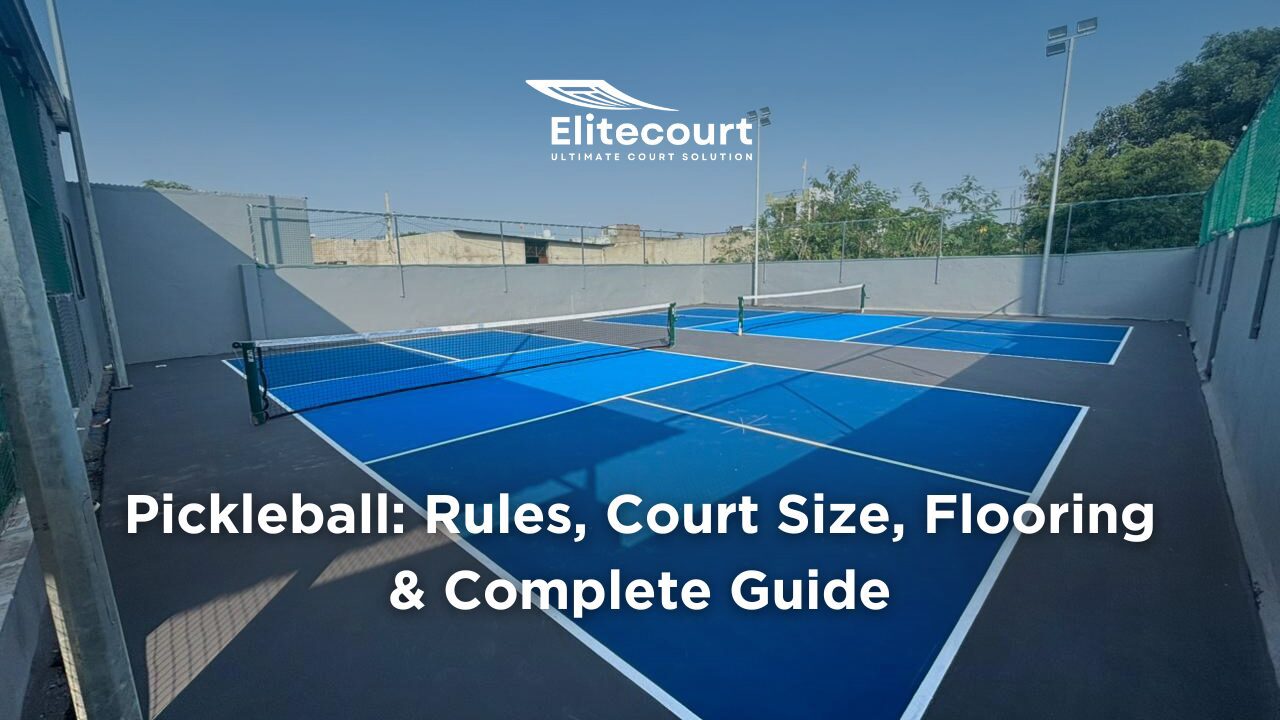
Padel vs Pickleball Court Dimensions: Measurements That Define the Game
When comparing padel vs pickleball, court dimensions are not just numbers—they define how each sport is played, how players move, and how the court surface performs over time. The physical size of the court influences rally length, movement intensity, surface wear patterns, and even the type of traction players expect underfoot.
Unlike equipment or rules that can feel abstract, dimensions are tangible. They dictate space utilization and directly impact flooring performance. Understanding the exact measurements provides clarity and reinforces why padel and pickleball require different surface behaviors, even when using the same synthetic acrylic flooring base.
Standard Padel Court Dimensions
A regulation padel court follows internationally recognized dimensions and is always designed for doubles play.
Padel court measurements:
- Court length: 20 meters
- Court width: 10 meters
- Total playing area: 200 square meters
- Back wall height: 4 meters
- Side wall height: 3 meters (stepping down beyond service line)
These dimensions create a balanced playing area where players move forward, backward, and laterally in quick succession. The enclosed space encourages continuous rallies, making uniform surface texture and shock absorption critical across the entire court.
From a padel vs pickleball flooring perspective:
- Larger surface area requires even friction consistency
- Enclosures increase rebound-based movement near walls
- Flooring must perform identically from baseline to glass edges
Any variation in surface grip or elasticity becomes immediately noticeable in padel due to its full-court usage.
Standard Pickleball Court Dimensions
Pickleball courts are significantly smaller and are played on open surfaces without enclosures.
Pickleball court measurements:
- Court length: 13.41 meters
- Court width: 6.10 meters
- Total playing area: Approximately 81.8 square meters
- Non-volley zone (kitchen): 2.13 meters from the net on each side
These compact dimensions result in a faster-paced, net-focused game where quick reflexes and precise footwork matter more than long-distance movement.
In the padel vs pickleball comparison, pickleball’s smaller court size means:
- Higher activity concentration near the net
- Repetitive short movements
- Increased stress on specific surface zones
Flooring must therefore prioritize comfort, controlled slip resistance, and localized durability.

Padel vs Pickleball Dimensions Compared
| Feature | Padel Court | Pickleball Court |
|---|---|---|
| Court Length | 20 m | 13.41 m |
| Court Width | 10 m | 6.10 m |
| Playing Area | 200 sq. m | ~81.8 sq. m |
| Court Type | Enclosed | Open |
| Movement Style | Full-court, 360° | Net-focused, compact |
Why Measurements Matter for Court Flooring
In the padel vs pickleball discussion, measurements explain why flooring systems cannot be treated as generic. Court size affects:
- Heat retention across surface area
- Wear distribution patterns
- Player fatigue levels
- Surface maintenance consistency
Padel’s larger footprint demands flooring systems with long-term structural stability, while pickleball’s compact layout requires surfaces that remain comfortable under repetitive stress.
Synthetic acrylic flooring adapts to both environments—but only when surface texture, layering, and finish are specified with these dimensional realities in mind.
Dimensions as a Foundation for Performance
Ultimately, court dimensions form the physical foundation of each sport. In padel vs pickleball, understanding these measurements helps explain why the games feel different, why players move differently, and why flooring performance must be tuned accordingly.
When dimensions and surface engineering work together, courts deliver consistency, safety, and an authentic playing experience—exactly what modern players and facilities expect.
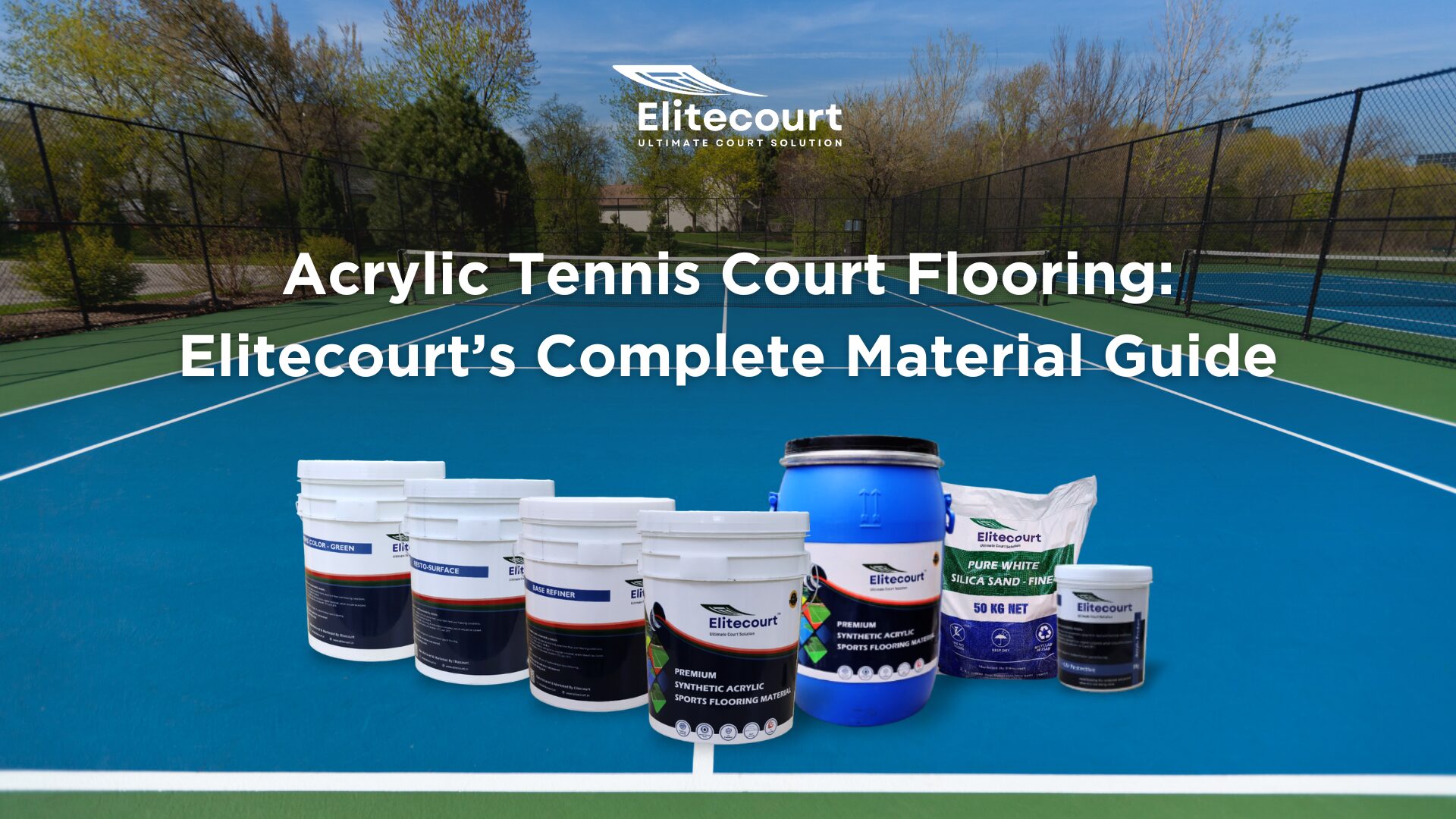
Synthetic Acrylic Flooring: The Common Foundation
Despite their differences, one key similarity in padel vs pickleball is the widespread reliance on synthetic acrylic sports flooring. This material has become the foundation for modern racket sports due to its versatility, resilience, and performance consistency.
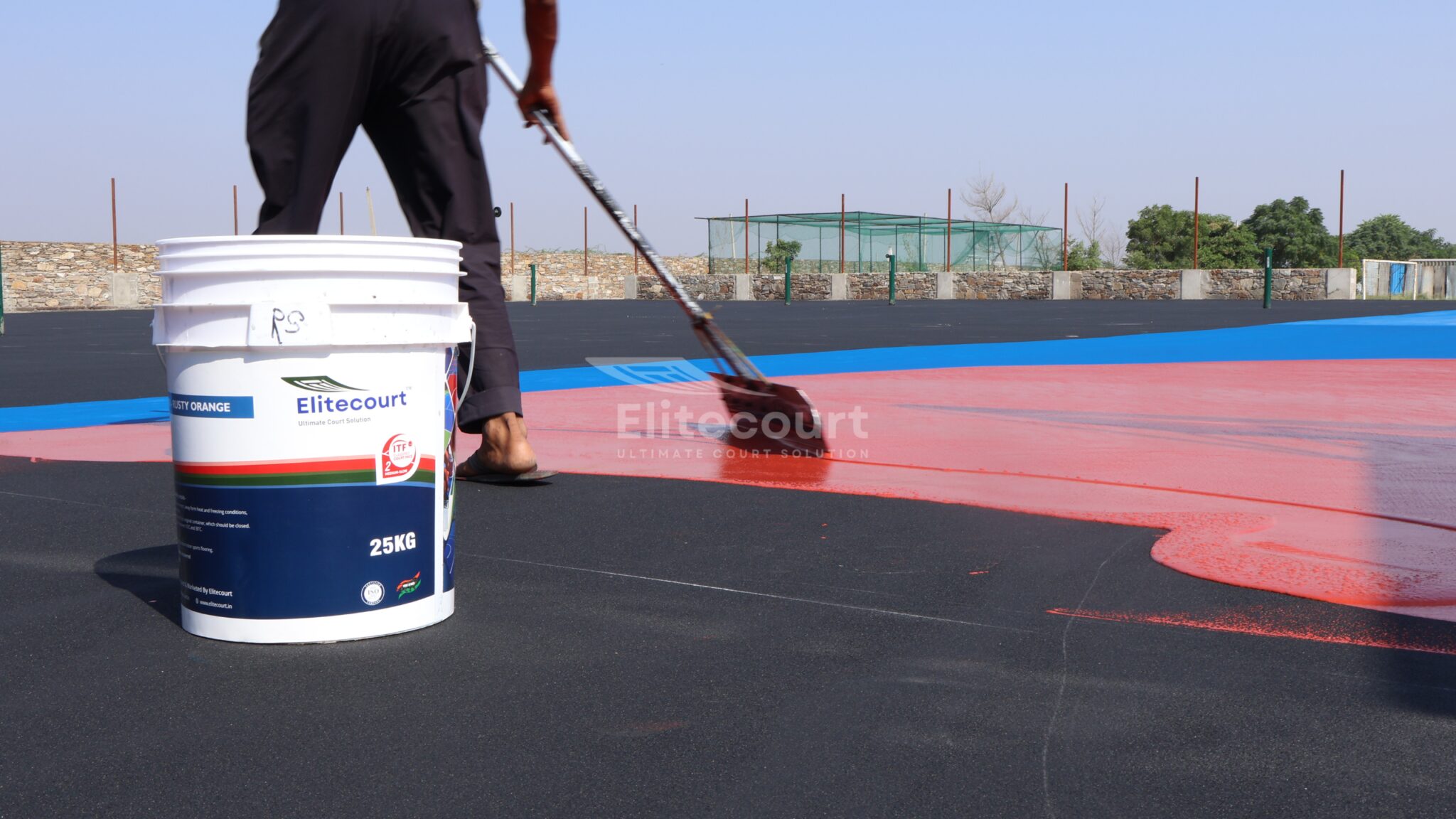
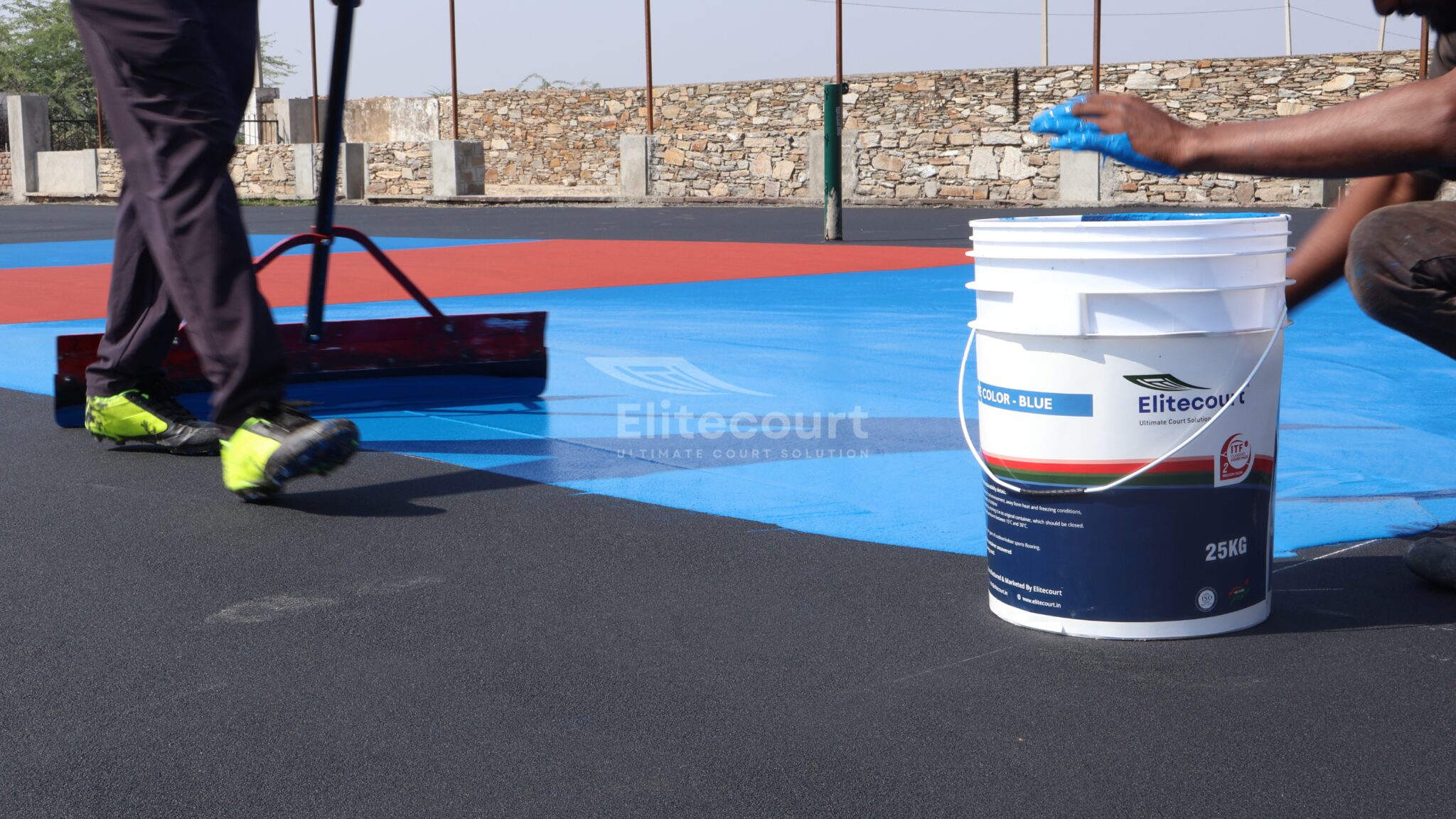
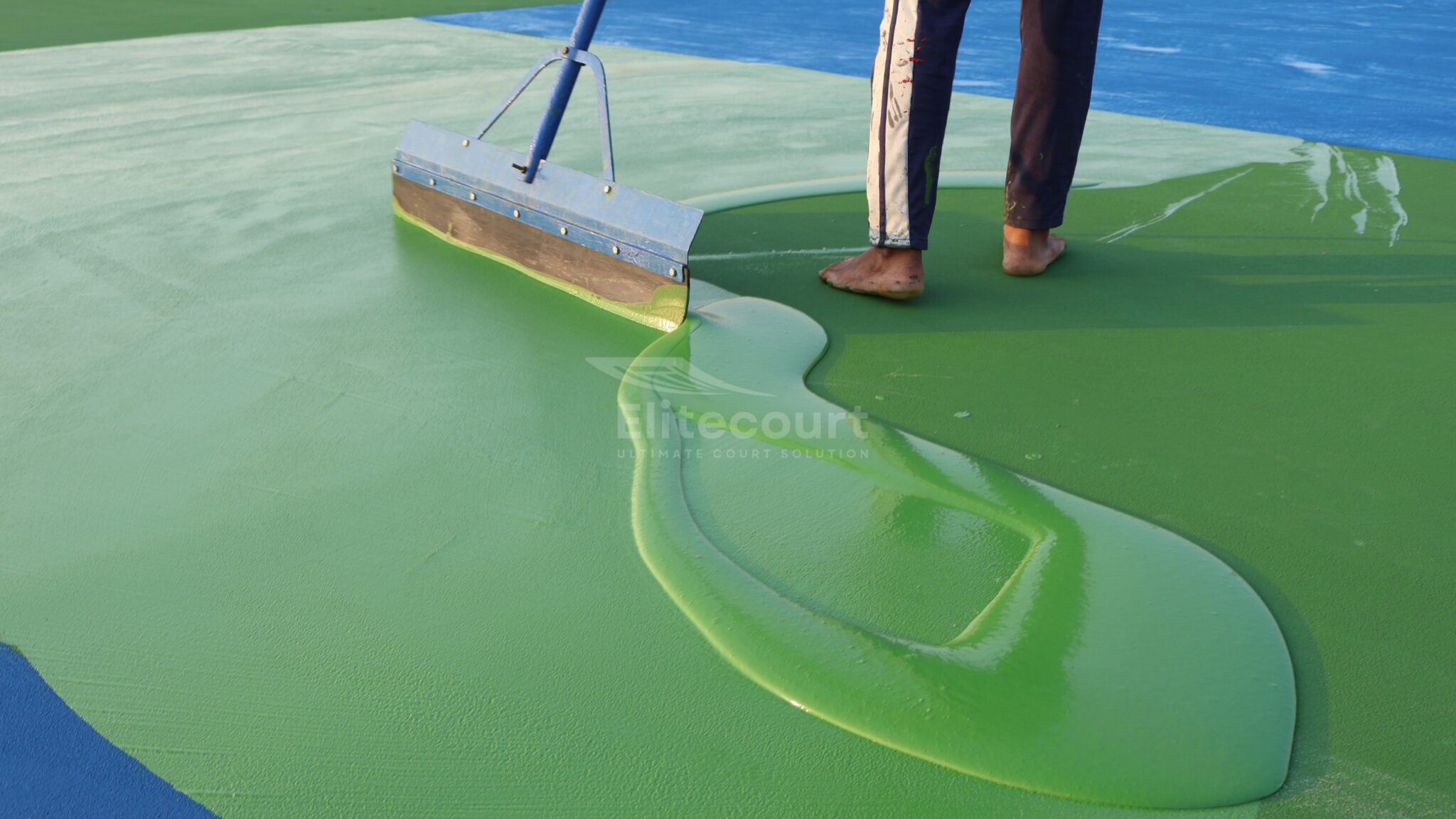
Acrylic flooring systems are engineered through multiple layers, each serving a specific purpose—from base stability to surface texture. This layered approach allows manufacturers to fine-tune performance characteristics according to the sport’s needs.
Why Acrylic Flooring Works
- Excellent UV resistance
- Customizable texture levels
- Consistent ball response
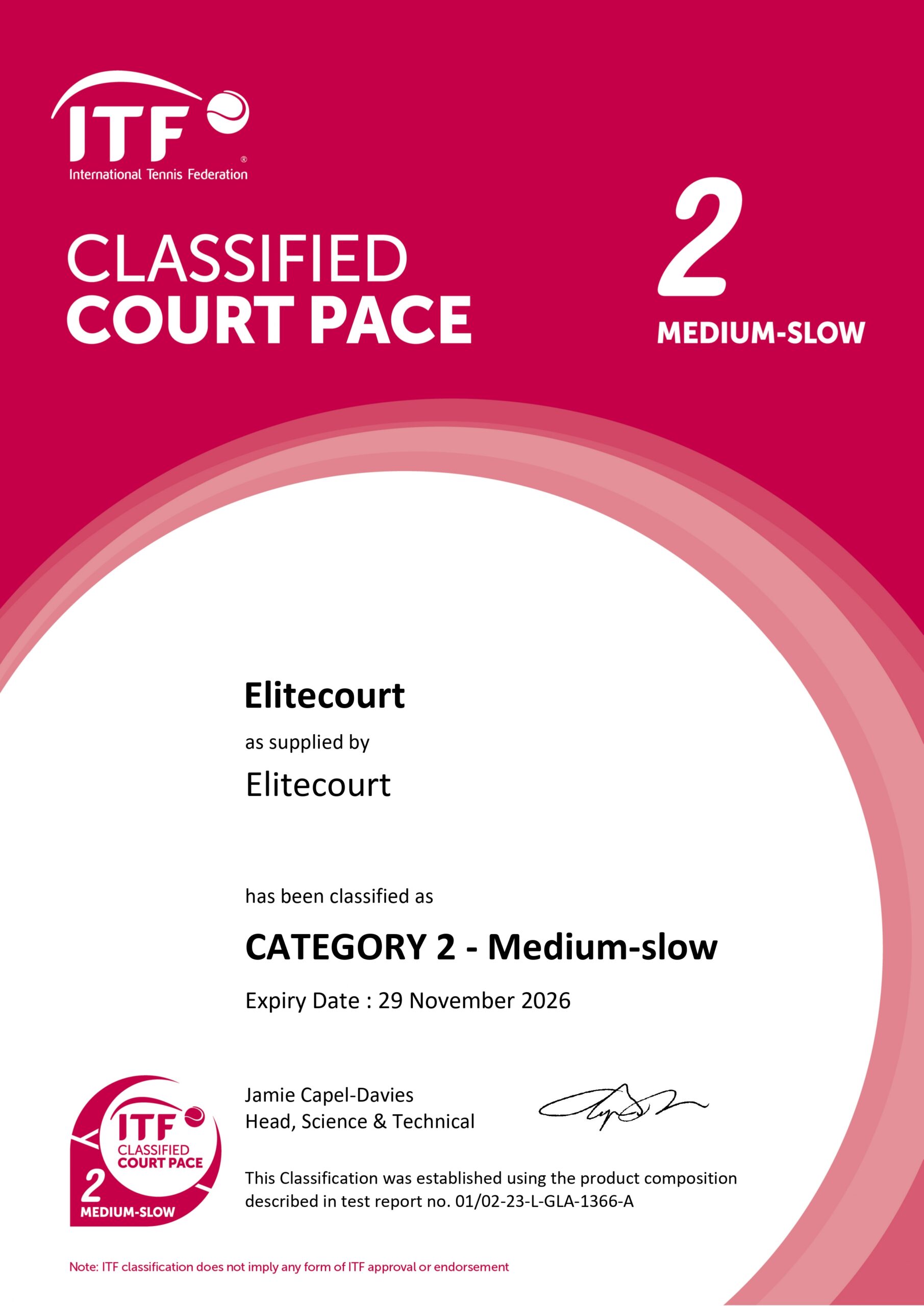
Elitecourt’s acrylic flooring systems are designed to meet international sports performance benchmarks, making them suitable for both sports when specified correctly.
Beyond performance, synthetic acrylic flooring supports long-term sustainability by maintaining surface integrity under heavy usage. This makes it an ideal solution for facilities comparing padel vs pickleball court development.
Transform Your Sports Facility Today!
Contact us for high-quality synthetic sports flooring material and elevate your space!
Padel vs Pickleball Flooring Performance Requirements
While acrylic flooring serves as a common base, the performance expectations differ significantly in the padel vs pickleball comparison. Each sport places unique physical and technical demands on the surface, requiring careful calibration of texture, elasticity, and friction.
Padel involves aggressive lateral movements, quick recoveries, and repeated wall-based exchanges. Pickleball emphasizes controlled footwork, quick reflexes, and sustained comfort over extended sessions.
Padel Flooring Focus
- Energy return
- Lateral grip
- Shock moderation
Pickleball Flooring Focus
- Controlled glide
- Foot comfort
- Reduced abrasion
Understanding this distinction is essential when evaluating padel vs pickleball court surfaces.
A flooring system optimized for one sport may underperform for the other if these nuances are ignored. That is why sport-specific surface engineering remains central to delivering an authentic playing experience.
Slip Resistance & Player Safety Considerations
Safety is a defining factor in the padel vs pickleball discussion, and slip resistance sits at the core of player protection. Both sports require surfaces that allow confident movement without increasing injury risk.
Too much grip can stress joints and muscles, while too little grip compromises balance and control. Achieving the right equilibrium is a hallmark of high-quality synthetic acrylic flooring.
- Excessive grip increases injury risk
- Low grip reduces control
Acrylic flooring systems are engineered with balanced slip resistance, ensuring safe play under dry and humid conditions.
In both padel and pickleball, consistent traction enhances player confidence, enabling natural movement patterns and reducing hesitation during play.
Weather Resistance & Outdoor Play
Outdoor courts are a major driver of growth in both sports, making weather resistance a critical topic in the padel vs pickleball comparison. Exposure to sunlight, rain, and temperature fluctuations places constant stress on court surfaces.
Environmental Challenges
- UV exposure
- Rainfall
- Temperature fluctuations
Synthetic acrylic flooring provides:
- Color stability
- Surface integrity
- Long-term durability
This makes it ideal in the padel vs pickleball outdoor debate.
By maintaining texture and performance despite environmental changes, acrylic surfaces ensure that outdoor courts remain playable and visually appealing over time.
Indoor vs Outdoor Courts: Padel vs Pickleball
Indoor and outdoor environments present different challenges, further shaping the padel vs pickleball conversation. While indoor courts benefit from controlled conditions, flooring performance remains just as critical.
Indoor padel courts require surfaces that complement enclosed acoustics and fast-paced rallies. Indoor pickleball courts prioritize comfort and noise reduction due to frequent close-range play.
- Indoor padel requires acoustic-friendly surfaces
- Indoor pickleball focuses on comfort and noise reduction
Acrylic systems adapt through layering and finish customization.
This adaptability allows synthetic acrylic flooring to perform reliably across varied environments without compromising sport-specific needs.
Maintenance & Long-Term Surface Performance
Ease of maintenance is a decisive factor when evaluating padel vs pickleball court surfaces. Facilities seek flooring systems that maintain performance with minimal intervention.
Routine Care
- Simple cleaning
- Minimal resurfacing
Consistent performance over time strengthens the value proposition in the padel vs pickleball comparison.
Acrylic flooring systems are designed to resist surface fatigue, ensuring that traction, color, and ball response remain stable across extended usage cycles.
Customization & Court Aesthetics
When discussing padel vs pickleball, customization and court aesthetics may seem like a secondary concern, but in reality, they play a powerful role in shaping player perception and engagement. Modern sports facilities are no longer just functional spaces—they are experiential environments. The way a court looks influences how players feel when they step onto it, how spectators perceive the sport, and how clubs build identity around their facilities.
In both padel and pickleball, visual clarity is directly tied to gameplay. Clear boundary lines, contrasting color zones, and consistent surface finishes help players read the game better, react faster, and maintain focus during intense rallies. From a broader perspective, well-designed courts also support branding, sponsorship visibility, and long-term facility recognition. This makes customization a strategic decision rather than a purely aesthetic one.
- Color zoning improves gameplay clarity
- Branding strengthens facility identity
Acrylic flooring allows precise color control without affecting performance.
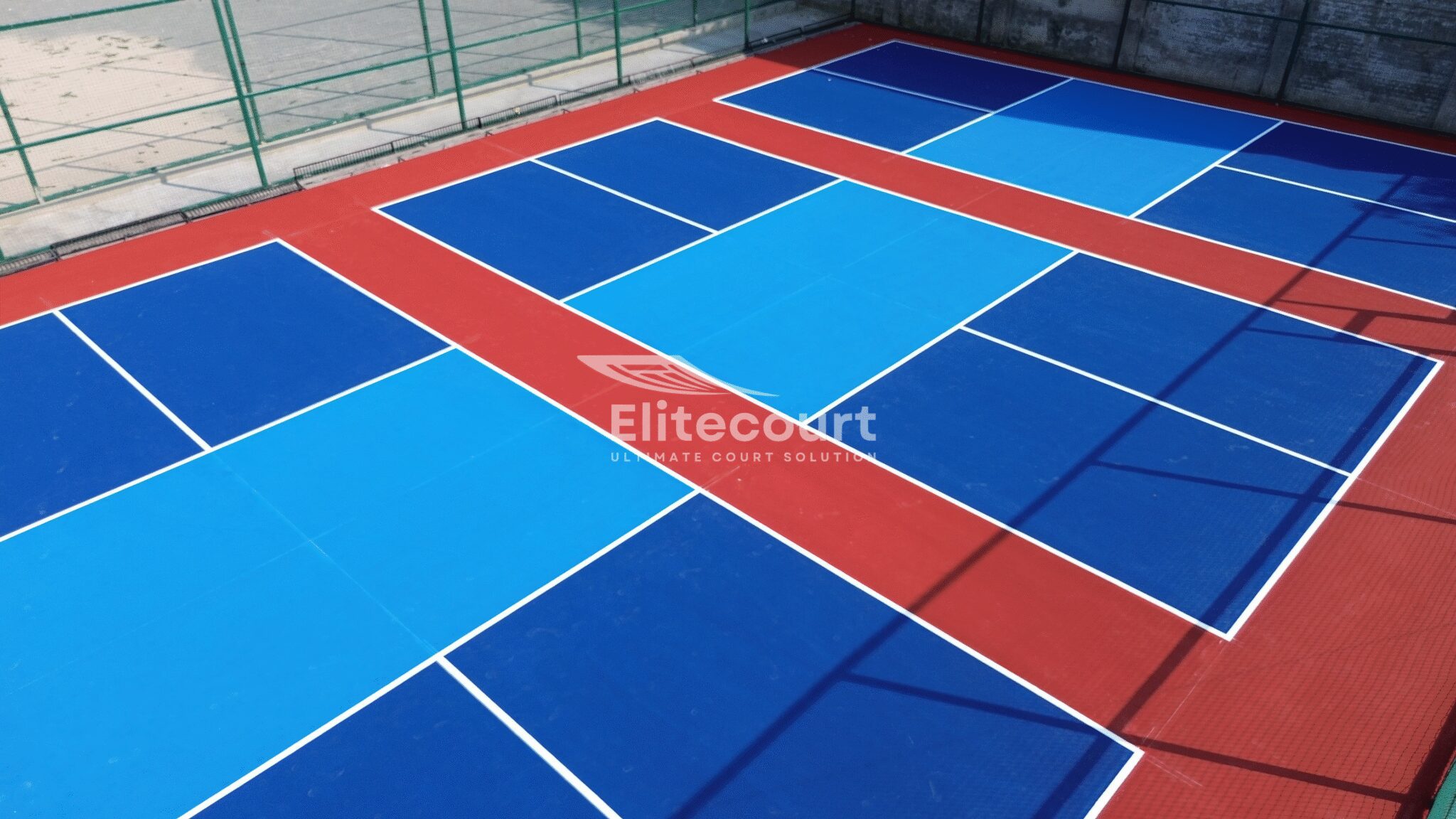
From a padel vs pickleball standpoint, customization must always respect sport-specific requirements. Padel courts often use deeper, richer tones that enhance contrast within enclosed glass environments, while pickleball courts favor lighter, high-visibility colors that support quick reaction times in open spaces. Synthetic acrylic flooring enables this flexibility without compromising texture, grip, or durability, ensuring that visual appeal and technical performance coexist seamlessly.
Transform Your Sports Facility Today!
Contact us for high-quality synthetic sports flooring material and elevate your space!
Multi-Sport Facilities: Choosing Between Padel vs Pickleball
As urban spaces become more compact and sports participation becomes more diverse, multi-sport facilities are increasingly common. In this context, the question of padel vs pickleball often arises not as an either-or decision, but as a planning challenge: how to accommodate both sports efficiently without compromising performance.
Multi-sport environments demand surfaces that can adapt to different movement styles, ball behaviors, and intensity levels. However, adaptability should never mean compromise. Each sport has its own identity, and flooring systems must respect those distinctions while enabling operational flexibility.
Key considerations:
- Surface adaptability
- Line marking compatibility
- Performance compromise avoidance
Purpose-engineered flooring ensures neither sport is disadvantaged.
From a flooring perspective, understanding padel vs pickleball in shared facilities means recognizing where overlap is possible and where separation is essential. While synthetic acrylic systems offer versatility, surface specifications—such as texture levels and cushioning—must still be aligned with each sport’s demands. Strategic planning at this stage ensures that facilities remain future-ready, scalable, and enjoyable for all players.
Why Surface Quality Determines Game Quality
No matter how well a court is designed structurally, the surface ultimately determines how the game feels, flows, and performs. In the padel vs pickleball conversation, surface quality is the invisible factor that players notice immediately—even if they can’t always articulate why.
A high-quality surface supports natural movement, predictable ball behavior, and sustained comfort. A poor surface does the opposite, disrupting rhythm, increasing fatigue, and raising injury risks. This makes flooring one of the most influential components of court design.
Poor flooring leads to:
- Inconsistent bounce
- Increased injury risk
- Reduced player satisfaction
High-quality synthetic acrylic flooring ensures fairness and longevity.
When comparing padel vs pickleball, it becomes clear that while the games differ, both rely on flooring to deliver consistency. Whether it’s absorbing impact during padel’s high-intensity rallies or supporting controlled footwork in pickleball, surface quality shapes the entire playing experience from the first serve to the final point.
Elitecourt’s Role in Padel vs Pickleball Flooring Excellence
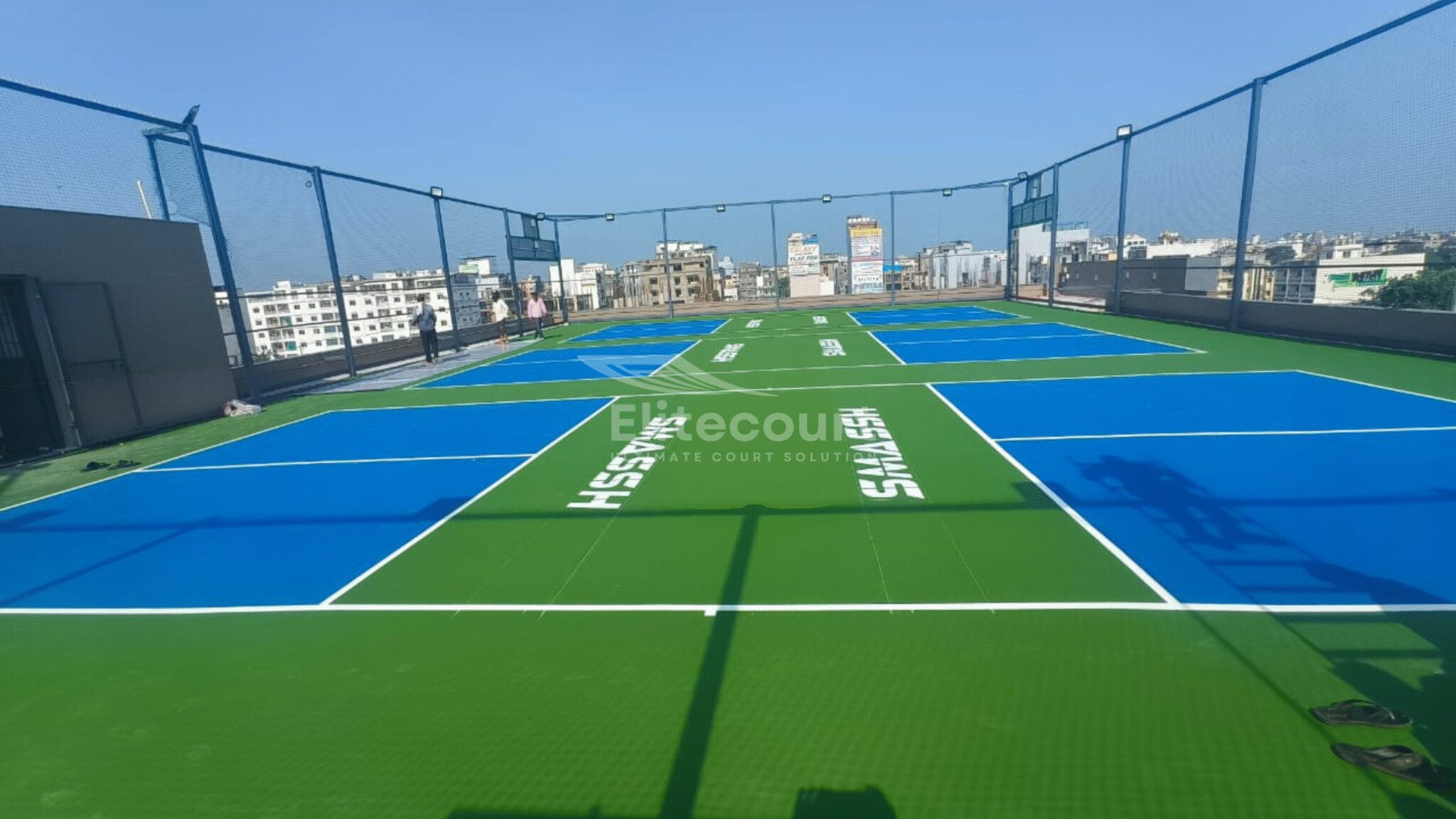
In the evolving landscape of padel vs pickleball, the role of the flooring manufacturer becomes increasingly significant. Elitecourt focuses exclusively on manufacturing advanced synthetic acrylic sports flooring systems that meet the technical demands of modern racket sports.
Rather than offering generic solutions, Elitecourt emphasizes material precision, performance reliability, and consistency across diverse playing environments. This manufacturing-focused approach ensures that each flooring system delivers predictable results aligned with sport-specific requirements.
- Precision material formulation
- Reliable performance consistency
- Industry-aligned quality standards
This expertise positions Elitecourt as a trusted authority in the padel vs pickleball conversation.
By understanding how padel and pickleball differ at a fundamental level, Elitecourt supports the development of courts that enhance player experience, promote safety, and sustain long-term performance—without compromise.
Transform Your Sports Facility Today!
Contact us for high-quality synthetic sports flooring material and elevate your space!
Expert Tips: Choosing the Right Flooring System
Choosing the right flooring system is one of the most critical decisions in the padel vs pickleball debate. It requires more than surface-level comparisons—it demands a deep understanding of how players move, how the game flows, and how the court will be used over time.
Expert Tip: Always prioritize surface performance compatibility over visual appeal alone.
Consider:
- Sport-specific movement
- Environmental exposure
- Player demographics
From an expert perspective, the most successful courts are those where flooring decisions are made early and thoughtfully. Aligning surface characteristics with the sport’s physical demands ensures not only better gameplay, but also long-term satisfaction for players and facility operators alike.
Common Myths Around Padel vs Pickleball Courts
Misconceptions often shape early decisions in sports infrastructure planning. In the case of padel vs pickleball, these myths can lead to surface choices that undermine performance and safety.
- Myth: One surface fits all
- Myth: Texture doesn’t matter
- Myth: Outdoor surfaces don’t need UV protection
Each misconception can compromise court performance.
Understanding the truth behind these myths helps stakeholders make informed decisions. Flooring is not interchangeable, and subtle differences in texture, layering, and finish can significantly influence how each sport is played.
The Future of Padel vs Pickleball in India
The future of padel vs pickleball in India is closely tied to the quality of sports infrastructure being developed today. As participation grows, expectations around performance, safety, and durability will rise alongside it.
Both sports are set to expand rapidly, driven by urban development and recreational demand. The future will favor high-performance, durable, and adaptable flooring systems that support long-term playability.
Facilities that invest in technically sound surfaces today will define the standard for tomorrow’s playing experience.
Conclusion: Padel vs Pickleball — Choosing the Right Court Surface
The discussion around padel vs pickleball ultimately leads back to one foundational truth: the surface defines the sport. While rules, equipment, and court layouts differ, flooring remains the constant factor that influences safety, performance, and enjoyment.
The padel vs pickleball debate goes far beyond paddles and nets. It begins at the surface level—where traction, comfort, durability, and consistency come together to support the game. Understanding these elements ensures that each sport is given the environment it needs to thrive.
With advanced synthetic acrylic flooring solutions, the right surface empowers both sports to grow sustainably, delivering reliable performance and an authentic playing experience for years to come.
Transform Your Sports Facility Today!
Contact us for high-quality synthetic sports flooring material and elevate your space!
FAQs
The main difference between padel vs pickleball is the court design and style of play. Padel is played in an enclosed court where walls are part of the game, encouraging longer rallies and full-court movement. Pickleball is played on an open, smaller court and focuses on quick reactions, precise placement, and net-based exchanges.
Court dimensions influence how players move and how rallies develop. Padel’s larger enclosed court allows continuous, multi-directional movement, while pickleball’s compact court concentrates play near the net. These differences affect surface wear patterns and flooring performance expectations.
Synthetic acrylic flooring is commonly used for both sports, but performance characteristics must be adjusted. Padel surfaces require higher lateral grip and uniform bounce, while pickleball surfaces prioritize controlled traction and player comfort.
Both sports demand high-quality surfaces, but in different ways. Padel stresses the surface through continuous movement and wall-based play, while pickleball places repeated stress on specific areas due to compact court use.
Flooring directly affects safety, ball behavior, and player movement. A well-designed surface enhances gameplay consistency and reduces injury risk, making flooring a key factor when comparing padel vs pickleball.
For global guidelines on court surface performance and play characteristics, international standards referenced by the International Tennis Federation (ITF) are widely followed.