When you’re searching for “indoor basketball courts near me,” you’re not just looking for a place to play. You’re searching for a quality facility where you can enjoy the game safely and perform at your best. Finding the right court involves more than just locating the nearest facility; it’s about understanding what constitutes a great playing environment. This guide will walk you through everything from identifying potential courts to evaluating their quality, with a special focus on the most critical element: the flooring.
The quality of an indoor basketball court is fundamentally determined by its surface. A superior court provides the perfect balance of grip, shock absorption, and consistent ball bounce. This is where synthetic acrylic flooring systems excel, offering a seamless and durable surface that enhances player performance while minimizing the risk of injury. As you search for courts, understanding the characteristics of high-performance flooring will help you identify top-tier facilities that prioritize player experience.
Why the Demand for Quality Indoor Basketball Courts is Growing
Basketball’s popularity continues to surge, moving from a seasonal sport to a year-round passion for many. This has fueled a significant demand for accessible, high-quality indoor facilities. Unlike outdoor courts, which are subject to weather conditions and can wear down quickly, indoor courts offer a controlled environment for consistent play.
Shifting Preferences: From Outdoor to Indoor
Weather unpredictability, pollution, and urbanization have driven many athletes toward indoor spaces. Indoor basketball courts provide protection from harsh sunlight, rain, wind, and dust—ensuring that games can be played continuously regardless of seasonal changes. This is a crucial factor in cities where access to quality outdoor spaces can be limited.
The Rise of Multi-Purpose Sports Complexes
Modern urban landscapes are seeing a rise in multi-sport complexes that cater to a variety of activities. These venues often prioritize synthetic acrylic flooring due to its versatility and low maintenance needs. For basketball enthusiasts, this means better access to well-maintained, safe, and professional-grade courts.
Players, from amateurs to aspiring professionals, are becoming more discerning. They recognize that the quality of the playing surface directly impacts their game and their physical well-being. A poor surface can lead to inconsistent play and increase the likelihood of slips, falls, and long-term joint issues. Consequently, the search for “indoor basketball courts near me” is often a search for a facility that invests in superior infrastructure, particularly its flooring.
This growing awareness places a responsibility on facility owners and managers to provide surfaces that meet modern standards. Synthetic acrylic flooring has become the go-to solution for new constructions and renovations because it addresses the core needs of the sport: performance, safety, and longevity.
What Makes an Indoor Court “High-Quality”?
A high-quality indoor basketball court is a combination of several key factors that work together to create an optimal playing environment. While lighting, ventilation, and space are important, the surface is paramount.
Critical Features to Look For:
- Superior Flooring: The court should have a non-slip surface that provides excellent traction. It needs to absorb impact to reduce stress on players’ knees and ankles. The surface must also offer a uniform and predictable ball bounce.
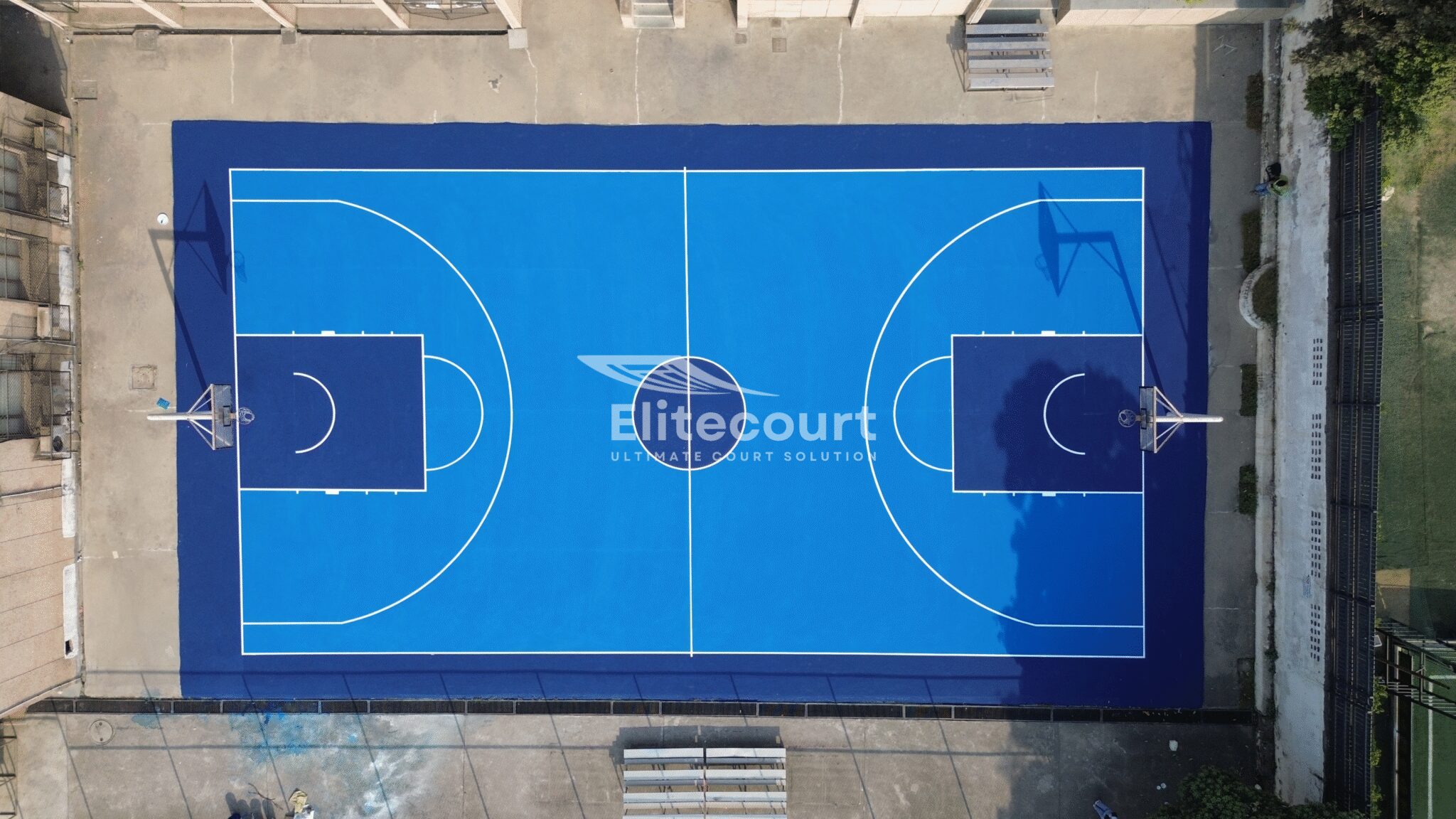
- Proper Line Markings: All lines—sidelines, baselines, free-throw lines, and the three-point arc—should be clear, accurate, and compliant with official regulations.
- Regulation Hoops: The baskets should be set at the regulation height of 10 feet with sturdy backboards and breakaway rims that are in good condition.
- Adequate Lighting: The court should be brightly and evenly lit, eliminating shadows and dark spots that can interfere with play.
- Sufficient Space: There should be ample runoff space around the court to ensure player safety during fast breaks and out-of-bounds plays.
Additional Facility Amenities
While the quality of the playing floor is vital, other amenities can significantly enhance your playing experience and comfort:
- Changing Rooms & Lockers: Clean and secure facilities for personal belongings.
- Spectator Seating: Adequate seating for family, friends, and fans.
- Ventilation & Air Conditioning: Especially crucial in hot climates to ensure air quality and player comfort.
- On-Site Staff: Having attentive staff available enhances safety and provides assistance quickly if needed.
The Science Behind High-Performance Basketball Court Flooring
The floor is the most crucial piece of equipment on a basketball court. Its properties can make or break the player experience. Modern sports flooring is engineered with advanced materials to deliver specific performance characteristics. Synthetic acrylic surfaces, in particular, are designed through a multi-layered system to achieve the perfect trifecta of player safety, optimal performance, and long-term durability.
Understanding the Layers of a Synthetic Acrylic Court
A high-performance indoor basketball court surface is more than just paint—it’s a complex, multi-layered system designed for durability, safety, and performance. Here’s how a professional-grade synthetic acrylic court is built:
- Concrete or Asphalt Sub-Base: A stable, perfectly level foundation ensures the integrity of the layers above. Any imperfections here will affect the final surface.
- Primer/Adhesion Coat: This layer bonds the sub-base to the acrylic system, preventing peeling or delamination over time.
- Resurfacer/Filler Coats: Acrylic resurfacer layers fill small voids, creating a smooth, even surface to support uniform play.
- Cushion Layers: Multiple layers of cushioned acrylic, containing fine rubber granules, provide shock absorption to protect players’ joints during intense activity. The more layers, the greater the cushioning.
- Texture/Color Coats: These layers give the court its color and calibrated surface texture. The texture offers just the right grip—enough to prevent slipping but still allowing smooth pivoting, balancing the key performance factor known as the coefficient of friction.
- Line Marking: Precise, durable markings define the playing area in accordance with official basketball standards.
This multi-layered system ensures a court that’s safe, comfortable, and built for professional-level performance. Next time you search for “indoor basketball courts near me,” ask about the flooring system to gauge the facility’s quality and commitment to player experience.
Transform Your Sports Facility Today!
Contact us for high-quality synthetic sports flooring material and elevate your space!
Key Performance Benefits of Synthetic Acrylic Flooring
Why do facility owners and players prefer synthetic acrylic surfaces? The benefits are clear and directly impact the quality of play.
| Feature | Benefit for Players | Benefit for Facility Owners |
|---|---|---|
| Shock Absorption | Reduces stress on joints (knees, ankles), lowering the risk of both immediate and long-term injuries. Allows players to play longer and harder with less fatigue. | Attracts more users who prioritize safety. Reduces liability associated with player injuries. |
| Optimal Traction | Provides a secure grip for quick directional changes, sprints, and defensive slides. Prevents slips and falls, boosting player confidence. | Ensures a safe environment for all skill levels. The surface maintains its texture for a long time, reducing maintenance needs. |
| Consistent Ball Bounce | Delivers a predictable and uniform ball response across the entire court. Allows for better dribbling control and predictable gameplay. | Enhances the facility’s reputation for providing a professional playing experience. |
| Seamless Surface | Eliminates seams or joints that can cause unpredictable ball bounces or tripping hazards. Creates a uniform and aesthetically pleasing look. | Easy to clean and maintain. There are no grout lines or gaps where dirt and debris can accumulate. |
| Durability | The surface is highly resistant to wear and tear from heavy foot traffic and gameplay. It maintains its performance characteristics for years. | Offers a long-term, cost-effective solution with a low lifecycle cost. Resists scuffing, fading, and damage. |
How to Find and Evaluate Indoor Basketball Courts Near You
Now that you know what to look for, let’s explore practical steps for finding and assessing local indoor courts.
Step 1: Your Digital Search for “Indoor Basketball Courts Near Me”
Your quest will almost certainly begin online. Using search terms like “indoor basketball courts near me,” “public indoor basketball gyms,” or “places to play basketball indoors” will yield a variety of options. Here are the types of places to look for:
- Community Centers and Recreation Departments: Many municipalities operate public recreational facilities that have indoor basketball courts. These are often the most affordable and accessible options.
- Fitness Chains and Gyms: Large gym franchises frequently include basketball courts as a key amenity. Their websites will typically list this feature prominently.
- Dedicated Sports Complexes: These facilities are built specifically for sports and often host leagues, tournaments, and open-gym sessions. They tend to have high-quality, well-maintained courts.
- Schools and Universities: Some educational institutions open their athletic facilities to the public during off-hours or for a membership fee.
Expert Tip: Use online maps and directories. Platforms like Google Maps, Yelp, and specialized court-finder websites can provide lists, reviews, and photos of facilities in your area. Pay close attention to recent reviews that mention the condition of the courts.
Advanced Tips for Your Search
- Leverage Local Sports Networks: Many local basketball leagues and sports clubs have insider knowledge about the highest-quality courts in your area. Connecting with player communities can give you access to courts that may not be widely advertised.
- Try Scheduling Apps: Certain apps allow players and community members to book or review indoor basketball courts in real-time.
Step 2: Evaluating a Court Before You Play
Once you have a list of potential locations, it’s time to assess their quality. You can often do this with a quick visit or a phone call.
Questions to Ask the Facility Manager:
- What type of flooring does your basketball court have? If they can confidently say it’s a “cushioned acrylic” or “synthetic sports surface,” that’s a great sign. If they are unsure or just say “wood” or “paint on concrete,” you may want to investigate further.
- When was the court last resurfaced? A well-maintained court is typically resurfaced every 5-8 years to restore its performance characteristics. A recent resurfacing indicates a commitment to quality.
- Do you host leagues or tournaments? Facilities that host competitive events usually maintain their courts to a higher standard to meet the expectations of serious players.
- Can I come in to see the court? Nothing beats a visual inspection.
Step 3: The On-Site Inspection Checklist
When you visit a potential court, use this checklist to perform a quick but thorough evaluation:
- Check the Surface Integrity:
- Look for cracks or peeling: Are there any visible cracks, bubbles, or areas where the top layer is peeling away? These are signs of an aging or poorly installed surface.
- Feel the surface: Does it feel smooth and uniform? Run your hand over it. A quality acrylic surface will feel finished and slightly textured for grip.
- Test the Traction:
- The Shoe Test: Wear your basketball shoes and try a few quick stops and pivots. Do your shoes grip the floor firmly without sticking? You should feel secure, not slippery.
- Assess the Ball Bounce:
- Dribble the Ball: Bring a basketball and dribble it across different areas of the court. Is the bounce height consistent and lively? Dead spots, where the ball doesn’t bounce as high, indicate issues with the sub-base or the flooring system itself.
- Examine the Overall Environment:
- Lighting: Is the lighting bright and consistent across the court?
- Cleanliness: Is the court clean and free of dust? Dust can make even the best surfaces dangerously slippery.
- Hoops and Nets: Are the rims in good shape and the nets intact?
Real-World Example:
Imagine you walk into a newly renovated community center. The floor looks vibrant and feels slightly textured underfoot, hoops are sturdy, the room is brightly lit, and you hear the crisp sound of the basketball. Comparing this to another nearby facility—where the court is dull, has worn patches, and you notice inconsistent bounces—gives you immediate insight on where your game will be safest and most enjoyable.
Transform Your Sports Facility Today!
Contact us for high-quality synthetic sports flooring material and elevate your space!
Unique Advantages of Playing on Indoor Basketball Courts
Year-Round Playability
One of the biggest perks of indoor courts is the ability to play all year, rain or shine. Weather-related cancellations are a thing of the past, and players can maintain their training schedule uninterrupted.
Improved Skill Development
A consistent floor surface allows you to develop and perfect your skills, from shooting to footwork, because you can predict how the ball and your body will react. This is especially important for younger players building their technique.
Enhanced Safety and Injury Prevention
Indoor courts, especially those surfaced with synthetic acrylic flooring, significantly lower the risk of injury compared to concrete or older hardwood alternatives. The shock absorption and slip resistance are crucial for intense, fast-paced games.
Community & Social Benefits
Indoor courts often serve as community hubs. People come together not just for games, but also for clinics, tournaments, and events. This supports a social network for health and wellness.
The Role of Proper Maintenance in Court Performance
Even the best-installed synthetic acrylic court requires regular maintenance to preserve its safety and playability. The longevity of a court is a partnership between the quality of the materials and the diligence of the facility’s maintenance staff. When you’re evaluating “indoor basketball courts near me,” a clean and well-kept appearance is a strong indicator of a high-quality facility.
Daily and Weekly Maintenance Routines
Proper maintenance is straightforward but essential.
- Daily Dust Mopping: The number one enemy of an indoor court’s grip is dust. A daily pass with a large, dry microfiber dust mop is the most effective way to remove fine dust particles that can create a slippery film on the surface.
- Immediate Spill Cleanup: Any liquids should be wiped up immediately to prevent stains and ensure the surface remains safe.
- Weekly Deep Cleaning: Depending on the amount of traffic, a weekly or bi-weekly cleaning with a pH-neutral cleaning solution and an auto-scrubber can remove sweat, body oils, and stubborn dirt that dust mopping leaves behind.
Long-Term Care and Resurfacing
Over years of play, the textured top coats will gradually wear down, and the cushioning may lose some of its resilience. This is normal. A complete resurfacing involves deep cleaning the court, applying new texture and color coats, and repainting the lines. This process restores the court to like-new condition, renewing its grip, appearance, and performance.
A facility that adheres to a regular maintenance schedule and invests in periodic resurfacing demonstrates a clear commitment to providing a top-tier experience for its patrons. When you find such a court, you know you’re in good hands.
Comparing Indoor Court Flooring Types
To help you understand what you may encounter when searching for “indoor basketball courts near me,” here’s a comparison of common flooring types:
| Flooring Type | Shock Absorption | Traction | Longevity | Maintenance Level | Typical Use Cases |
|---|---|---|---|---|---|
| Acrylic Synthetic | Excellent | High | 10-15 years+ | Low | Modern sports centers |
| Maple Hardwood | Very good | Moderate-High | 20+ years | Medium | Professional arenas |
| Polyurethane | Very good | Very High | 10-12 years | Low | Multi-purpose halls |
| Vinyl | Good | Medium | 7-10 years | Medium | Budget gyms |
| Basic Concrete | Poor | Low | Very long | Low | Old courts, outdoors |
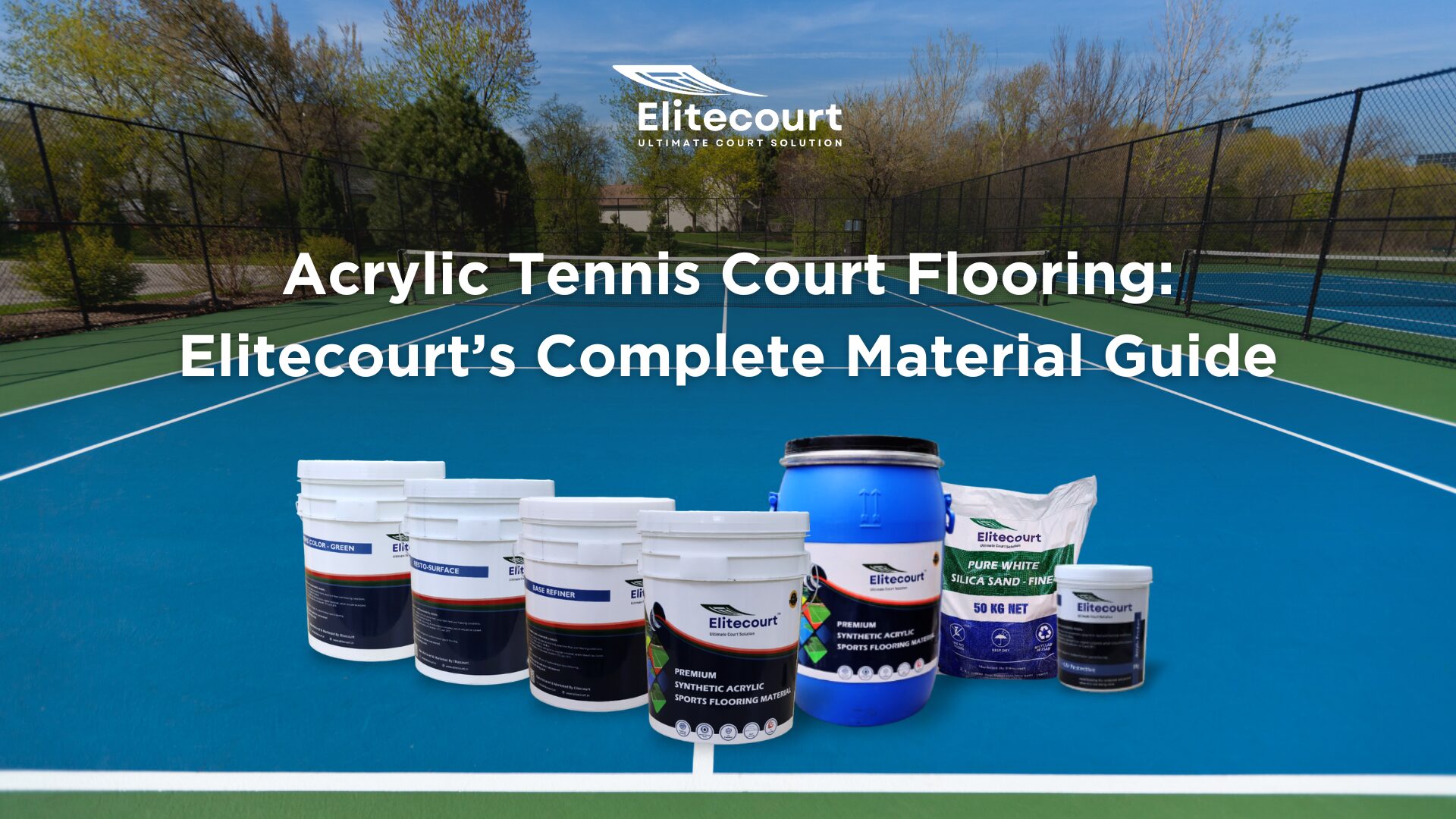
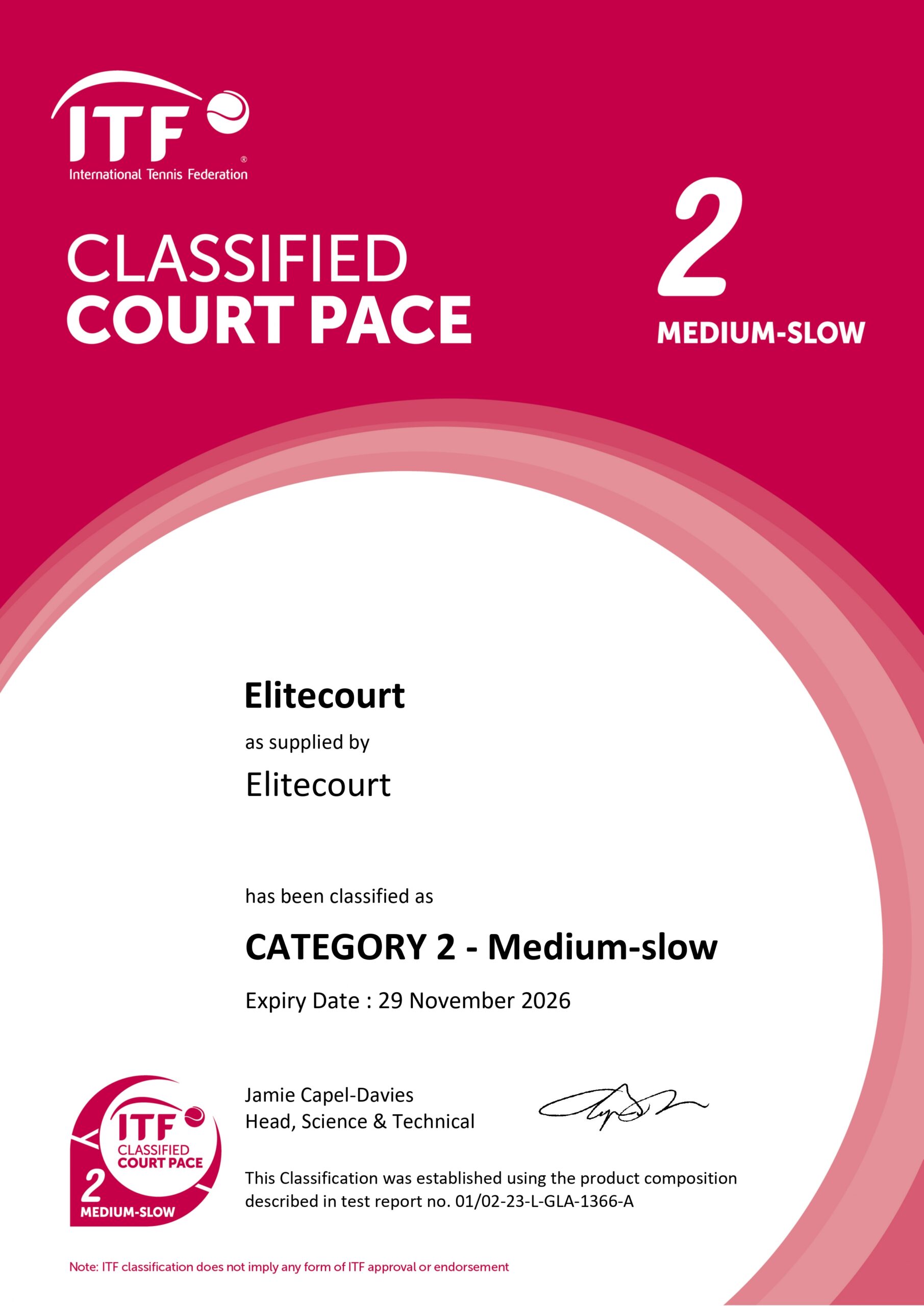
Note: Elitecourt manufactures premium synthetic acrylic flooring, known for consistency and high performance.
Transform Your Sports Facility Today!
Contact us for high-quality synthetic sports flooring material and elevate your space!
Great Places to Play Basketball in India
India’s basketball scene is rapidly growing, and several cities now boast state-of-the-art indoor basketball courts that offer excellent facilities for both casual players and serious athletes. If you’re searching for “indoor basketball courts near me” in India, here are some well-known venues worth exploring:
Delhi-NCR
- Thyagaraj Stadium (New Delhi): Known for hosting national tournaments, this stadium’s indoor courts meet international standards and are open to both training and competitions.
- Indira Gandhi Indoor Stadium (New Delhi): One of Asia’s largest indoor sports complexes, it’s equipped with high-quality courts and modern amenities.
Mumbai
- Andheri Sports Complex: Popular among basketball enthusiasts for its well-maintained indoor infrastructure.
- Dome, SVP Stadium: Hosts major basketball events and league games, offering a professional-grade basketball experience.
Bengaluru
- Kanteerava Indoor Stadium: A go-to destination for athletes, with courts suitable for both training and elite competitions.
- Play Arena: Renowned for its multi-sport indoor setup, it offers high-quality basketball courts for players of all levels.
Chennai
- Jawaharlal Nehru Indoor Stadium: Frequently holds championships and community basketball events, drawing top talent from across the region.
Hyderabad
- Gachibowli Indoor Stadium: Recognized for its international-level facilities, this stadium has become a hub for basketball tournaments and coaching.
Other Notable Venues
- Sree Kanteerava Indoor Stadium (Bengaluru)
- YMCA Indoor Courts (Multiple Cities)
- Panjim Indoor Stadium (Goa)
Expert Tip: Many modern sports complexes and academic institutions in major cities now provide public access or membership for their indoor basketball courts. It’s always best to check availability and booking requirements in advance.
Basketball Flooring Standards and Player Safety
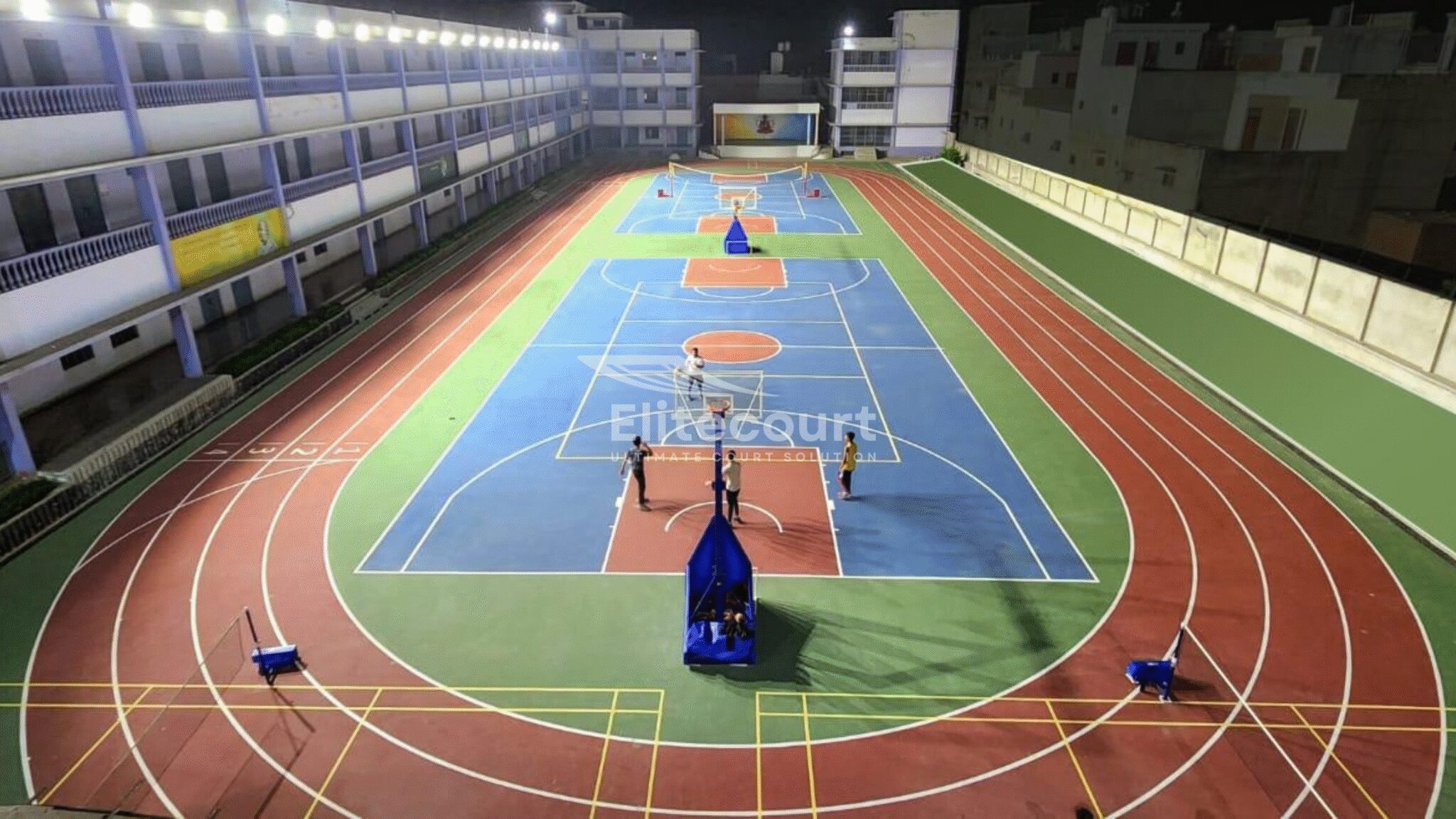
Player safety is the most important consideration in the design and construction of any sports facility. Governing bodies and sports federations have established guidelines for competition surfaces to ensure a fair and safe playing field. For example, organizations like the International Basketball Federation (FIBA) have specific criteria for flooring, including standards for shock absorption, surface friction, and ball bounce. More about FIBA guidelines
When a facility installs a flooring system from a reputable manufacturer, they are often installing a product designed to meet or exceed these international standards. This commitment to quality infrastructure is a direct investment in the health and well-being of every player who steps onto the court. The science behind cushioned acrylic systems—specifically their ability to dissipate impact forces—is a critical advancement in sports injury prevention. By choosing courts with these advanced surfaces, players can enjoy the game with a reduced risk of stress-related injuries.
Sustainability and Environmental Benefits of Synthetic Acrylic Flooring
Elitecourt not only focuses on player safety and performance but also ensures that its products are environmentally responsible. The materials used in synthetic acrylic sports flooring are designed to be low-VOC (volatile organic compounds), contributing to better indoor air quality. Plus, because acrylic floors last so long and require minimal maintenance, their overall environmental footprint is reduced compared to products that need frequent replacement or harsh cleaning chemicals.
Facilities prioritizing sustainable flooring are also recognizing the long-term value these choices bring—not only to athletes but to the wider community and our planet.
How Elitecourt is Transforming the Experience of “Indoor Basketball Courts Near Me”
Elitecourt’s manufacturing expertise is trusted by sports facilities nationwide, from community centers to high-end sports complexes. Facilities that choose Elitecourt flooring solutions are making a deliberate investment in quality and safety—directly impacting players’ satisfaction and performance.
Customer and User Experience
Players frequently note the difference when they set foot on a well-constructed synthetic acrylic court. The feedback is almost immediate: “The floor feels right,” meaning safe, comfortable, and performance-enhancing. Facility managers appreciate the easy upkeep and long-lasting appearance, knowing their investment is protected long after installation.
The Future of Indoor Basketball Courts in India
As basketball’s popularity rises and urbanization continues, the need for top-quality indoor facilities will only increase. Trends suggest more multi-purpose athletic centers are opening nationwide, often choosing synthetic acrylic flooring due to its versatility and resilience.
Technological innovations: Advances in eco-friendly materials, smart flooring technologies that monitor usage and wear, and enhanced customization options are changing the way indoor basketball courts are conceived and built.
Transform Your Sports Facility Today!
Contact us for high-quality synthetic sports flooring material and elevate your space!
Frequently Asked Questions About Indoor Basketball Courts
Cushioned synthetic acrylic surfaces are ideal, offering great shock absorption, traction, and consistent ball bounce.
Look for visible dust or a film. Test grip with your shoes and ask staff about their cleaning routine.
Some community centers offer free sessions, but most facilities require payment or membership.
Check for good lighting, regulation hoops, safe surrounding space, and overall cleanliness.
Resurfacing is needed every 5–8 years to restore grip and appearance; replacement is rarely required with good care.
If you’re starting your journey to find the best “indoor basketball courts near me,” keep these guidelines in mind—with the right surface underfoot, every game, practice, and tournament can be played at its highest level. For facility owners and managers, partnering with manufacturers like Elitecourt sets a new standard for safety, performance, and satisfaction—ensuring your venue is a leader in India’s basketball landscape.