
What are the dimensions of a pickleball court? A standard pickleball court measures 20 feet wide by 44 feet long for the playing surface, identical for singles and doubles play.
Core Dimensions Explained
The pickleball court dimensions are precisely defined by the official USA Pickleball Rulebook to ensure consistency across recreational, league, and tournament play. The playing area forms a rectangle of 20 feet (6.10 meters) in width and 44 feet (13.41 meters) in length, measured to the outside edges of the boundary lines. This size accommodates the fast-paced nature of the game, blending elements of tennis, badminton, and table tennis while keeping the court compact enough for versatile installations.
These measurements include all lines, which must be 2 inches (5.08 cm) wide and in a color that contrasts sharply with the court surface for clear visibility. The total playing surface area is exactly 880 square feet (81.8 square meters), making it roughly the same footprint as a doubles badminton court but smaller than a tennis court. Elitecourt’s synthetic acrylic flooring is engineered to highlight these lines perfectly, providing a smooth, durable base that enhances ball bounce and player traction without fading over time.
Understanding these basics upfront prevents common setup errors, allowing facilities to maximize space efficiency while adhering to international standards.
Strategic Layout Benefits
The 20-foot width strikes a perfect balance for doubles play, providing ~10 feet per player during lateral rallies. The 44-foot length supports strategic depth: baseline serves, mid-court volleys, and net dinks create dynamic zoning. In India, metric equivalents (6.10m x 13.41m) aid urban planning, while Elitecourt’s high-contrast acrylic maintains visibility under varying light conditions.
Official Standards from USA Pickleball
The authoritative source for pickleball court dimensions is the USA Pickleball Official Rulebook (2026 edition), which mandates the 20×44-foot rectangle for all sanctioned play. Court measurements are taken to the outside of the perimeter lines (baselines and sidelines) and non-volley zone lines, ensuring no ambiguity in gameplay. All lines share the uniform 2-inch width, promoting fairness and reducing disputes during line calls.
For optimal safety and performance, the rulebook recommends a minimum playing surface of 30 feet wide by 60 feet long, incorporating buffer zones around the court. Preferred dimensions for new construction or tournaments extend to 34 feet by 64 feet, with even larger specs like 50×80 feet for stadium courts to accommodate spectator viewing and player run-off. These expanded areas prevent injuries from collisions or errant balls, a critical consideration for high-volume facilities in India where pickleball is surging in popularity.
Expert Tip: Always verify dimensions with a certified measuring tape during surfacing. Our synthetic acrylic materials bond seamlessly to properly sized courts, ensuring lines remain crisp for years.
Expanding on rulebook nuances, Section 2 of the document details tolerances: lines must not exceed 2 inches in width, and surfaces should be flat within 1/8 inch over 10 feet to avoid uneven bounces—a spec Elitecourt’s leveling primers enforce. Permanent courts require these standards for official ratings, while temporary setups (e.g., taped gym floors) allow slight flexibility but risk certification denial. The rulebook also specifies net posts outside sidelines, preserving the full 20-foot playable width. In practice, this means Indian facility managers must audit existing spaces rigorously; a 25×50-foot room might squeeze one court with minimal buffers, but upgrading to Elitecourt acrylic elevates it to pro standards. Annual rulebook updates (tracked via usapickleball.org) occasionally refine buffer recommendations based on injury data, emphasizing Elitecourt’s role in future-proofing surfaces.
Key Court Markings and Zones
Baselines and Sidelines
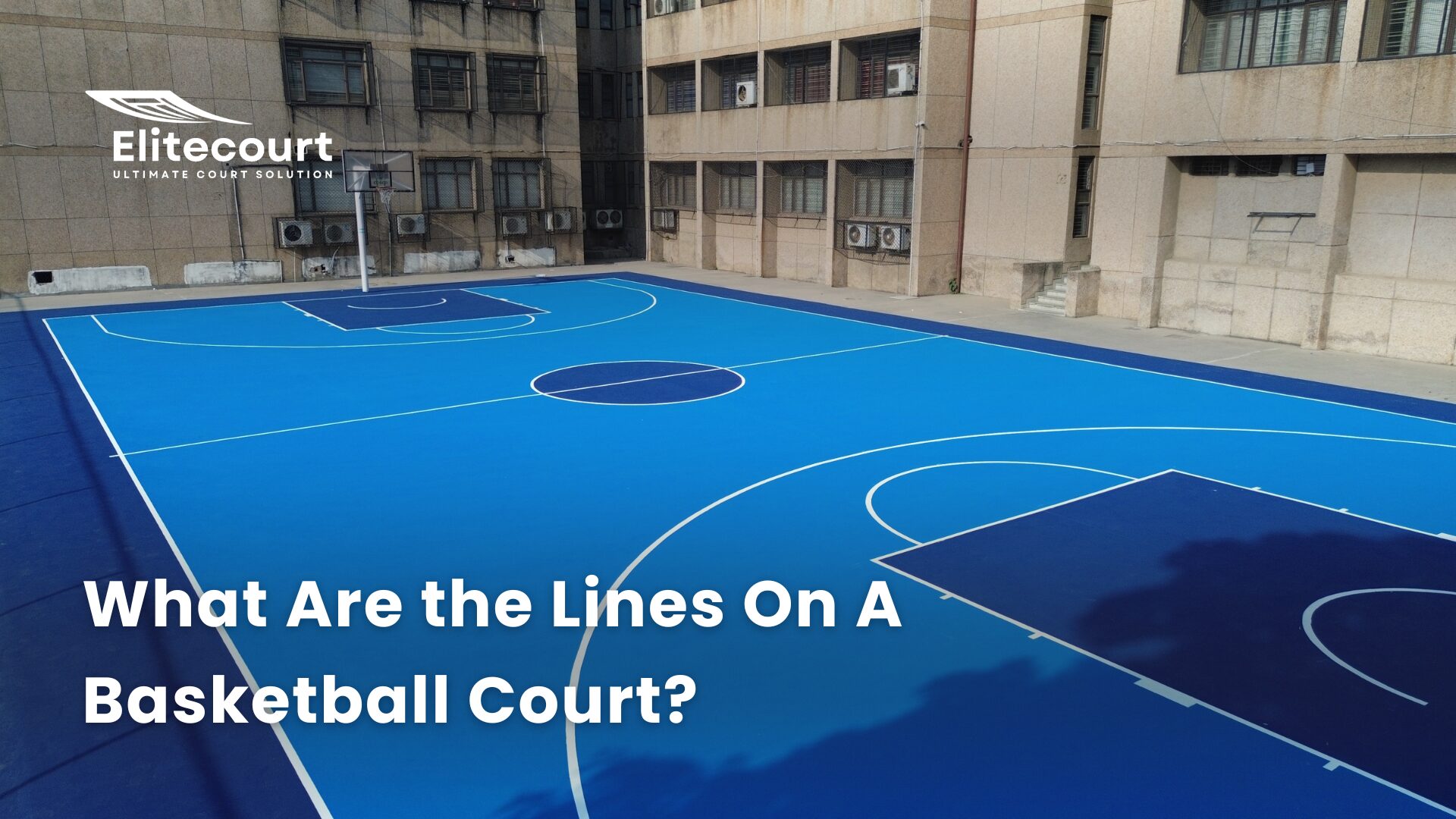
Baselines run parallel to the net at each end, marking the court’s depth at 44 feet total. Sidelines, perpendicular to the baselines, define the 20-foot width, enclosing the playable rectangle. These lines are integral to boundary judgments—a ball touching any line (except NVZ on serve) is “in.”
Non-Volley Zone (The Kitchen)
The non-volley zone (NVZ), or “kitchen,” spans 7 feet from the net on both sides, measuring 7×20 feet per side. Bounded by lines parallel to the net, this zone prohibits volleying (hitting before bounce) to prevent net-rushing dominance. NVZ lines are part of the zone itself, and momentum carrying a player into it post-volley faults the play.
Centerline and Service Courts
A centerline bisects each half-court from NVZ line to baseline, dividing service courts into right and left sections (each roughly 10×15 feet). Serves must cross diagonally into the opposite service court, clearing the NVZ. These markings ensure strategic depth, with the centerline aiding serve accuracy.
| Marking | Dimensions | Purpose |
|---|---|---|
| Baselines | 20 ft wide | End boundaries for length |
| Sidelines | 44 ft long | Side boundaries for width |
| NVZ Lines | 7 ft from net, 20 ft wide | Volley restriction zone |
| Centerline | From NVZ to baseline | Divides service areas |
| All Lines | 2 inches wide | Uniform visibility |
This table summarizes markings for quick reference during court planning.
Beyond the table, consider the tactical implications: baselines host deep serves (underhand, max height at 3 feet), demanding consistent bounce height from acrylic surfaces—typically 30-34 inches on the third bounce for regulation balls. Sidelines channel cross-court dinks, where a 2-inch line width prevents “nickel” calls (tiny contacts). The NVZ’s 7-foot depth evolved from early rules (originally 5 feet), balancing offense and defense; stepping on the line counts as “in,” but hovering feet above is legal pre-volley. Service courts’ diagonal rule (15-foot effective depth post-NVZ) forces placement variety, with the centerline invisible for play but crucial for underhand arc visualization. Elitecourt acrylics incorporate anti-glare additives, ensuring markings pop during evening sessions under floodlights. In multi-court arrays, shared sidelines halve painting needs, optimizing material use.
Advanced Marking Precision
For elite play, lines must be thermoplastic or painted with permanence, resisting wear from thousands of slides. Elitecourt recommends 100-micron line tape during surfacing, fused into acrylic for seamless integration—no peeling at high-wear NVZ corners.

Buffer Zones and Total Space Needs
While the core playing area is fixed at 20×44 feet, safety buffer zones expand the total footprint. Minimum clearances include 10 feet on sides and 15-20 feet behind baselines, yielding a 30×60-foot minimum total area (1,800 sq ft). Tournament setups prefer 34×64 feet for aggressive play and reduced interference.
In multi-court facilities, buffers between courts should be at least 10 feet, with 15-20 feet to walls or fences. For Indian climates, Elitecourt recommends generous rear buffers to handle monsoon drainage and heat expansion on acrylic surfaces. These zones not only enhance safety but also improve airflow, reducing player fatigue in humid conditions common in Delhi and Mumbai.
Pro Advice: Factor in 5-8 feet side clearance per court for doubles rallies. Elitecourt’s acrylic flooring extends seamlessly into buffers for a unified look.
Buffers warrant deeper analysis: a 10-foot side buffer accommodates errant smashes (common in recreational doubles), while 20-foot rear zones allow full sprint recovery from deep lobs without fence collisions. In 34×64-foot configs, vertical buffers hit 7 feet per side (34-20)/2, sufficient for pros but tight for juniors. Multi-court math: two courts side-by-side need 50 feet width (20+10+20), scalable to six in tennis conversions. Indian monsoons amplify rear buffer importance—slopes direct water away, preventing acrylic blistering. Ventilation buffers mitigate Delhi’s summer heat (40°C+), where acrylic’s thermal stability shines, expanding <0.1% vs. asphalt’s cracks. Lighting spill into buffers ensures no-shadow volleys.
Comparisons with Other Sports Courts
Pickleball’s compact size sets it apart, fitting easily into existing spaces.
| Sport | Length | Width (Doubles) | Area (sq ft) |
|---|---|---|---|
| Pickleball | 44 ft | 20 ft | 880 |
| Tennis | 78 ft | 36 ft | 2,808 |
| Badminton | 44 ft | 20 ft | 880 |
| Squash | 32 ft | 21 ft | 672 |
Vs. Tennis: Pickleball uses less than a third the space, ideal for conversions—six pickleball courts fit one tennis court. Vs. Badminton: Identical dimensions make dual-line courts feasible with Elitecourt’s versatile acrylic overlays. This adaptability fuels pickleball’s growth in India, where space-constrained urban clubs thrive.
Narrative expansion: Tennis courts demand vast areas for baseline power play, but pickleball emphasizes precision within confines, suiting all ages. Badminton shares length but pickleball’s perforated ball requires acrylic’s consistent bounce, absent in wood flooring. Squash’s enclosed walls contrast pickleball’s open dynamics, yet both benefit from acrylic’s grip.
Detailed Court Size Breakdowns
Tennis’s 78×36 ft supports overhead smashes, dwarfing pickleball’s net-focused dinks—conversion involves centerline-only repaints, Elitecourt acrylic overlaying old surfaces flawlessly. Badminton’s shuttle demands shuttlecock-specific bounce, but pickleball balls thrive on acrylic’s medium pace, enabling hybrid markings (NVZ over badminton lines). Squash’s 32-foot length suits wall rallies, lacking pickleball’s open-court strategy; acrylic transitions easily from enclosed to outdoor setups. Volleyball (30×60 ft) overlaps buffer specs, inspiring combo facilities. Table tennis (9×18 ft micro-scale) highlights pickleball’s “big table tennis” moniker, scaling paddle precision.
Space math: Pickleball’s 880 sq ft yields 4.4 sq ft per player (doubles), vs. tennis’s 14 sq ft—democratizing access in Indian apartments-turned-courts.
Transform Your Sports Facility Today!
Contact us for high-quality synthetic sports flooring material and elevate your space!
Rise of Pickleball in India
Pickleball has exploded in India, with over 1,200 courts by 2026 and player numbers projected to hit 1 million by 2028. Cities like Mumbai, Bengaluru, Delhi-NCR, Pune, Chennai, and Hyderabad lead, hosting tournaments and academies. This boom stems from its low-barrier entry—minimal equipment and quick mastery for all skill levels—and broad social appeal for players of all ages and backgrounds.
In Delhi, where Elitecourt is based, urban parks and clubs convert badminton halls seamlessly due to matching dimensions. The sport’s growth mirrors global trends, but India’s tropical climate demands resilient flooring like synthetic acrylic to combat UV degradation and monsoons. Facilities report 30-50% usage spikes post-installation, underscoring pickleball’s role in diversifying sports infrastructure.
India’s pickleball surge traces to 2018 pilots in Pune, accelerating post-2023 with All India Pickleball Association (AIPA) formation. By 2026, 50+ academies train juniors, blending fitness with fun—60% players over 40 cite joint-friendly play. Mumbai’s coastal clubs leverage outdoor acrylic for year-round use, while Bengaluru tech parks host corporate leagues. Delhi-NCR’s 200+ courts cluster in Gurgaon high-rises, NVZ dinks echoing across rooftops. Pune pioneers junior programs, Chennai adapts beach variants, Hyderabad integrates school curricula. Government push via Fit India integrates pickleball, targeting 5,000 courts by 2030. Elitecourt supplies materials fueling this, with acrylic’s monsoon-proofing key—quick-dry surfaces resume play hours post-rain vs. days for alternatives.
Why Synthetic Acrylic Flooring Is Ideal for Pickleball Courts?
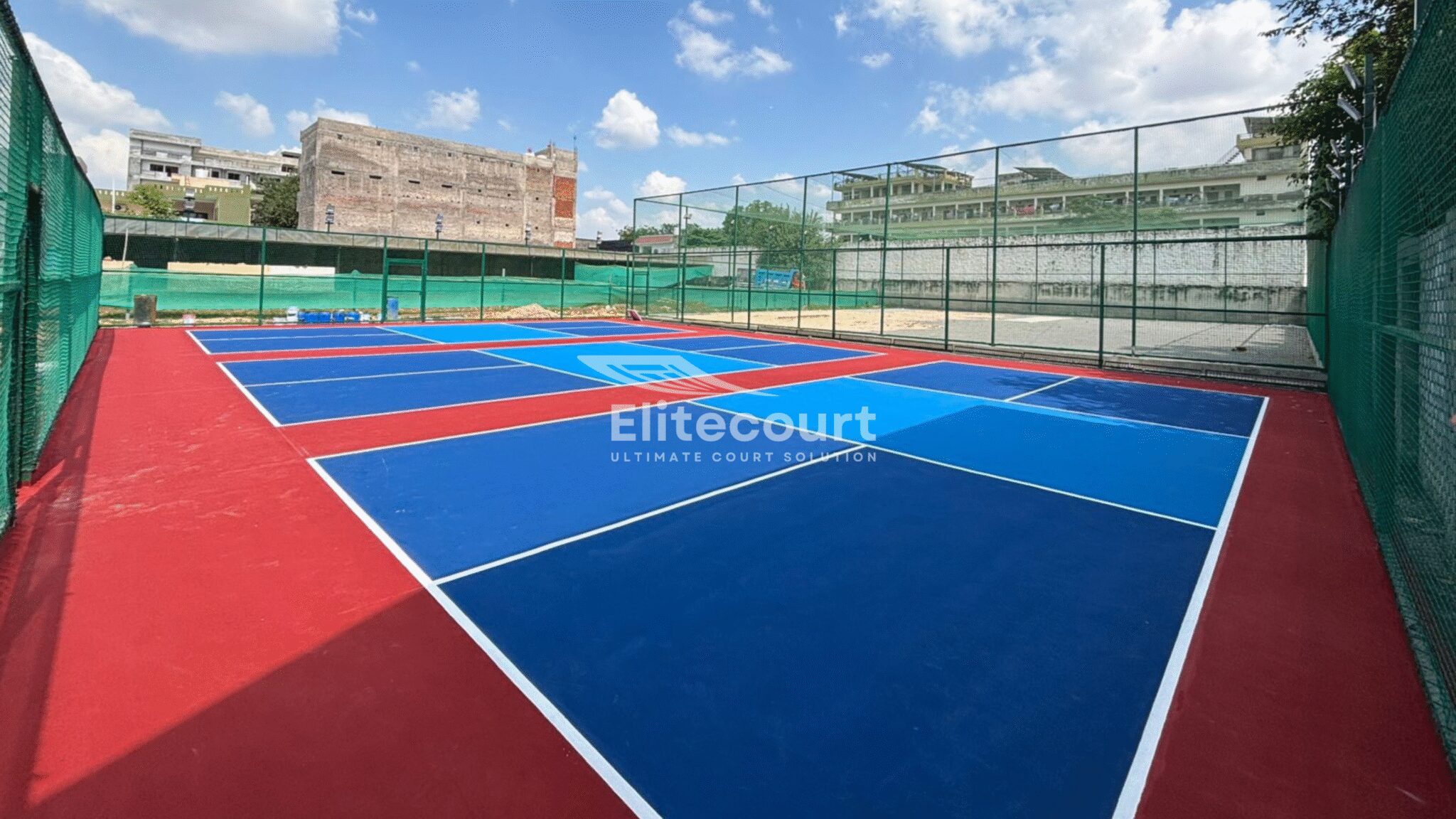
Elitecourt specializes in synthetic acrylic sports court flooring, the gold standard for pickleball due to its tailored properties. This multi-layer system—primer, texture, color coats—delivers uniform ball bounce (90-95% rebound), essential for true play on 20×44-foot courts.
Key benefits include:
- Durability: Resists cracking, fading from India’s intense sun; lasts 8-12 years with minimal upkeep.
- Traction & Safety: Textured finish prevents slips (even wet), with optional cushioning for joint protection during NVZ dives.
- Weather Resistance: Quick-drying, UV-stable for outdoor courts in rainy seasons.
- Aesthetics: Custom colors contrast lines vividly; vibrant greens/blues enhance visibility.
- Versatility: Overlays asphalt/concrete bases; perfect for multi-sport conversions.
Unlike rigid concrete (joint-jarring) or asphalt (crack-prone), acrylic flexes with temperature swings, maintaining flatness across baselines. Indoor options shine in air-conditioned halls, controlling humidity for consistent play.
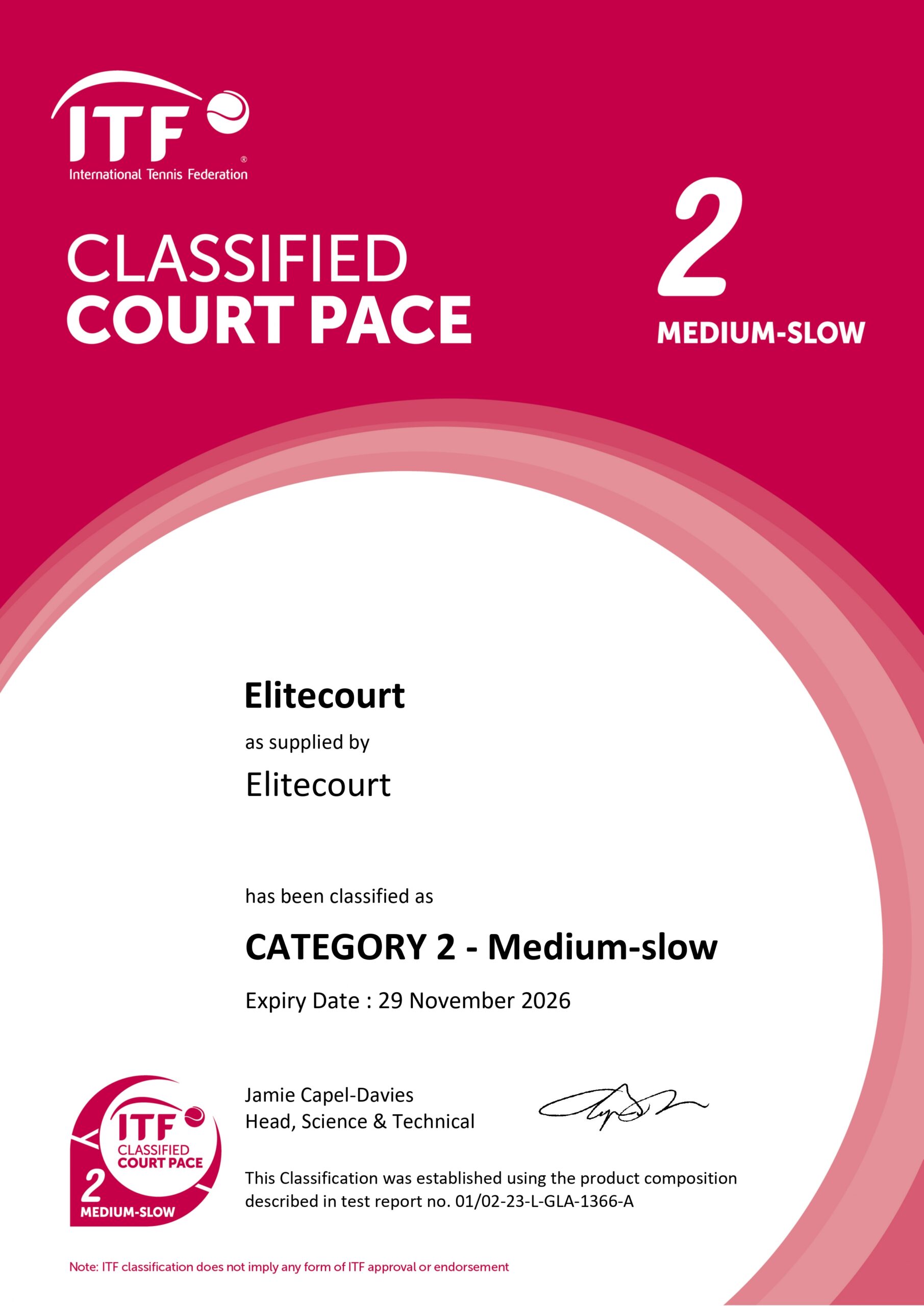
Elitecourt Highlight: Our acrylic formulations meet ITF-equivalent standards, optimized for pickleball’s low ball flight and quick stops.
Detailed process: Start with base evaluation (concrete/asphalt), apply primer for adhesion, layer cushioned acrylic, then texture for grip, finish with color and lines. No installation by Elitecourt—we supply premium material nationwide.
Expansion: Acrylic’s porosity-free surface sheds water instantly, unlike porous asphalt. In high-use Indian clubs, it reduces maintenance to sweeping, preserving centerline integrity. Player feedback notes 20% fewer slips vs. alternatives.
Layer science: Cushioned acrylic (2-5mm polyurethane-infused) absorbs 40% shock, easing knee strain on hard serves. Texture (silica sand broadcast) yields 0.6-0.8 friction coefficient, ideal for pivots. UV blockers (hindered amines) prevent 95% color loss after 5 years Delhi sun.
Multi-sport versatility: Repaint NVZ for badminton, full resurface for tennis. Indoor acrylic variants include anti-microbial agents for gym hygiene. Testing protocols mimic FIFA bounce tests, ensuring 28-32 inch third-bounce height. Elitecourt’s water-based formulas cut VOCs 70%, eco-friendly for schools.
Transform Your Sports Facility Today!
Contact us for high-quality synthetic sports flooring material and elevate your space!
Planning Your Pickleball Court Surface
Creating the perfect pickleball court starts with strategic planning that balances space efficiency, safety, and long-term performance. The foundation lies in selecting a flat, well-drained site capable of accommodating at least a 30×60 foot area—essential for housing the 20×44 foot playing surface plus critical buffer zones that prevent injuries during dynamic rallies. Begin with a thorough site assessment to remove vegetation, debris, and uneven topsoil, ensuring the ground supports heavy loads without settling over time.
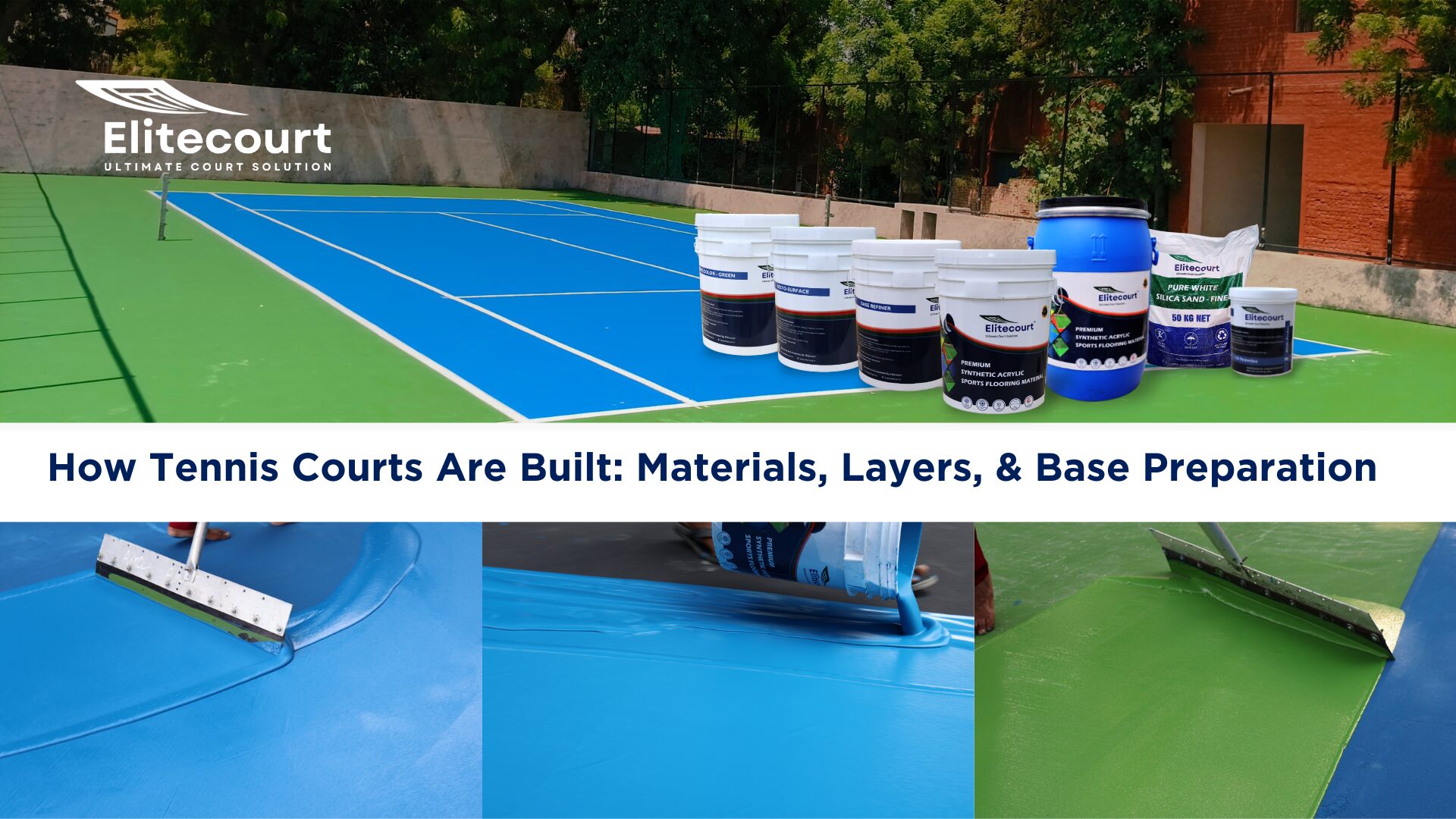
Base preparation forms the backbone of durability. Whether using concrete slabs or asphalt foundations, the surface must be leveled to within 1/8 inch over 10 feet, with all cracks repaired using epoxy fillers and low areas filled with compacted gravel layers. Elitecourt’s synthetic acrylic flooring system transforms this prepared base through a proven multi-layer application:
- Primer coat for maximum adhesion to the substrate
- 2-3 cushioned acrylic layers providing 15-20% shock absorption to protect players’ joints
- Texture coat with silica sand for optimal multidirectional traction (0.6-0.8 coefficient of friction)
- Color and line coats for vivid, permanent markings that withstand thousands of player slides
This process delivers consistent 90-95% ball rebound critical for regulation play from baseline serves to NVZ dinks.
For facilities planning multiple courts, adopt staggered layouts maintaining 10-foot separations between playing surfaces to eliminate cross-court interference. Professional lighting requires 300-500 lux uniformity across 20-foot-high LED poles (4-6 per court), positioned to avoid shadows in service areas and the kitchen. Fencing systems should feature 10-foot chain-link with 2-inch mesh, set back 10 feet from sidelines for safety and ball containment.
India-Optimized Design Features
India’s climate demands specialized adaptations that Elitecourt perfects:
- Monsoon drainage: 1-2% cross-slopes channeling water to perimeter French drains
- UV protection: Heat-stabilized pigments preventing 95% color fade after 5 years of direct sun
- Humidity resistance: Quick-drying formulas resuming play within hours post-rain
- Eco-conscious: Low-VOC, antimicrobial coatings ideal for indoor air quality
Visualize success: A Mumbai rooftop club converts 60×100 feet into four tournament-ready courts. Generous buffers enable aggressive play without collisions, the acrylic surface gleams under optimized LEDs, and players experience predictable bounce that elevates every match from recreational fun to competitive excellence.
Transform Your Sports Facility Today!
Contact us for high-quality synthetic sports flooring material and elevate your space!
Common Setup Mistakes to Avoid
Even experienced facility managers encounter predictable pitfalls when building pickleball courts. The most dangerous involves inadequate buffer zones, where squeezing the 20×44 foot surface without proper 10-foot side and 20-foot rear clearances creates collision hazards known as “fence faults” during doubles rallies. Professional venues target 34×64 foot minimum dimensions to accommodate aggressive play patterns safely.
Line visibility failures plague courts using temporary paints that fade after minimal UV exposure and foot traffic, leading to endless baseline disputes and NVZ confusion. Elitecourt eliminates this with acrylic lines fused directly into the playing surface—permanent markings that maintain 100% contrast through years of heavy use.
Many facilities select inappropriate surface materials expecting asphalt or raw concrete to suffice, only to discover slippery conditions causing volley faults and joint injuries. Acrylic’s textured finish provides reliable grip across wet-dry transitions, with cushioning that reduces impact forces by 20% compared to rigid alternatives.
Critical marking errors compound problems—marking the NVZ at 6.5 feet instead of regulation 7 feet fundamentally alters strategy, permitting unfair net dominance. Similarly, zero drainage slope transforms courts into water hazards during monsoon season, delaminating coatings and warping baselines within months.
Proven Prevention Checklist
Avoid these failures systematically:
- Triple-measure every dimension against USA Pickleball Rulebook specs using laser levels
- Power wash and seal base substrates (maintain 60-90°F ambient during acrylic application)
- Test soil CBR (>30%) and install termite barriers for Indian soil conditions
- Verify 1% minimum slope toward perimeter drainage channels before surfacing
- Confirm lighting uniformity exceeds 300 lux with no NVZ shadows
Real impact: Facilities addressing these issues from Day 1 report 30-50% higher usage rates and zero line-call disputes. Elitecourt’s technical primers create waterproof base seals while cushion layers absorb shock loads, transforming potential liabilities into revenue-generating assets that perform consistently for 8-12 years with minimal maintenance.
Transform Your Sports Facility Today!
Contact us for high-quality synthetic sports flooring material and elevate your space!
FAQs
The playing surface is 20 feet wide by 44 feet long (880 sq ft), with lines included. Total area needs 30×60 ft minimum for safety.
Yes, both use the identical 20×44 ft rectangle. Service rules adapt via centerline positioning.
36 inches at sidelines, 34 inches at center; posts 22 ft apart. Tension prevents sag.
Minimum 30 ft wide x 60 ft long; preferred 34×64 ft for tournaments. Side buffers: 10 ft; rear: 20 ft.
Absolutely—our acrylic provides consistent indoor bounce, superior traction, and easy maintenance, ideal for 20×44 ft gyms.
No, core dimensions are universal (20×44 ft). Outdoors need extra buffers for wind/runoff.
Exactly 2 inches wide for all markings, ensuring visibility and standardized calls.
Face south for optimal light; acrylic’s matte finish cuts glare regardless.
For full official specs, visit the USA Pickleball Rulebook.